Less than 4 years ago, and shortly after his infamous "whatever it takes" threat to speculators, Mario Draghi responded to a question from Zero Hedge readers, saying "there is no Plan B"
when it comes to contingency plans for a Eurozone nation leaving the
monetary union. The reasoning was simple: the mere contemplation of such
a scenario assigned a probability to its occurrence, which is why the
ECB was desperate to give the impression that no matter what, Europe's
cohesion is unbreakable.
Fast forward four years later, when not only has this
particular strategy been thoroughly rejected, but for the first time
ever the head of the ECB provided a framework, vague as it may be,
laying out what a Eurozone exit would look like.
In a letter to two Italian lawmakers in the European Parliament released on Friday, and first reported by Reuters, Mario Draghi implied that a country could leave the euro zone - so much for "No Plan B" - but first it would need to settle or debts with the bloc's TARGET2 payments system before severing ties.
"If a country were to leave the Eurosystem, its national
central bank's claims on or liabilities to the ECB would need to be
settled in full," Draghi said in the letter.
As Reuters confirms,
the comment by Draghi is "a rare reference by Draghi to the possibility
of the currency zone losing members." We would say not just "reference"
but admission that a Italexit is all too possible, however the only way
the ECB would allow it, would be for Italy first to pay its €357 billion TARGET2 bill (which
various confused and clueless tenured economists over the past five
years claimed would never be used by the ECB as a bargaining chip in
"exit" negotiations and has no political implications; oops).
To be sure, the beneficiary of such a transfer payment would
be the country most reliant on the perpetuation of the status quo:
Germany, which has some €754 billion in Target2 "assets" which could be
nullified should one or more Eurozone countries exit without satisfying
their payment obligations.
In the letter, Draghi reiterated that the imbalances were
due to the ECB's own bond buying-program, where many of the sellers are
foreign investors with accounts in Germany, and ensuing portfolio
rebalancing.
Draghi's admission that "QuItaly" or UscIta as
it is known domestically - is an all too real possibility coincides
with a groundswell of anti-euro sentiment in Italy and other euro zone
states, fueled in part by last June's unprecedented decision by Britain
to leave the European Union.
The threat of defaults on cross-border debts has often been
credited as one element keeping the euro zone together throughout the
financial crisis. As these payments are not generally settled, weaker
economies including Italy, Spain and Greece have accumulated huge
liabilities towards Target 2 while Germany stands out as the biggest
creditor with net claims of 754.1 billion euros.
Target 2 imbalances have worsened in recent months, with
Harvard economist Carmen Reinhart warning of capital flight from Italy.
This can be seen in the chart below, which confirms that below the calm
surface portrayed by low - if recently rising - Italian bond yields,
tremendous capital imbalances are piling up.
Draghi's admission, which is meant as a quasi-threat to
Italy, may have opened up a whole new can of worms for European
stability in addition to concerns about Trump, because not only has
Draghi confirmed that an exit from the Eurozone has been explicitly
modeled by the central bank, but also lays out the conditions under
which it would be considered and permitted.
More importantly, it also once again provides the basis for
an aggressive "negotiation", potentially escalating to rancorous
bargaining between Italy and Germany, as suddenly the ECB has made it
clear that Italy's gain in a "hypothetical" Euro zone exit would be a
tremendous loss for Berlin and Merkel. We are confident that the
question of "how much" preventing such a loss would be worth to Merkel,
will emerge in very short order. As for what Draghi's statement means
for countries with a far smaller Target2 liability which may also
consider exiting the monetary union, the answer is two words: "green
light."
I'm City A.M.'s economics reporter writing about the trends that shape markets i [..] Show more
Draghi will face scrutiny over alleged lobbying links (Source: Getty)
European Central Bank (ECB) president Mario Draghi
is set to come under investigation by an EU body after a complaint over
his membership of an elite group of bankers from around the world,
including JP Morgan, UBS and Credit Suisse.
The European Ombudsman, which follows up complaints by EU
citizens over maladministration, will investigate whether Draghi comes
under undue influence as a member of the Group of Thirty, which meets to
discuss economic policy.
The group includes governor of the Bank of England (BoE) Mark Carney
among its members, but the complaint is focused on the possibility of
lobbying from chief executives of major banks and investment businesses.
The complaint was brought by anti-lobbying group
the Corporate Europe Observatory, who allege Draghi’s membership could
impact his role in regulatory oversight of the sector.
This is the second time the complaint had been
made, but the Ombudsman judged enough had changed in the role of the ECB
that there was a “need to reflect on this new context”. The ECB has
been given more regulatory powers over the banking sector since the
financial crisis.
Corporate Europe Observatory’s complaint says “it
is vital that members of the ECB decision making bodies avoid {the
perception of) conflicts of interest, and avoid close association with
special interest groups, including the big banks represented in the
G30.”
Non-banking members include Timothy Geithner, a
former US Treasury secretary who now heads private equity firm Warburg
Pincus and Philipp Hildebrand, vice chairman of BlackRock, the world’s
biggest investment manager.
The group also includes former BoE governor Mervyn King and Nobel Prize winner Paul Krugman.
How Deutsche Bank Made a $462 Million Loss Disappear
A dubious trade leads to a criminal trial for Europe’s most important bank.
by
Vernon Silver
and
Elisa Martinuzzi
On Dec. 1, 2008, most of the
world’s banks were still panicking through the financial crisis. Lehman
Brothers had collapsed. Merrill Lynch had been sold. Citigroup and
others had required multibillion-dollar bailouts to survive. But not
every institution appeared to be in free fall. That afternoon, at the
London outpost of Deutsche Bank, the stolid-seeming, €2 trillion German
powerhouse, a group of financiers met to consider a proposal from a team
led by a trim, 40-year-old banker named Michele Faissola.
The
scion of an Italian banking family, Faissola was the head of Deutsche’s
global rates unit, a division that created and sold financial
instruments tied to interest rates. He’d been studying the problems of
one of Deutsche’s clients, Italy’s Banca Monte dei Paschi di Siena,
which, as the crisis raged, was down €367 million ($462 million at the
time) on a single investment. Losing that much money was bad; having to
include it in the bank’s yearend report to the public, as required by
Italian law, was arguably much worse. Monte dei Paschi was the world’s
oldest bank. It had been operating since 1472, not long after the
invention of the printing press, when the Black Death was still a living
memory. If investors were to find out the extent of its losses in the
2008 credit crisis, the consequences would be unpredictable and grave: a
run on the bank, a government takeover, or worse. At the Deutsche
meeting, Faissola’s team said it had come up with a miraculous solution:
a new trade that would make Paschi’s loss disappear.
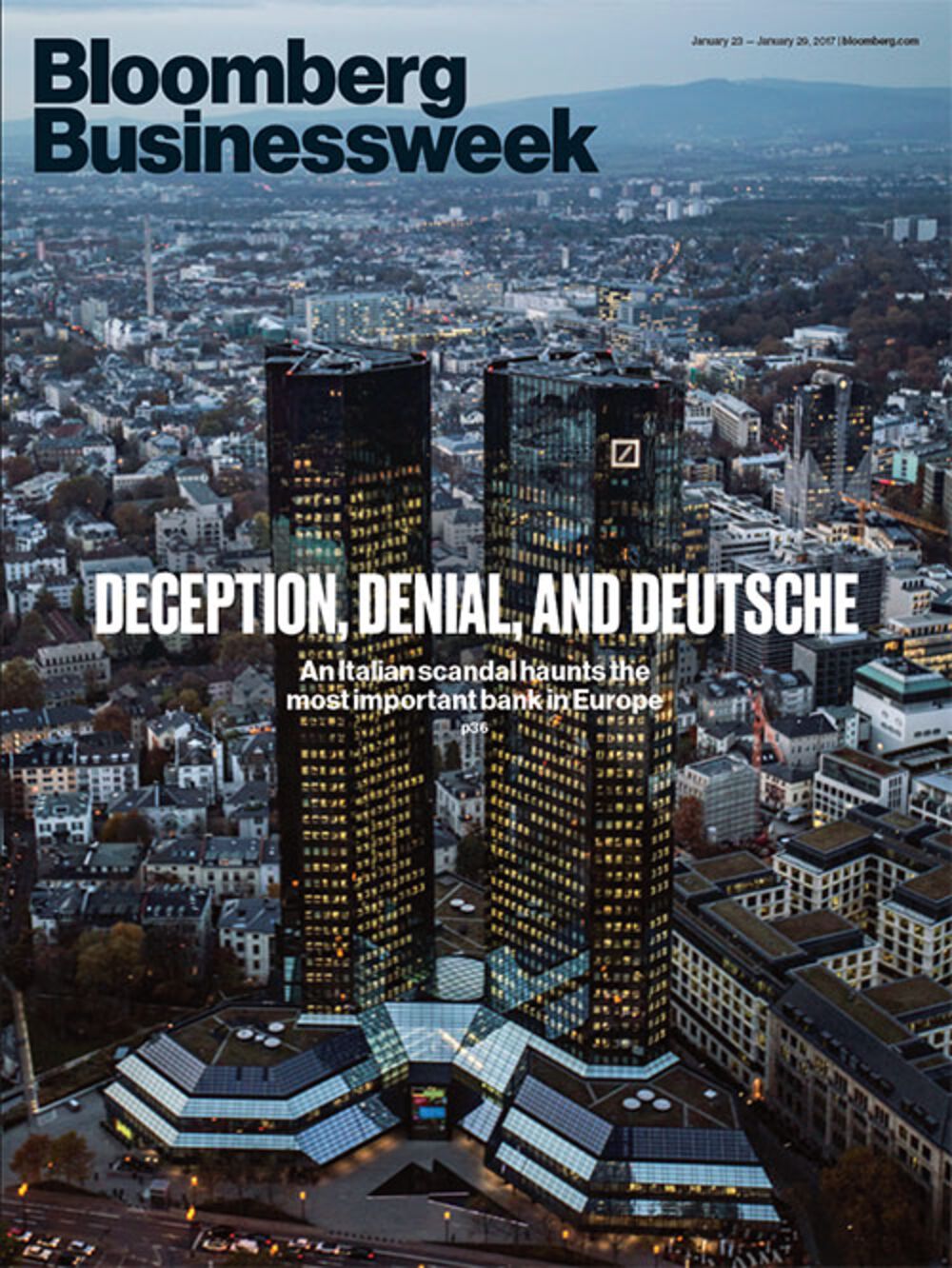
Featured in Bloomberg Businessweek, Jan. 23-Jan. 29 2017. Subscribe now.
Photographer: Ulrich Baumgarten/Getty Images
The
bankers in the room had seen some financial sleight of hand in their
day, but the maneuver that Faissola’s staffers proposed was audacious.
They described a simple trade in two parts. For one half of the deal,
Paschi would make a sure-thing, moneymaking bet with Deutsche Bank and
use those winnings to extinguish its 2008 trading losses. Of course,
Deutsche doesn’t give away money for free, so for the second half of the
deal, the Italians would make a bet that was sure to lose. But while
the first transaction was immediate, the second would play out slowly,
over many years. No sign of the €367 million sinkhole would need to show
up when Paschi compiled its yearend financial reports.
The
audience for the proposal that day was Deutsche’s global market risks
assessment committee, a top-level panel that reviews transactions with
legal, regulatory, and reputational considerations. Respectively, that
means asking: Is a given trade within the law? Is it within the looser
framework of industry rules and standards? And even if so, can Deutsche
pull it off without maiming its brand—its basic ability to operate as a
trustworthy member of the global financial system?
To at least one
member of the committee, the possibilities of Faissola’s trade seemed
wondrous. “This is fantastic,” said Jeremy Bailey, Deutsche’s European
chairman of global banking, according to testimony of an executive who
later recounted the exchange for an internal disciplinary panel. “You
can book a [profit] in front and spread losses over time?” Bailey added.
“We should do it for Deutsche Bank.”
Ivor Dunbar, the meeting’s
chairman, curbed Bailey’s enthusiasm. “We are not discussing [our]
balance sheet here,” he said. (Bailey, through a spokesman, denies he
made the remarks.)
Outside the room, one of Faissola’s longtime
colleagues was raising questions about the deal. William Broeksmit, a
managing director who specialized in risk optimization, was concerned
about the winner-loser construction. A Chicago-born son of a United
Church of Christ minister, Broeksmit had decades earlier been a pioneer
in interest rate swaps, the financial instruments that had rewritten the
possibilities—and profitability—of investment banking. But Broeksmit,
53, was also against reckless derivative deals, which is how he viewed
Faissola’s proposal, according to a person familiar with his thinking.
Eleven minutes after the meeting began, Broeksmit e-mailed one of its
attendees with a warning about the Paschi trade and its “reputational
risks.”
The message had no effect. When the meeting ended after almost 90
minutes, Faissola got a go-ahead—setting in motion a scandal that has
resulted in a criminal trial now under way in Milan. A judge there has
accused Deutsche Bank and five former executives, including Faissola and
Dunbar, of colluding with Paschi to falsify its accounts in 2008. (None
of Deutsche’s top managers at the time has been accused of wrongdoing.
Faissola declined to comment for this article, as did both banks. Dunbar
didn’t respond to requests for comment.)
Eight years after the
financial crisis, the stakes could hardly be higher. Being the biggest
bank in Germany makes Deutsche the most important bank in Europe, and
the Paschi trial is an uncomfortable reminder that its operations,
already with barely enough capital to meet industry standards, are
threatened by persistent scandal. Deutsche is also facing investigations
into whether it helped clients launder billions out of Russia. This
month the bank agreed to pay $7.2 billion to resolve a U.S. probe into
its subprime mortgage business, admitting it misled investors. Deutsche
has paid more than $9 billion in further fines and settlements related
to claims of tax evasion; violating sanctions against Iran, Libya,
Syria, Myanmar, and Sudan; rigging the $300 trillion Libor market; and
other alleged breaches of the law.
The strain has intensified
concerns about Deutsche’s balance sheet, which contains one of the
world’s largest pots of most-difficult-to-quantify risk. The bank says
it’s trimmed some of its exposure, as John Cryan, who became chief
executive officer in 2015, attempts to clean up his predecessors’
messes. But if Deutsche ever requires government help, such as a
bailout, the effects could be catastrophic for more than shareholders.
In recent years, as the euro community has faced one solvency problem
after another in Greece, Portugal, and elsewhere, Germany’s Angela
Merkel has been chief scold. She’s insisted on fiscal pain for
irresponsible actors and pushed for banking rules that keep taxpayers
from picking up the bills again for reckless financiers. Her government
coming to the aid of Deutsche Bank after lecturing others on restraint
would be the ultimate euro zone irony. In a worst-case scenario, it
could trigger a furor that finally brings down the continent’s currency,
already made fragile by Brexit, refugees, and the rise of nationalist
politicians.
The bank’s deal with Paschi is a microcosm of how
Deutsche’s embrace of derivatives, questionable accounting, and
slow-walking of regulators have eroded the market’s trust to the point
that no one really knows how close the company is to the edge. What
exactly happened in the days surrounding the December 2008 meeting in
London is key to the Italian prosecution. The German financial-markets
regulator, known as BaFin, already tried to get to the bottom of the
matter, commissioning an independent audit in January 2014.
The ensuing report has never been made public, but Bloomberg Businessweek
obtained a copy. It shows that auditors asked Faissola what happened
that afternoon in London. Other participants recalled details and
dialogue, the report says, but Faissola drew a blank about the event
he’d helped run. Broeksmit wasn’t interviewed. On Jan. 26, 2014, the day
before the audit began, his body was found at his London home, hanging
from a dog leash.
Founded in 1870, Deutsche Bank was for most
of its existence content to take deposits and make loans; in the 1920s
it participated in the founding of the airline Lufthansa and the merger
of automakers Daimler and Benz. Then, in the 1980s and ’90s, Deutsche
watched as rival lenders in London and across the U.S. turbocharged
profit growth by snapping up boutique investment banks and hiring or
building teams to sell higher-margin financial products. To join the
bonanza, Deutsche in 1995 hired one of its leaders from Merrill Lynch:
Edson Mitchell, a redheaded chain smoker from Maine who was nurturing a
team of future financial leaders. His crew included Broeksmit, the swaps
innovator, and Anshu Jain, a prodigy at selling such risky, fee-laden
products to hedge funds. Three years later, Deutsche made an even more
emphatic attempt to buy its way into investment banking’s culture and
profits, acquiring Bankers Trust—a New York derivatives house notorious
for its cowboy culture—for about $10 billion.
If longtime Wall
Streeters gawked at first at the German interloper, they quickly
recognized that Deutsche had adopted their aggression and then some:
Mitchell and his deputies expanded Deutsche’s London-based investment
banking operation until it made half the bank’s revenue by the turn of
the century.
Mitchell
didn’t live to see Deutsche complete its transformation into a
financial omnivore. Three days before Christmas 2000, he was riding in a
small Beechcraft Super King Air 200 plane along the coast of Maine
toward his vacation home in Rangeley. The wreckage was found the next
morning, not far from the summit of Beaver Mountain. He was 47.
Afterward, Jain took over as head of global markets. One of his deputies
was Faissola.
Faissola represented the next generation in
Deutsche’s investment banking push. He was born in 1968 in Sanremo, the
coastal town whose legendary song contest launched the tune Volare,
and his uncle was president of the Italian banking association. While
running Deutsche’s global rates division in London for Jain, Faissola
built his own fortune, at times earning tens of millions of pounds a
year. He drew the jealousy of British co-workers because, as a
foreigner, he was able to legally avoid U.K. tax on his bonuses.
Faissola’s town house in Chelsea featured an indoor pool.
In the
first years of the millennium, Deutsche bankers chased new sources of
riches around the globe. People who piled into uncharted areas or pushed
the rules were rewarded handsomely. Starting in 2005, Deutsche traders
in Europe, North America, and Asia manipulated a benchmark interest rate
to benefit their own derivative bets, according to an indictment made
public last year in federal court in New York City. Deutsche’s most
profitable derivatives trader earned a bonus of almost £90 million (then
$130 million) in 2008 alone. Deutsche bankers also increased their
bonuses in the runup to the crisis by creating and selling to clients
mortgage securities that were marketed as high-quality investments but
were in fact loaded with home loans destined to go bust. For clients,
Deutsche became a go-to bank when they wanted risk and complexity.
In May 2002, when it was 530 years old,
Monte dei Paschi asked Deutsche Bank to sell it something complicated.
Paschi had recently listed its shares on the Italian stock exchange and
was under pressure to grow. It owned a piece of another bank known today
as Intesa Sanpaolo and wanted to convert some of that stake into cash
for acquisitions, while still benefiting from any rise in Intesa’s
shares—a kind of have-cake-and-eat-it-too arrangement. It was exactly
the kind of bespoke financial product the new, risk-friendly Deutsche
was growing fat on. The two banks created a venture called Santorini
Investments—essentially, a derivative bet in the form of a company. The
bet would pay off if Intesa shares rose and would lose value if they
fell. Later restructuring made Paschi the sole shareholder.
The
switch meant that in 2008, when bank stocks tanked in the worldwide
financial crisis, Paschi took all of the losses, which swelled from €180
million in early October to more than €300 million in the following
weeks. The bank’s own shares were on their way to losing half their
value since the start of the year. If Paschi included the Santorini loss
in its Dec. 31 reports, the consequences would be dire: Italy’s central
bank could take over its administration or force a bailout that would
wrest control from its owners, a politically connected Siena foundation.
As the losses grew, Deutsche executives knew time was running out for
Paschi to find a solution. Having done the first deal, they went to
Paschi management with a proposal for a second that would both help the
Tuscan bank and be a new source of fees for Faissola’s group. On Nov. 3
they sent Paschi draft contracts for the sure-to-win/sure-to-lose trade
that straddled the new year. Each prong of the bet simply wagered on an
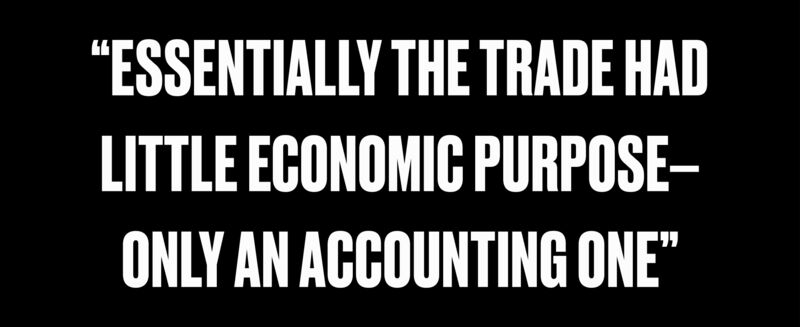
index that was the exact inverse of the other. Essentially, the trade
had little economic purpose—only an accounting one.
That’s
typically a red flag to auditors and regulators, and it took almost a
month for Deutsche to alter the deal so it contained a small amount of
actual risk. The bankers did this by mixing in two interest rate
triggers—that is, prices to be fed into a formula that would determine
how much money the participants in the trade had to pay or receive from
each other. But that created a slight possibility that Paschi could win
both sides of the bet. To mitigate this potential Deutsche loss—as much
as €500 million—Deutsche added a third trigger. Underlying the now
complex flowcharts of rates, payments, and triggering events was the
asset on which the transactions were to be based: about €2 billion in
Italian government bonds.
Further
illustrating the incestuousness of the deal, Paschi would need to buy
the bonds and hand them over to Deutsche as collateral. Deutsche, for
the sake of its own accounting, would need to sell the bonds to come up
with cash that it then would give right back to Paschi to pay off the
Santorini loss. And Paschi would buy the bonds in the first place from a
third bank that had bought them from Deutsche.
By Dec. 1, 2008,
Faissola’s group was ready to present the deal to Deutsche’s risks
assessment committee, which sent it along to a final bureaucratic stage:
the market risk management approval committee, where Broeksmit had
influence. Top management had just handed Broeksmit broad authority to
police risk across the firm, rehiring him after he’d taken a hiatus as a
consultant. Michele Foresti, a managing director who reported to
Faissola, e-mailed Broeksmit on Dec. 2, copying his boss. “I understand
market risk management doesn’t want to give us green light to close this
transaction,” Foresti wrote, noting the small chance of a €500 million
loss. “I feel the risks are important but we should be able to manage
them, could we sit down to discuss as soon as you have 5 mins?”
Broeksmit’s reply was terse: “I think this should be presented to
Anshu.”
Anshu Jain was by then co-head of investment banking at
Deutsche. Foresti sent another e-mail at 3:52 p.m. the next day: “still
waiting for [committee] approval, faissola is in anshu’s office.” What,
if anything, Jain knew about the deal was an avenue later explored in
the German regulator BaFin’s audit. It found no evidence to suggest Jain
was aware of the transaction and couldn’t conclude whether he’d been
involved in its approval. Jain told the inquiry that he wasn’t part of
that process, though he couldn’t rule out having heard about the Paschi
transaction in a general meeting. Faissola said he couldn’t recall
having talked with Jain about the transaction. Faissola could have been
in Jain’s office for many reasons. (Jain declined to comment for this
article. Foresti, who’s a defendant in the Milan case, also declined to
comment.)
Deutsche’s risk committee signed off on the Santorini
project by the end of the day, after first securing a concession that
Paschi would sign a memo pledging to inform its own auditors about the
deal and consult its own legal and accounting advisers. The two parties
executed the first part of the trade that night by phone, and the rest
of the paperwork was signed over the following two days.
The deal
allowed Paschi an immediate gain of €364.1 million, neutralizing the
derivative loss. Deutsche netted about €60 million in fees, according to
documents seen by Bloomberg Businessweek. Internally, the profits were credited to Faissola’s unit.
Deutsche
also benefited from the way it accounted internally for its side of the
deal. That complex shuttling of Italian bonds? The bank decided that
all of the back-and-forth maneuvers canceled themselves out and did not
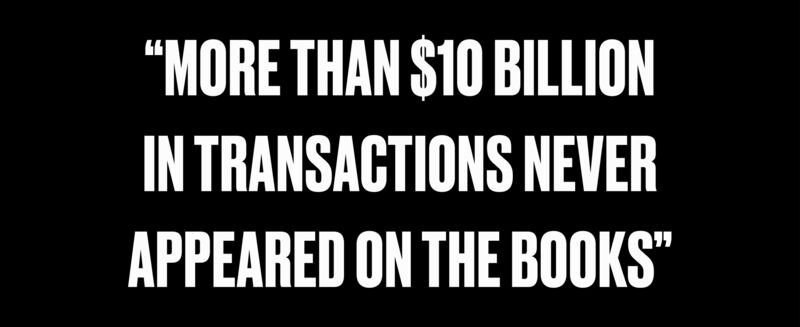
need to appear on its balance sheet. Deutsche began to apply the
practice to transactions around the world, totaling more than $10
billion that never showed up on its books and making the bank look
smaller and less risky than it really was. In September 2009, it was
Broeksmit again who took notice. In an e-mail about a similar deal, he
wrote that such accounting techniques “may be a rounding error at this
point, but [they are] growing quickly.”
An anonymous whistle-blower
contacted Italian authorities and the U.S. Federal Reserve about
Santorini, and they started parallel probes in 2011. In the fourth
quarter of that year, Deutsche appeared to resist the Fed’s questions,
and likely because of the delays and insufficient replies—according to
the BaFin audit—the Fed issued a subpoena in April 2012.
Jain was
promoted to co-CEO the next month. He proposed Broeksmit as the new
chief risk officer, but had to back off after BaFin objected, noting
that he’d never managed a large number of employees. Broeksmit retired
in February 2013—out of the bank, but well aware of the mounting
investigations into the Deutsche-Paschi deal. In subsequent months he
complained to a psychiatrist that he was suffering from anxiety about
being investigated.
At the same time, Santorini exploded in Italy
as a national scandal. In January 2013, Bloomberg News reported that
Paschi executives had used the deal to improperly obscure
losses—provoking criminal investigations, tanking the bank’s stock, and,
in February 2013, leading to a government bailout of €4.07 billion.
Among
the casualties was David Rossi, Paschi’s communications chief. At about
9 p.m. on March 6, a bank employee noticed that Rossi was missing from
his fourth-floor office. A window had been left open. Authorities found
Rossi’s body in a courtyard below. Rossi, 51, wasn’t himself the subject
of any inquiries, but his home had been searched two weeks earlier by
police. His death was at first ruled a suicide, but the inquest has been
reopened based on evidence his wife presented, including security video
that shows Rossi fell out backward.
Several months after Rossi’s
death, in January 2014, Broeksmit was supposed to meet his wife of
almost 30 years at a cafe near their home in the South Kensington
neighborhood of London. He didn’t show. When she returned home, she
found his body hanging from the leash attached to a door. In a dog bed,
he’d left suicide notes, including one addressed to Jain, his longtime
colleague. The New York Post reported last year that the note to Jain contained an apology. A summary of Deutsche Bank’s own review of the suicide, seen by Bloomberg Businessweek, doesn’t mention the note and says the review found no direct link between Broeksmit’s death and his work at Deutsche.
BaFin’s auditors interviewed Faissola on
Aug. 28, 2014. He told them he couldn’t recall details of the period in
which the Santorini deal closed. Faissola also said he couldn’t recall
telling Deutsche’s lawyers in 2012 that the transaction could be
characterized as “window dressing” Paschi’s financials, as another
source had told the investigators.
Faissola laid blame on Paschi
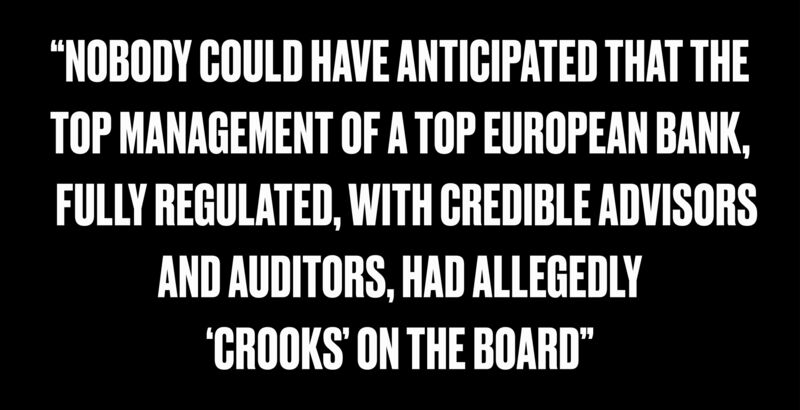
and defended his role. “Nobody could have anticipated that the top
management of a top European bank, fully regulated, with credible
advisors and auditors, had allegedly ‘crooks’ on the board,” he told
auditors hired by BaFin. Faissola left Deutsche Bank in 2015, as did
Jain and his co-CEO, Jürgen Fitschen. (Neither Jain nor Fitschen is
accused in the Italian case.)
In February 2016, Deutsche said
BaFin had closed its inquiries into Paschi and other matters, pointing
to changes the bank had implemented and further measures it planned to
take. An overhaul of the management board and the departure of senior
executives contributed to the regulator’s assessment that the company
had done enough, a person with knowledge of the matter said at the time.
On
Oct. 1, 2016, a judge in Milan handed down his indictment in the
Santorini affair. The trial, which began with an initial hearing in
December, is expected to run throughout 2017. Doubts about the financial
health of Deutsche Bank have eased, but the stock is still about 80
percent below its 2007 high, and with legal costs uncertain, management
hasn’t ruled out needing to raise more capital. New CEO Cryan is
expected to introduce a strategy as soon as February, when the bank
announces its final 2016 results, which analysts estimate will barely
show a profit. Brought in to right the ship, Cryan has been contrite.
“We didn’t always control ourselves,” he said at a Davos panel on Jan.
17. And those big bonuses? Gone. Senior employees won’t be getting any
for the last year.
Meanwhile, Paschi is about to be nationalized
in the biggest bank takeover by the state since the 1930s. And Faissola
has kept busy. After his resignation he founded an investment company,
based in Jersey in the Channel Islands, called F.A.B. Partners. The F
stands for Faissola. It counts among its clients the Qatari government.
With a stake of almost 10 percent, the regime is the biggest shareholder
in Deutsche Bank. According to recent reports, Faissola’s latest
project is advising the Qataris on whether to boost that position—and
extend his former employer a lifeline.
—With Matt Scully, Donal Griffin, and Ambereen Choudhury
Professor of Economics and Political Economy, University of Leeds
Disclosure statement
David Spencer has received funding from ESRC, EPSRC, and FP7.
Partners
University of Leeds provides funding as a founding partner of The Conversation UK.
The Conversation UK receives funding from Hefce, Hefcw, SAGE,
SFC, RCUK, The Nuffield Foundation, The Ogden Trust, The Royal Society,
The Wellcome Trust, Esmée Fairbairn Foundation and The Alliance for
Useful Evidence, as well as sixty five university members. View the full list Republish this article
Republish our articles for free, online or in print, under Creative Commons licence.
The Bank of England’s chief economist, Andy Haldane, recently criticised his very own profession. This led to a bout of soul searching for economists as we face, again, the familiar criticism that nobody predicted the 2008 financial crisis (in fact, some economists did) and reflect on whether the subject is being taught properly at school and university.
Yet Haldane’s criticisms are less severe than they might first
appear. Indeed they remain largely innocuous at the level of economic
prediction. Andy Haldane.Niccolò Caranti
To his credit, Haldane made some effort to highlight more deep-seated problems in economics.
These problems relate to issues of theory and method. They are also
related to an unwillingness to allow dissent within economics and to
open up to other disciplines.
Unwittingly, however, he distracts attention away from these problems
by focusing on the issue of forecasting and misses the opportunity to
ram home the point that economics is flawed in a fundamental sense.
Better forecasts cannot exonerate economics from its failings now and in
the past.
Weak and off-target
Economics should be in crisis. But in reality it is not.
Rather, economics remains largely the same as it was before the
financial crisis – in effect, it remains just as problematic now as in
the past. This is an issue not just for economics but for society as a
whole, given the enduring power and influence of the discipline on policy and public life.
To think of economics in terms of forecasting is to limit its nature
and scope. Economics ought to be about explanation. It should be able to
make sense of the world beyond forecasts of the future. It is not clear
that as it exists now, economics is able to understand the world in its
present form. To this extent, it cannot help understand the frequency
and depth of crises.
Economists remain committed to a particular approach to theory building in which mathematical models are all that count.
They are often too abstract to be tested and exist as formal
abstractions with no connection to the real world. For example, some
macroeconomic models before the crisis were so out of touch with reality
they excluded the existence of banks. No wonder the crisis came as a
surprise.
As things stand, there is little chance that economics will open up
to the ideas and methods of other disciplines. Instead, the discipline
has embraced a project of “economic imperialism” seeking to colonise other social sciences. Genuine interdisciplinary debate has lost out in this process.
Haldane’s criticisms of economics, therefore, remain weak and off
target. He calls for economics to learn from meteorology. That way it
can improve its forecasts. What he misses is the need for radical change
at the level of theory and method. He misses the need for economics to
embrace reform that turns it into a social science which explains the
world as it actually is – not a device for better predicting the
economic weather.
Alternatives exist
To be sure, Haldane questioned standard economic assumptions
such as that of all actors being perfectly rational. He has also
encouraged the use of alternative methods like agent-based modelling,
which offers a more realistic view of individual behaviour. Yet, his
proposals for reform are limited and weak. The notion that economics
might need to be reworked from first principles and rebuilt as a more
open and less formal social science remains implicit in his criticisms.
Alternative economic ideas do exist. They exist among dissenting heterodox economists, but they remain on the fringes of economics debate, without any real influence on the core discipline itself. Big thinker: Friedrich Hayek.LSE Library, CC BY
This fact is probably a surprise to most. Surely the crisis has led
to a rebirth in the study of great economic thinkers like Marx, Keynes,
and Hayek? After all, these thinkers studied in detail the economic
system including its crisis-prone nature.
The sad truth is that this rebirth hasn’t happened. In fact, any rebirth has been stifled by the insularity of the economics discipline.
Economic dissenters like Marx, Keynes, and Hayek are still more likely
to be studied by scholars outside of economics than within it.
So while Haldane is correct to call for reform in economics he misses
the barriers to reform and the need to overcome them. He misses how
economics has stifled dissent and how the restructuring of economics
requires root-and-branch reform in the way that economics is studied. We
need economists that are not better weather forecasters but rather
committed social scientists concerned with addressing and resolving
real-world problems on an ongoing basis.
To understand why economics students around the globe are calling for Rethinking Economics, the book The Econocracy
is a thoughtful and accessible place to start. An econocracy, as
defined by authors Joe Earle, Cahal Moran, and Zach Ward-Perkins is “a
society in which political goals are defined in terms of their effect on
the economy, which is believed
to be a distinct system with its own logic that requires experts to
manage it.” Their work carefully explains why our current system is an
econocracy and discusses possible ways to change that. Based on my own
experiences so far, I can’t help but agree with them. The Econocracy
argues that the current definition of economics is limited to a narrow,
neoclassical viewpoint. Institutions of higher education have accepted
and helped reinforce this tendency, at the expense of the discipline.
The neoclassical approach to economics requires an understanding of
complex mathematical models, which leaves many citizens feeling unable
to engage with it at all. However, they should not be intimidated by
those who do possess the necessary quantitative skills. While today’s
economic experts hold prestigious positions, their understanding of math
is often greater than their understanding of the economy. As the 2008
recession demonstrated, the majority of current experts didn’t get
things right. This shows “the perils of leaving economics to the
experts.” The authors’ critique of economics
curricula at colleges and universities necessarily extends to a critique
of the higher learning system where these curricula are taught.
Interestingly enough, they argue neoclassical arguments have helped
shape this system to become what it is today. “Human capital”
theory has its roots in neoclassical utility maximization. One of the
first exercises in standard econometrics classes is to calculate the
“returns to education,” which shows that incomes are higher for those
who have completed college degrees. These type of theories are
problematic because they frame education as a “financial investment”
which encourages students to give “the minimum effort and engagement
necessary to get a satisfactory grade.” Such a mentality “undermines
many of the core principles of a liberal education.” The authors look
through history at the UK’s higher education system, and show how rising
tuition costs financed by personal loans also has its roots in
neoclassical thinking. This type of change is symbolic of the
econocracy’s influence throughout all spheres of civil life. While studying at UC Berkeley and
Bard College, I met many students who thought and acted this way. As
long as you put in a minimal effort, there was little chance of failing
or being expelled. Second and third chances were given out often.
Teachers did not give a lot of room to think critically about what you
were learning, and worksheets and one-size-fits-all curricula were the
norm. Nearly every class I had was in a lecture/tutorial format, and
nowhere was the socratic method used for teaching. Still, there were
some great professors and fellow students who shined the light in the
right direction for me. I finished school feeling like I missed out on
something, but I’m glad I have my entire life to continue learning. The Econocracy does more than offer a critique—it
also puts forth a new direction, albeit one that might be tough to
achieve. For the authors, reform should start with the education system.
They pose it’s necessary to shift away from “a passive student
body—whose only input into their education is a tick-box feedback
form—to an “active student co-production of education.” Debate and
dialogue should be encouraged. A shift needs to happen within economics curricula too. The authors recommend economics departments teach with a pluralist
approach, which would place post-Keynesian, classical, Marxist,
feminist, Austrian, historical, ecological, and other perspectives front
and center next to neoclassical economics. This way, students would be
able to see neoclassical views as one of many ways to look at things.
They would recognize that scholars have debated alternative points of
view for decades, often on the fringes of the institutions they call
home. As Joan Robinson quipped in Marx, Marshall and Keynes: “The
purpose of studying economics is not to acquire a set of ready-made
answers to economic questions, but to learn how to avoid being deceived
by economists.” It doesn’t have to be this way. The Econocracy
offers a different vision for economics. One where it is not only for
the experts but for everyone. They want to “democratise economics
because [they] believe at its core economics should be a public
discussion about how to organise society.” That’s something we should
all get behind. At The Minskys, we too hope to help advance a jargon
free view of the economy that everyone feels empowered to engage with.
Economics can’t just be left to the experts, because “the economy”
affects us all. Be sure to grab your own copy of The Econocracy, read it, and comment down below with your thoughts.
Each month the European Central Bank buys 8 billion in corporate bonds. Thus it provides some of the largest companies in Europe cheap loans. This money would have to come into the real economy justified, but in practice, little of it here. Moreover, the European SMEs are put in an improper manner at a disadvantage. Is that allowed?
Shell, Volkswagen, Louis Vuitton Moet Hennessy (LVMH) - not exactly business that you would expect to need aid. Yet these are representative names on the long list of big companies that benefit from the so-called corporate sector purchase program (CSPP) of the European Central Bank (ECB).
The CSPP is part of the larger buy-back program that runs the ECB, in
his own words, to bring inflation towards 2 percent and thus stimulate
the economy. In my previous article I gave an overview of the entire program. Today we take a deep dive into the part of corporate debt buys.
The ECB acts still in line with the foundation of the European Community?
270 million per day
Daily flow enormous sums from Europe towards the business community. Since June 8, 2016, the ECB buys loans from large companies worth 8 billion per month. Digital money for these purchases, the ECB can create out of nothing. A special power, that you may hope that is handled with care, in the service of us all.
Yet 10 percent of the total buyback budget of the ECB (EUR 80 billion
per month) do not lend to governments or nonprofit organizations, but to
large companies for profit.
In other words, the central bank creates a mere 270 million per day to
buy selectively debt securities of specific companies within the CSPP. The ECB acts thus still in line with the foundation of the European Community , namely the principle of an open market economy with free competition?
Only large multinationals
The companies eligible for the CSPP must meet a number of requirements to meet. Only in euro traded debt of non-banking companies with a certain credit rating (investment grade they call it) can be bought. The companies must be based in Europe, but do not necessarily have to come from here: Coca-Cola is for instance also on the list .
Companies that are large enough to settle all over the world and also
write loans in euros, basically meet the automatic criteria. It will be no surprise that especially large multinationals may use the cheap loans. Of all European companies in the top 25 of the Fortune 500
, the ECB has already bought bonds, and also the most frequent ECB
purchases can be found on the list of world's largest companies.
SMEs more expensive
Small and medium enterprises (SMEs) is at the CSPP the wayside. SMEs do not borrow through bonds, for the issue of which is a complicated process that requires financial expertise. The large corporates tend to have their own banking department to handle bond issues, while the average for an SME loan must knock at the bank. Of course a commercial bank that tries to pick up a nice margin. According to a report
by the Authority Consumer & Market (ACM) SMEs always pay more for a
loan than large companies, both in the form of a higher interest rate
because of the high closing fees.
Lending to small businesses is riskier than large companies, but the
higher interest rates on the other hand the result of the worse
bargaining position of SMEs and operating costs by calculating the bank.
So it costs more anyway to finance small business entrepreneur in the
corporate world, and with the CSPP ECB strengthen existing inequalities.
negative returns
The ECB shall not provide funds for SME loans, but buy both new loans
from large firms as debt securities (bonds) that already exist and are
traded on the market. Just thanks to the announcement of the CSPP investors anticipated an increasing demand for corporate bonds and the rates went up. Bond prices and interest rates move in opposite directions. The yield (also called yield) of a number of short-term bonds from companies such as Shell, Siemens and LVMH has therefore become even negative. That means that you as buyer of this debt a lower amount effective after paying back will get you inlaid with purchase!
The CSPP ECB strengthen existing inequalities
For the return of long-term debt securities - such as our pension -
this is not cheap, but professional traders do brisk business thanks to
price increases. According Robeco benefit its Investment Grade Corporate Bond Fund directly from the ECB purchases.
The impressive gains of the past year they close, with all modesty, not
only to their own excellent performance, but largely due to the 'game changing volumes "that the ECB affect the market.
The CSPP is for investors and fund managers, such as Robeco, very
advantageous: the value of their portfolios increases and the
"outstanding performance" are rewarded with large bonuses. The treasurers of large companies rubbing their hands: they can close all new loans at very low interest rates. To put this in perspective, according to
the Dutch Central Bank pays SMEs for a loan under 250,000 euros between
3 and 5 percent interest (depending on the maturity) and on top of that
there are the high banking costs. Shell took to be repaid in August 1.25 billion that only about 9 years, and over pays an interest rate of only 0.375% per annum. The ECB was one of the buyers of this debt.
"The treasurers of large companies rubbing their hands: they can close all new loans at very low interest rates"
Real economy?
The CSPP is born from the idea that the cheap money through companies
faster in the real economy than enters through the public sector.
The ECB has therefore decided to broaden its buyback program, which
initially covered only government bonds to the private sector.
The money is "put through to the real economy," according to ECB
President Mario Draghi as companies invest the cheap money in productive
activities.
Shell, for example as an additional drilling rig pulls up in the North
Sea creates additional economic activity and that is good for
employment.
namely access to cheap money does not attractive investments still on
But is this logic is? namely access to cheap money does not attractive investments still. This requires confidence in the economy and good ideas for new business much more important. A company does not invest in a new plant without the confidence that the investment is recouped.
As well as commercial enterprises can borrow money cheaply profit
remains their ultimate goal, and invest them in projects that not only
create jobs but not profitable. Just big corporates adopt a strict return requirements for investments (so-called hurdle rate) of over 10 or even 20 percent, as in this explained article.
This means that even at extremely low interest rates, only a few
projects have a profit outlook that's bright enough to invest in it
actually.
"Non-bank corporates have since the introduction of the euro never borrowed as much as in 2016"
lucrative destinations
The ECB has not learned from the American situation , where the stimulus from the Federal Reserve (the US central bank) also not led to productive investments. Large companies are not charities, and to satisfy their shareholders in the first place.
If present themselves not attractive investment opportunities in the
real economy, companies are looking for other lucrative destinations for
their money. According to Bloomberg have "non-bank corporates never borrowed as much as in 2016. Where is this cheap money used since the introduction of the euro?
Repayment of expensive loans I have all Dutch companies approached the CSPP list to answer this question.
Most companies did not respond substantively, but Aegon, Akzo Nobel,
Enexis and Gasunie were so sporty to do to provide transparency.
They acknowledged to borrow substantially cheaper since the
announcement of the CSPP and the money to be used primarily to repay
old, more expensive loans. Also KPN in August with an inexpensive new loan more expensive loans paid off faster.
In their responses represented the companies that the money is then
used for general corporate purposes, and the ability to borrow at the
ECB has not led to a change in business or investment decisions. They thus seem to confirm that the low cost of borrowing does not lead to additional investments. None of the parties wanted to qualitatively comment on the ECB's policy. That is understandable in itself: the ECB's next capitalist financially supervisor, and you do not want to antagonize you! Certainly not as long as you reap the benefits of the CSPP in the form of cheaper funding.
cash hoard Thanks to its ultra-low interest rates, borrowing costs much less than before. This will hoard money also an interesting option. Think of it as a piggy bank for later. You pay nothing for a full reservepot you can break right away if present themselves or profitable investments.
Dividend payment and repurchase its own shares For shareholders, there is of course nothing more beautiful than the ECB's money immediately to see flow to the private purse. The payment of dividends is therefor the most direct method, but it has the disadvantage that you have to pay tax. The repurchase of own shares on the market is a much better option if you are sitting on huge pile of unused money. There is thus an artificially high demand for the shares thereby increasing the share price. Again cash to all shareholders, so from that angle you will hear no complaints. However, the result is an inflated stock price (asset inflation), which sooner or later comes back down - but that seems to worry about later.
Short-term gains may even be so tempting to buy shares at these low
rates is preferred over making risky (re) investment in the real
economy. ( Thesetwo articles in the Financial Times and the OECD report
explain how the purchase of own shares is more attractive compared to
long-term investment due to monetary easing.) Ensure a good chance that
the ECB instead of the economic stimulus, a new bubble in facilitating
both bond and stock market.
Mergers and acquisitions Mergers and acquisitions worldwide since 2013, and certainly again sharply in Europe increased . Cheap financing opportunities and cash reserves are used by large companies to grow through acquisitions.
The ECB peppered with its policy of corporate war funds to go on an
acquisition and that creates a further concentration of economic power. FTM published last week an article
about the power relations between supermarkets and suppliers after the
merger between Delhaize (also found on the list CSPP) and Albert Heijn.
Mergers and acquisitions rarely lead to productive investment or jobs,
except the investment bankers and lawyers that accompany these deals. Boys thrive on the South Axis, but the ordinary man again did not benefit from the indirect purpose of the ECB's money.







 believed
to be a distinct system with its own logic that requires experts to
manage it.” Their work carefully explains why our current system is an
econocracy and discusses possible ways to change that. Based on my own
experiences so far, I can’t help but agree with them.
believed
to be a distinct system with its own logic that requires experts to
manage it.” Their work carefully explains why our current system is an
econocracy and discusses possible ways to change that. Based on my own
experiences so far, I can’t help but agree with them.