giovedì 13 febbraio 2025

The Absurdity of Testing a New Drug on the Entire Population

The introduction of new drugs on the market is a complex process that requires rigorous clinical trials and scientific evaluations to ensure the efficacy and safety of the treatment. The idea of ​​testing an experimental drug on the entire population appears not only irrational but also extremely dangerous. This article analyzes this absurd hypothesis from different points of view - medical, political, ethical and economic - highlighting the disastrous consequences that can derive from it.


1. Medical Perspective

From a medical point of view, testing a drug on a large population without going through controlled research phases is scientifically irresponsible. Drugs are developed following a well-defined protocol:

Preclinical Phase: Studies begin with in vitro (on cells) and in vivo (on animals) experiments to verify safety and efficacy.

Clinical Phase: Next, drugs are tested on small groups of human volunteers (Phase 1), then on larger groups (Phase 2) to evaluate efficacy and monitor side effects. Finally, large randomized trials (Phase 3) are conducted to confirm the results.

If a harmful drug were to be distributed on a mass scale without these controls, the consequences would be catastrophic. Serious adverse effects, such as multiple organ damage, fatal allergic reactions, or unpredictable drug interactions, could affect millions of people simultaneously. Furthermore, the lack of accurate data would make it impossible to quickly identify the problem and limit the damage.

Furthermore, each individual has a different biological response to drugs, influenced by genetic, environmental and metabolic factors. Ignoring this variability would dramatically increase the risk of irreparable damage.


2. Political Perspective

Politically, the indiscriminate administration of an experimental drug would represent a monumental failure of health governance. Policy implications include:

Legal Liability: Any government that authorizes such a move would expose itself to enormous legal liability. Families of victims could file major civil lawsuits, while international bodies could condemn the country for human rights violations.

Loss of Credibility: The public’s trust in health and political institutions would plummet. This could lead to opposition movements, social protests and political instability.

Geopolitical Risks: If an event of this type were to occur in a world-leading country, the negative impact would be reflected globally, compromising diplomatic relations and international cooperation.

Furthermore, managing a large-scale health crisis caused by a harmful drug would require immense resources, likely beyond the financial and organizational capabilities of any nation.


3. Ethical Perspective

From an ethical perspective, the idea of ​​administering an untested drug to the entire population violates fundamental principles of bioethics:

Principle of Nonmaleficence: According to the principle of "primum non nocere" (first, do no harm), health professionals have an obligation to avoid actions that could cause harm. Distributing a drug without sufficient evidence would be a clear abuse of this principle.

Information Autonomy: Patients have the right to be informed about the benefits and risks of a treatment and to give informed consent. Administering a drug to an entire population without choice would be a serious violation of this right.

Social Justice: The harmful effects of an untested drug would disproportionately affect the most vulnerable groups, such as the elderly, children and people with pre-existing conditions, amplifying social inequalities.


4. Economic Perspective

From an economic point of view, the absence of preliminary tests would entail unsustainable costs for health systems:

Direct Medical Costs: Each person harmed by the drug would require urgent medical care, overwhelming hospitals and emergency services. The cost associated with recovery therapies, corrective surgeries, and ongoing care would be enormous.

Productive Losses: Illness or premature death caused by the drug would reduce the active workforce, negatively impacting the national economy.

Compensation and Reparations: As mentioned, the lawsuits and compensations sought by the victims would generate stratospheric financial burdens for the pharmaceutical companies and governments involved.

Furthermore, the reputation of the pharmaceutical industry would be seriously damaged, leading to a loss of confidence among investors and consumers.


5. Psychosocial Perspective

Finally, let's consider the psychosocial impact of such a mistake:

Mass Panic: The discovery that a harmful drug has been administered to millions of people would generate widespread panic, fueled by the rapid spread of fake news and conspiracy theories in the media.

Psychological Trauma: Those who survive the drug's harmful effects may suffer from chronic anxiety, depression, or PTSD (post-traumatic stress disorder).

Erosion of Trust: The population will lose confidence in health services, public authorities and even science itself, creating a lasting climate of mistrust.

Conclusions

Testing a drug on the entire population without following rigorous procedures is not only a scientifically foolish idea, but also a morally, politically, and economically disastrous one. History has taught us how crucial it is to follow careful protocols to protect public health. Events like the thalidomide case in the 1960s demonstrate how devastating the consequences of hasty or imprudent decisions in the pharmaceutical field can be.

To preserve the safety and well-being of society, it is essential that we maintain high standards of verification and transparency. Only then can we ensure that scientific advances are used to improve people's lives, rather than jeopardize them.

martedì 11 febbraio 2025

Lion King: Who was the founder of the richest African empire?


The real Lion King: Who was the founder of the richest African empire?

The epic of Sunjata Keita has become heritage of the entire African continent
The real Lion King: Who was the founder of the richest African empire?

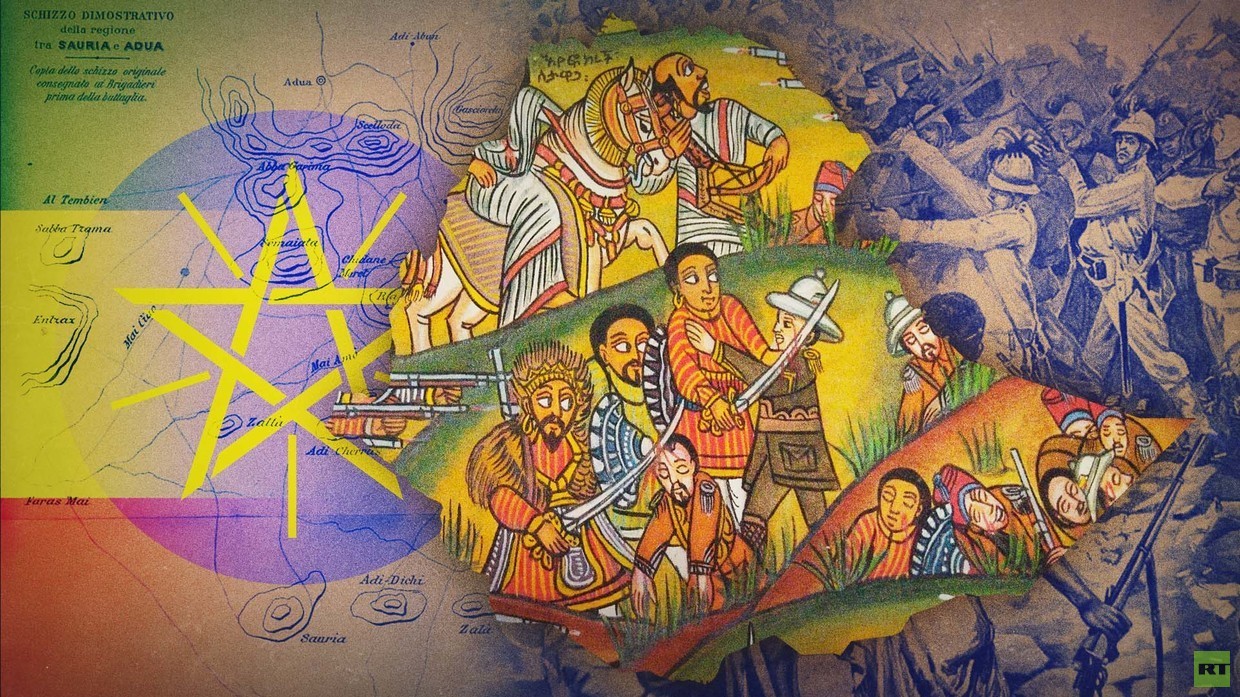
The Empire of Mali was renowned not only within the continent of Africa, but also beyond its borders. Its emperor Mansa Musa was placed on medieval European maps of Africa with description: “The king is the richest and most noble because his country abounds in gold.” Under him, the empire reached its apogee. However, the Malians themselves often single out another ruler, Sunjata Keita, as the most significant. He was the founder of the Mali Empire, or the “Lion King.”

“Without us the names of kings would remain in oblivion”

Modern Malians place a high value on their country’s pre-colonial history, with a particular emphasis on the history of the medieval empire. Notwithstanding the retention of the same names, the boundaries of the contemporary state of Mali diverge considerably from those of the empire.

The empire originated from a modest kingdom situated at the upper reaches of the Niger River. During its zenith in the 14th century, it encompassed territories that correspond to modern-day Senegal, Mali, Guinea, Guinea-Bissau, Mauritania, Burkina Faso, Gambia, and Cote d'Ivoire (Ivory Coast).

The history of the great empire of Mali is known to us through the Sunjata epic. This narrative has been preserved in oral tradition from around 13th century, and transmitted from one generation to the next by griots. A griot is a singer and storyteller, a role that is traditionally passed down from father to son. Griots are a common feature of West African nations. In their traditional role, griots served as advisors to rulers, providing guidance and instruction on matters of lineage and purpose.

RT

The role of the griot has been significantly altered in the present era. Some have assumed the role of ordinary musicians, while others have ceased to observe traditional practices entirely. However, in ancient times, their role was of significant importance, and those who served in the court of kings held a high social status.

In the words of Mamadou Kouyaté of Guinea, from whom one of the documented versions of the Sunjata epic was recorded, the griot’s role can be described as follows: “We are bags of words, we are bags in which lie centuries-old secrets. The art of speaking is revealed to us; without us the names of kings would remain in oblivion, we are the memory of men. With our words we give life back to former deeds and actions in the face of new generations.”

An epic is not to be confused with a fairy tale or a chronicle. An epic is defined by its narrative of heroic behavior, wherein the hero is a singular figure who exemplifies a synthesis of traditions and progress. In its original form, the work is performed in a vocal style accompanied by the playing of traditional West African stringed musical instruments.

The Lion King’s story

The epic of Sunjata, the great founder of the Mali Empire, has been a part of Malian cultural consciousness from an early age. The narrative is one of healing and victory over evil. Despite all the miracles described by the griots, he is not a mythical figure but a real historical one. This period is studied in detail in primary school.

Those in proximity to him were aware of his destined greatness even prior to his birth. A powerful hunter foretold this to his father. However, Sunjata’s poor health (he was unable to walk) led many to question his suitability for the role, particularly when his father passed away and the decision regarding the succession to the throne had to be made.

The first wife, who desired for her own son to assume the role of ruler, subjected Sunjata’s mother to relentless harassment and humiliation until the latter reached her limit and directed her frustrations towards Sunjata. This prompted him to undergo a miraculous healing process. At Sunjata’s request, the blacksmiths crafted a staff that enabled him to stand. The staff itself underwent a transformation, bending and turning into a bow, thereby enabling Sunjata to overcome his physical limitations and become a strong man, as foretold. He then plucked a baobab tree from its roots and presented it to his mother. The birth of the hero is accompanied by the following words of his griot:

“Make way, make way! Make way!

The lion has gone!

Antelopes, hide,

The lion is coming!”

One might be forgiven for questioning the rationale behind the choice of a lion. Primarily, the lion is the spirit animal of his father’s family line. Secondly, this information is reflected directly in his name, which can be translated literally as Sogolon’s Jara (Sogolon is his mother’s name, while jara means ‘lion’). This was subsequently shortened to Sunjata and he was designated the Lion King. Despite the numerous parallels with the plot of the iconic cartoon of the same name, the Walt Disney Company asserts that its creative inspiration was not derived from the pre-colonial history of Africa, but rather from Shakespeare’s Hamlet.

Sunjata’s magical healing validates the prophecy that he will become the successor to the throne and spearhead Mali’s ascent to greatness, which causes even more concern for the first wife. She makes efforts to neutralize him. Consequently, Sogolon, Sunjata’s mother, opts to depart from the kingdom in order to safeguard him and another daughter of hers.

RT

During his exile, Sunjata becomes a skilled hunter, demonstrating a mastery of magic in accordance with the traditions of West Africa. He will subsequently emerge as the leader of the resistance against the usurper Soumaoro Kanté, who has taken control of the kingdom.

Sunjata’s legacy today

This is an approximation of the epic, given that there are more than 60 documented versions, with numerous additional interpretations preserved by griots throughout Africa. It can be stated with certainty that every Malian, regardless of ethnicity, takes pride in Sunjata. Although the narrative is primarily that of the Malinke people, it has subsequently become the heritage of the entire continent. In surveys, Sunjata Keïta is consistently identified as the most significant figure in African history. The epic has also been the subject of numerous cinematic and theatrical adaptations.

However, the story of the Lion King cannot be concluded at the moment of vanquishing the evil invader Soumaoro. Thereafter, Sunjata was confronted with the challenge of rebuilding a weakened kingdom. One of the initial actions undertaken by him was the establishment of the Kurukan Fuga Charter, also known as the Manden Constitution.

“He has come, and happiness has come.

Sunjata is here and happiness is here.”

At Kurukan Fuga (Mali), Sunjata convened both allies and envoys from the vanquished, where the future political structure of the Mali Empire was established. Sunjata was himself proclaimed mansa, or ruler of all Manden, and the order of transfer of power from brother to brother was determined.

“If you go to Kaba, look at the Kurukan Fuga Plato. There you will see the linké tree, planted in honor of the great day when the world was divided,” says one of the griots who narrated the epic.

In Kurukan Fuga, the fundamental principles of social organization and the rights and obligations of citizens were established. Created in 1236, it is often referred to as the earliest known charter of human rights. It was initially articulated by the griot of Sunjata, and for an extended period, it was transmitted exclusively orally. In the 1990s, the Charter was translated into French, and in 2009 it was inscribed on UNESCO’s list of cultural intangible heritage.

The Charter contains a preamble, seven chapters and 44 articles. UNESCO briefly describes its contents as postulates for “social peace in diversity, the inviolability of the human person, education, the integrity of the homeland, food security, the abolition of slavery by razzia (or raid), and freedom of expression and trade.”

This laid the foundations for the concept of jamu, a feature of West African political culture that aimed to eliminate tensions between peoples. It is a kind of clan name and signifies the founder of one’s lineage. The Sunjata epic is a source of knowledge about various jamu. Its contents tell the story of the origin of their family. The charter also contains many of the rules for how representatives of different jamu interact with each other – a joking relationship.

Decolonizing history

Mali’s contemporary political landscape is characterized by an active anti-colonial movement. Research shows that the history curriculum in Malian schools has long emphasized the study of Western history. The pre-colonial period is not given enough attention in schools. However, one correspondent of the author stated that the lessons covered “everything that could be studied on the subject.” Thus, the gap between the number of lessons on Mali and the West can be partly explained by the fact that the country’s history has been fundamentally under-researched. While national history is taught, according to the interviewees, there is still a certain lack of awareness of the history of other African states, especially those located in different regions.

RT

The dissemination of African history beyond the continent is also essential. The diaspora is confronted with prejudices and stereotypes that stem from a lack of knowledge about Africa’s rich past.

History serves as a crucial means of understanding cultural, value, and worldview systems. Former metropolises have portrayed, and often continue to portray, Africa as an uncivilized continent, despite the fact that it was there that the most advanced ancient cultures emerged. Africans had developed complex political systems long before the arrival of colonizers.

Decolonizing history is a process that gives Africans back their own past and helps them build a future based on respect for themselves and their achievements. For Africans, recovering historical memory is a matter of justice.

Since its independence in 1960, the modern Malian state has actively deployed the Sunjata epic to construct a national identity. This strategy has sought to unite the diverse peoples living on its territory around the image of the great Malian empire, which preceded the formation of the modern republic. Furthermore, communication with Malians indicates that the government is effectively maintaining this delicate balance, in contrast to the situation in numerous other African countries.

martedì 4 febbraio 2025

How Quantitative Balancing Helps Banks Meet CET1 Requirements

Quantitative Balancing (QB) introduces a novel framework that can significantly impact banks' Common Equity Tier 1 (CET1) requirements, offering both direct and indirect benefits. CET1 is the highest-quality component of a bank’s capital structure, designed to absorb losses without external support. It serves as a buffer against risks and ensures financial stability. By redefining the treatment of deposits and seigniorage payments, QB aligns with the principles of robust regulatory frameworks like Basel III, potentially easing pressures on banks while maintaining or even enhancing systemic resilience.

 [Back to Main Quantitative Balance page]

How Quantitative Balancing Helps Banks Meet CET1 Requirements

1. Segregation of Deposits Reduces Risk-Weighted Assets (RWA)

Under traditional accounting practices, deposits are treated as liabilities directly borne by banks. This increases their Risk-Weighted Assets (RWA) , which in turn raises the amount of CET1 capital required to maintain regulatory compliance. With QB, deposits are reclassified as liabilities to the State Treasury rather than direct liabilities of the bank. This shift effectively reduces the bank's RWA because it acknowledges that depositors retain ownership of their funds, thereby reducing the perceived risk associated with these liabilities.

For example, consider a scenario where a bank has €1 billion in deposits. Under current rules, this amount contributes to the bank's RWA, increasing its CET1 requirement. However, under QB, since deposits are segregated and recorded as liabilities to the Treasury, they no longer count toward RWAs. Consequently, the bank’s CET1 ratio improves automatically, as the denominator (RWA) shrinks without requiring additional capital infusion.

2. Enhanced Transparency Facilitates Regulatory Trust

One of the core principles of QB is enhanced transparency through explicit recognition of seigniorage payments and clear segregation of monetary policy effects from commercial banking activities. This increased clarity allows regulators to better assess a bank's true risk profile and operational health. When regulators have greater confidence in the accuracy of financial statements, they may be more willing to adopt flexible interpretations of CET1 requirements during periods of stress.

Moreover, by explicitly recording seigniorage payments as operating expenses, QB provides a more accurate reflection of a bank's profitability. This transparency could reduce the need for excessive capital buffers, enabling banks to operate closer to minimum requirements without compromising safety.

3. Reduction in Need for Excessive Capital Buffers

Banks often hold excess capital beyond the mandated 4.5% CET1 ratio to total risk-weighted assets (RWA), partly due to uncertainties in accounting practices and regulatory scrutiny. QB addresses this issue by standardizing the treatment of deposits and ensuring consistent reporting across jurisdictions. As a result, banks may feel less compelled to maintain oversized buffers, freeing up capital for lending and other productive uses.

Additionally, the explicit guarantee of depositor funds by the State Treasury under QB reduces the likelihood of panic-driven withdrawals, which are a major source of liquidity risk. With lower liquidity risk, banks may face reduced demands for additional capital buffers, further alleviating pressure on CET1 requirements .

4. Realignment of Incentives Promotes Responsible Lending

QB fosters a stable Nash Equilibrium among banks, the State, and depositors by aligning incentives for responsible behavior. Banks are incentivized to lend prudently, knowing that underreporting M2 liabilities or engaging in reckless practices could lead to penalties or reputational damage. At the same time, the State ensures regulatory oversight and uses seigniorage revenues for public welfare, indirectly benefiting depositors .

This alignment of incentives encourages banks to focus on sustainable lending practices rather than aggressive expansion driven by short-term profits. Such prudence naturally lowers risk exposure, allowing banks to maintain healthier CET1 ratios without needing to accumulate excessive capital reserves.

5. Potential Adjustment to Capital Adequacy Rules

To fully realize the benefits of QB, regulatory frameworks such as the Capital Requirements Regulation (CRR) could be adjusted to exclude deposits from CET1 calculations altogether. Currently, deposits are included in RWAs, even though they do not represent actual cash inflows but rather claims on the bank. By excluding deposits from RWAs, QB simplifies capital adequacy assessments and ensures that CET1 requirements reflect only genuine risks .

Furthermore, the introduction of "Credits from Bank Seigniorage" as an asset on the State’s balance sheet creates symmetry between private and public financial statements. This harmonization enhances fiscal transparency and accountability, reinforcing trust in the overall system and potentially relaxing stringent capital requirements for banks.

6. Long-Term Stability Reduces Recapitalization Needs

By addressing fundamental issues in the current banking model—such as ambiguous definitions of money and opaque accounting practices—QB promotes long-term stability. A more stable banking system reduces the frequency and severity of crises, minimizing the need for emergency recapitalizations. For instance, during the 2008 Financial Crisis, many banks were forced to raise capital urgently to meet heightened CET1 requirements. Under QB, such situations could be mitigated by clearer risk assessment and stronger depositor confidence, reducing the burden on banks to constantly bolster their capital positions.

Conclusion

Quantitative Balancing offers a transformative approach to managing CET1 requirements by fundamentally altering how deposits and seigniorage are treated in financial reporting. Through the segregation of deposits, enhanced transparency, realignment of incentives, and potential adjustments to regulatory frameworks, QB enables banks to achieve higher levels of efficiency and stability while meeting capital adequacy standards. Ultimately, this reform not only supports individual institutions but also strengthens the broader financial ecosystem, paving the way for a more resilient and equitable banking sector.

By embracing QB, policymakers and regulators can ensure that banks remain well-capitalized, transparent, and focused on sustainable growth—all while fostering trust among depositors and stakeholders alike. This holistic approach underscores the importance of innovation in financial regulation and highlights QB as a promising solution to longstanding challenges in the banking industry.


Solving the Conundrum of Banks' Cash Flow Statements: A Quantitative Balancing Approach

 [Back to Main Quantitative Balance page]


lunedì 3 febbraio 2025

The Code of Capital: How the Law Creates Wealth and Inequality

⚖️

The Code of Capital: How the Law Creates Wealth and Inequality


Katharina Pistor's The Code of Capital examines how law shapes wealth and inequality globally. The book argues that law, specifically private law, is the fundamental mechanism creating and distributing wealth, not just markets. Pistor traces the historical evolution of legal tools—like property rights, contracts, and corporate structures—showing how they've been used to create and protect capital, often at the expense of broader societal well-being. She further explores how these legal tools are used in different contexts, from land ownership to modern financial instruments, illustrating the power of legal coding in shaping global capitalism. Finally, the book considers the implications of this system, including questions of access, inequality, and the potential role of digital technologies in reshaping the future of capital.


Briefing Document: The Code of Capital - Key Themes and Ideas


I. Overview


Pistor's work explores how law actively creates capital, rather than simply regulating existing wealth. It argues that legal codes are the essential “software” of capitalism, and that by understanding how these codes work, we can see the mechanisms that generate both wealth and inequality. The book examines how legal systems transform assets (tangible or intangible) into capital via a process of coding, which involves giving them legal attributes that enhance their value and enable them to be used as collateral or traded more efficiently.


II. Key Themes & Concepts


  • The "Code of Capital": The central idea is that capital is not a natural or pre-existing thing, but rather a legal construct. "Assets are not 'capital' until they are legally coded." (Implied). This coding involves using legal tools to imbue assets with specific attributes that enable them to be used in capitalist transactions. This includes things like legal personhood, property rights, priority in bankruptcy, and transferability.

  • Legal Modules: Pistor describes the law as made up of "modules" that can be recombined and adapted. These modules, like trust law, contract law, or corporate law, can be adjusted or applied to new kinds of assets to make them into capital. The excerpt notes: "Most of the time, the boundaries of the code’s modules are pushed slowly, step by step. If a legal module, such as the trust, can be used to harbor land and thereby protect it from creditors, perhaps it can protect other assets as well…" This suggests that legal innovation constantly extends the scope of what can be capitalized.

  • Intangible Capital: A significant focus is on how law creates intangible capital, such as intellectual property, financial instruments, and even digital assets. Pistor emphasizes that these are "creatures of the law" and argues that they may be even more "footloose" than physical property because they don't always require formal state action to come into being: "If anything, financial assets may be even more footloose than intellectual property rights, because they do not need an official act of state to come into existence."

  • Asset Shielding: A recurring theme is how legal coding allows for the shielding of assets from risk and creditors. This is achieved through mechanisms like trusts, corporate veils, and bankruptcy safe harbors. The book shows how these mechanisms aren't just neutral features, but powerful tools for concentrating wealth and power.

  • The Role of Lawyers: Lawyers are not just passive interpreters of the law but are active participants in constructing and adapting the legal code: "They are coded in the modules of the code of capital, over which lawyers have much sway subject only to the odd challenge in a court of law." The excerpt stresses lawyers’ ability to choose from various legal systems to achieve the best outcome for their clients. Pistor calls lawyers the “code masters” who are shaping global finance and the modern world.

  • Bankruptcy as a Political Act: Bankruptcy law is highlighted as a crucial area where political choices determine the allocation of losses. The excerpt states, "The reason is that bankruptcy law is the place where losses are realized and allocated, which is inherently a political task." It acts as a stress test for property rights, influencing behavior "ex ante" based on how it allocates claims in times of default.

  • Global Derivatives Markets: The excerpt describes how legal structures have been modified and extended to support global derivatives markets. Legal innovations have allowed for the safe harboring of complex derivatives in bankruptcy, which facilitates these markets, but potentially at the cost of other creditors. "This legal metamorphosis occurred from 1978 to 2005. In addition, if any man- made discovery or invention can be protected by patent, why not push patent authorities to recognize even the smallest alteration of nature’s code as such an innovation?"

  • Bitcoin and Private Money: Bitcoin is presented as a departure from conventional forms of private money because of its design as "money without credit." "Bitcoin is designed as money without credit: nobody can spend Bitcoin without proof of owner-ship." This characteristic, according to Pistor, challenges a core feature of capitalism, which relies on the ability to spend money one does not yet possess. It's used as a contrasting example of how digital money and legal code interact.

  • State Power & International Law: The book highlights the role of the state in creating and enforcing the legal code of capital, but also how the power of the state is often limited by international law. The excerpt uses the Metalclad case as an example of how a state can be held liable under international law for actions taken by its sub-units, even if these actions are not within the control of the central government.

  • Evolution of Law: The book shows that laws change over time, they are not static, and are often modified incrementally to meet the needs of those who are positioned to benefit from these modifications, such as elites and lawyers. "Most of the time, the boundaries of the code’s modules are pushed slowly, step by step."


III. Important Facts


  • Metalclad Case: A specific legal case where Mexico was held liable under international law for a municipality's refusal to grant a license, showcasing how international law can limit states’ internal authority.

  • The expansion of patent law: The US Supreme court decision in 1980 which allowed for parts of nature’s code to be patentable is used as a prime example of how the legal code surrounding patent law is constantly being expanded through legal action.

  • Derivatives and the Financial Crisis: The text implies that the expansion of derivatives markets through legal innovation is one of the reasons why the 2008 financial crisis happened.

  • Bitcoin as "Money without Credit": Bitcoin’s design as a system where users cannot spend what they don’t have is viewed as a departure from the typical function of money under capitalism.


IV. Implications


  • Wealth and Inequality: The book implies that the legal codes themselves are a major driver of wealth concentration. By manipulating the code, some can accrue more advantages and wealth over others. "This gives you the history of trust law in a nutshell, from its feudal origins to modern- day shadow banking."

  • Challenges to State Sovereignty: International legal obligations and private codes are shown to constrain the power of states.

  • The Need for Legal Reform: The book implicitly calls for greater scrutiny and potential reform of legal codes that create capital. This could include mechanisms to restrict the shielding of assets, allocate losses more fairly in bankruptcy, and regulate the creation and trading of complex financial instruments.


V. Conclusion


Pistor’s "The Code of Capital" provides a powerful framework for understanding the relationship between law, wealth, and inequality. It argues that the legal code is not a neutral instrument but an active force that shapes economic outcomes. By demystifying the legal mechanisms that create capital, the book offers a critical perspective on the architecture of capitalism and its distributional effects.


Timeline of Main Events


  • Feudal Era to Early Modern Times:Development of trust law, initially to harbor land and protect it from creditors. (This period is not given a specific date range in the text)
  • Early forms of private money, like bills of exchange, begin to emerge.

  • 17th - 19th CenturiesEnclosure Acts in England privatize land use, turning it into a commodity.
  • The rise of industrial policy, with governments giving out monopolies to stimulate invention, but also to favor certain industry.

  • Development of corporate structures with limited liability.
  • The emergence of a sophisticated merchant class, building on the older feudal structures.
  • Development of legal doctrines such as "Discovery Doctrine", which justified land seizures from indigenous populations.

  • 19th Century:Emergence of modern forms of property rights and debt.
  • The expansion of securitization practices.

  • Late 19th Century:The use of the trust as a legal instrument for asset protection evolves from its feudal origins to protect other forms of wealth, not just land, and to manage pooled assets.

  • Early 20th Century:Rise of the large industrial corporations in the US, and the modern legal structures around them.

  • 1978-2005:A significant legal metamorphosis occurs, extending bankruptcy safe harbors to swaps and other derivatives of private assets.
  • Global lobbying efforts to create conditions for global derivatives markets.

  • 1980:The US Supreme Court asserts that parts of nature's code are patentable, opening the door for biotech companies to stake claims on genetic material.

  • Late 20th Century to Early 21st Century:Explosion of the derivatives market, with complex financial instruments like CDOs becoming common.
  • Growth of regulatory arbitrage facilitated by legal structures and globalization.
  • The securitization of mortgages transforms real estate debt into tradable securities.

  • 2008:The Global Financial Crisis, triggered by the collapse of Lehman Brothers, highlights the systemic risk of complex financial instruments like derivatives and mortgage-backed securities.

  • 2016:The DAO (Decentralized Autonomous Organization) hack shows the vulnerabilities of smart contracts and digital code.

  • Post-2008:Ongoing legal battles regarding the scope of patents, especially involving genetic material.
  • Development and proliferation of cryptocurrencies like Bitcoin.

Cast of Characters


  • Satoshi Nakamoto: The pseudonymous creator of Bitcoin, who published the "Bitcoin Manifesto," aiming to solve the double-spending problem.
  • Richard Fuld: CEO of Lehman Brothers, whose actions and policies led to its downfall in 2008.
  • William Blackstone: 18th-century English jurist, whose Commentaries on the Laws of England was highly influential on the development of common law in England and the US.
  • Adam Smith: Scottish economist and philosopher (1723-1790), whose concept of the "invisible hand" is referenced in the context of market mechanisms and self-interest.
  • Karl Marx: 19th-century German philosopher and economist, whose theories on capitalism, labor, and class are contrasted in the context of law's role in economic inequality.
  • Friedrich Engels: Collaborator of Marx, co-author of The Communist Manifesto, and whose theories on social evolution is referenced here.
  • Gregor Mendel: 19th-century Austrian scientist, whose work on genetics is cited in the discussion of intellectual property and nature's code.
  • James Watson & Francis Crick: Scientists who co-discovered the structure of DNA in the 1950s, work used as a reference point for the discussion on nature's code and patentability.
  • Nick Szabo: A computer scientist, referenced for his work on digital contracts and the concept of "code is law."
  • Thurgood Marshall: US Supreme Court Justice, who delivered the opinion in the Johnson v. M'Intosh case.
  • Hernando De Soto: Economist who writes about the link between property law and capital, but is not directly referenced in these excerpts.
  • Louis Brandeis: US Supreme Court Justice known for his work on corporate and anti-trust law.
  • Ronald Coase: Economist, associated with the concept of "transaction cost economics," which this text engages with.
  • Stephen Magee: A scholar associated with the study of lawyers as "code masters."
  • Christopher Columbus Langdell: A 19th century Dean of Harvard Law School who advocated a case-based approach to legal education.
  • Alan Greenspan: Former head of the US Federal Reserve, who was a strong proponent of deregulation and is often associated with the lead-up to the 2008 crash.
  • Hyman P. Minsky: Economist known for his work on financial instability and "Minsky Moments," often connected with the dynamics of financial booms and crashes.
  • Robert Merton & Myron Scholes: Economists who won a Nobel Prize for their work on option pricing, often associated with the theory underpinning derivatives.
  • Joseph Schumpeter: 20th century economist who developed the concept of "creative destruction".
  • Christoph Menke: Philosopher, whose Critique of Rights is referenced in the context of the legal underpinnings of capitalist power.

Key Themes & Concepts


Throughout the timeline and character list, several key themes and concepts emerge:


  • The Law as a Code: The text emphasizes that the law is not merely a set of rules but a "code" that structures economic relations, particularly in creating and enforcing property rights and debts.
  • Intangible Capital: Much of the analysis focuses on "intangible assets" such as intellectual property, financial derivatives, and other legal constructs. The text shows how these assets can generate enormous wealth, but also contribute to instability and inequality.
  • Legal Innovation & Regulatory Arbitrage: The timeline highlights the constant innovation in legal structures to protect and expand capital and the means by which those structures circumvent regulation.
  • Globalization & Legal Harmonization: The emergence of a global code, promoted by international organizations, law firms, and the financial industry, is a key theme.
  • The Role of Lawyers: Lawyers are presented not just as interpreters of the law, but as active "code masters" who can shape legal structures to the advantage of their clients.
  • The Tension Between Private & Public Power: The text reveals the continuous struggle between private economic interests and state power, with states often creating structures that favor private interests.
  • Inequality & Exclusion: The code of capital, despite its capacity to generate wealth, is shown to create and exacerbate economic inequality.
  • The Fragility of Modern Finance: The text points out how complex financial instruments and legal constructs have created systemically risky markets.


Post in evidenza

The Great Taking - The Movie

David Webb exposes the system Central Bankers have in place to take everything from everyone Webb takes us on a 50-year journey of how the C...