Full-reserve banking was tried out in the UK and US in the 19th
century. It is assuring that macroeconomic indicators pointed mainly
upwards after the reforms were implemented. Although it is hard to
associate the positive developments directly with full-reserve banking
experiments, at least it should be clear that they did not have a
destabilizing impact on the economy.
This article summarizes some of
the key points made in my Ph.D. dissertation “Full-Reserve Banking:
Separating Money Creation from Bank Lending” (University of Helsinki).
Full-reserve banking was tried out in the 19th
century. At the time, private bank-issued notes were the prevailing
means of payment. Today, it is hard to imagine that each bank would
issue their own notes, but that was the case two centuries ago. In the
UK, the Bank Charter Act of 1844 prohibited private money creation by
requiring that bank-issued notes should be fully backed by government
money or gold. The National Acts of 1863 and 1864 implemented
full-reserve banking in the US. The experiments were never actually
abandoned, but banks were able to circumvent regulation by issuing deposits instead of notes.
This effectively undermined the reform, and this is how we ended up to
our current monetary system. Nevertheless, the government (including
also the central bank) has maintained a monopoly on issuing notes ever
since.
Now is the time to experiment full-reserve banking with electronic moneyas well.
The reform would prohibit private money creation, at least in the sense
that the government would not guarantee repayment or par clearance of
private monies or money-like assets. This would mean that there would be
no more deposit guarantee and the central bank would not act as the
lender of last resort for private actors. Consequently, banks could not
create new money simultaneously when making loans, but they would have
to acquire their funding before lending it out. In other words, banks would simply function as any other financial institution functions today.
Fiscal capacity expanded significantly
I argue that full-reserve banking
could also significantly expand the government’s’ fiscal capacity.
Assuming the M1 money supply continues its historical growth rate, I
have calculated that full-reserve banking would generate over 400
billion euros each year, on average, in the euro area, . The seigniorage
revenue is 4 % of euro area GDP or over 20 % of central government
budgets of the euro area member states. It is hard to imagine that such a
hike in government’s fiscal capacity could be achieved with any other
reform. Figure 1. Average annual seigniorage revenue from full-reserve banking Similar findings are also supported by simulations with a Stock-Flow Consistent macroeconomic model.
I find that under full-reserve banking, unlike in other cases, money
creation leads to a permanent reduction in consolidated government debt,
thus increasing the fiscal space of the government.
Towards a partial implementation of full-reserve banking
Fears that full-reserve banking would cause credit crunches or excessively volatile interest rates (e.g. Mitchell 2015b; Kregel 2012; Independent Commission on Banking 2011; Bossone 2001; 2002; Goodhart 1993) are not well justified.
Indeed, most detailed proposals based on public money – such as
sovereign money – include flexible elements that would make it
relatively easy to avoid them. The observation is also supported by
simulations with the Stock-Flow Consistent macroeconomic model.
Perhaps the most convincing critique
against full-reserve banking is that near-monies (non-cash assets that
are highly liquid) could undermine the reform, as happened in the 19th
century. That is, it is possible that people would prefer private
money-like assets rather than sovereign money as the former might offer a
positive return — despite not being guaranteed by the government.
Personally, I don’t believe it would happen, but, of course, it is a
possibility.
Only a new experiment with
full-reserve banking could provide an answer to that question.
Nevertheless, complete adoption of full-reserve banking seems unlikely
in any country in the near future as the Prime Minister of Iceland is
not anymore actively supporting it and the reform was recently turned
down in a referendum in Switzerland.
Due to technological progress and technocratic developments, however, partial adoption of full-reserve banking in the form of “digital cash” (a.k.a. deposited currency or central bank digital currency) seems quite likely. Obviously, the benefits would not be as big as with complete adoption,
but also the risks of failure are clearly smaller. Who knows, perhaps
small steps will eventually lead to a complete transition to a
full-reserve banking system.
Patrizio Lainà’s Ph.D. thesis is freely available here.
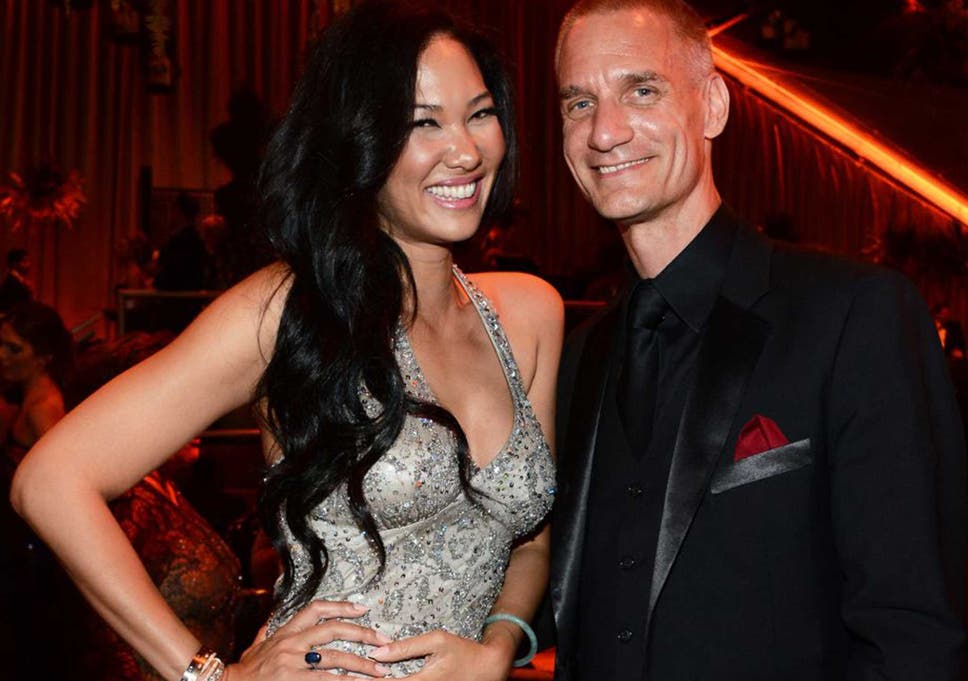
Tim Leissner (right), the senior Goldman
banker on the ground in Malaysia pleaded guilty in New York to
financial crimes related to 1MDB last week
(
Getty
)
Even by Wall Street standards of gouging customers this was one hell of a skim.
In 2012 and 2013, the Malaysian government was raising $6.5bn
(£5bn) from investors to establish a sovereign wealth fund and finance
various domestic infrastructure investment projects. And the cut for
Goldman Sachs – the most prestigious investment bank in the world – for
arranging the fundraising from the global capital markets? Ten per cent, or $600m.
Now we can have a guess as to why the Malaysian authorities were
so insouciant about those extortionate fundraising costs: because they
themselves were, apparently, going to loot the pot in one of the biggest
frauds in history.
Around half of the fund has gone missing. According to
the US Justice Department a fair amount has been pumped into luxury
American real estate and shady art auction bids. Appropriately, some
went into investing in Martin Scorsese’s The Wolf of Wall Street.
At one stage $680m mysteriously appeared in the bank account of
the former Malaysian prime minister, Najib Razak, who chaired the 1MDB
advisory board, and who is now charged in his own country with corruption.
Malaysian Prime Minister Mahathir Mohamad: Former PM Najib Razak 'totally responsible' for 1MDB corruption
Malaysian politicians, officials and financiers had effectively
bought Goldman Sachs’ blue chip reputation to pull in naive investors to
the “1MDB” state investment fund. Ten per cent probably seemed a
reasonable cut in the circumstances.
The question is: what did Goldman know about the theft?
The bank claims today that it was completely oblivious.
But the senior Goldman banker on the ground in Malaysia, Tim Leissner,
certainly knew. He pleaded guilty in New York to financial crimes
related to 1MDB last week, including bribery of officials to ensure
Goldman was the sole fundraiser.
What’s even more problematic for the bank is that Leissner told the court there was a “culture” at Goldman Sachs of bypassing internal compliance. That’s backed up by US prosecutors, who say
Goldman’s business culture in the region was “highly focused on
consummating deals, at times prioritising this goal ahead of the proper
operation of its compliance functions”.
Goldman has been a Teflon bank over the past decade. Scandals have slithered off it and nothing has really stuck. We found out
in 2010 that Goldman Sachs financiers constructed derivatives to help
the Greek government deceive the outside world about the true state of
its finances prior to the country joining the single currency.
It was revealed
in 2013 that, before the financial crisis, the bank had been
deliberately designing mortgage-backed investment products to fail and
then selling them to unwitting clients. There have been some large fines
from regulators for malfeasance over the years but no senior
resignations. The top brass have at every stage deplored the bad
behaviour of underlings, but insisted they personally had no idea what
was going on.
Lloyd Blankfein was one of the few Wall Street
chief executives, along with Jamie Dimon at JP Morgan, to survive right
through the financial crisis, collecting bonuses all the way. In 2007
Blankfein’s total remuneration was $100m. His compensation in 2017: $22m. Clearly austerity in action.
But now Blankfein is implicated in 1MDB scandal. Reports say he personally met the Malaysian prime minister and Jho Low, the Malaysian financier accused of masterminding the theft, in New York in 2009.
Low was notorious in New York for his copious and ostentatious nightclub partying and outrageous spending. At the time, the New York Postquoted one person as saying: “Nobody spends their own money like that. It’s just weird.”
Is it really credible to say that this was all just a local
problem, perpetrated by local rogue operatives? Did it really never
occur to senior Goldman Sachs managers to wonder why the fees on the
fundraising deal were so enormous?
Even if it is unproven that top Goldman executives knew what was
going on, what does it say about the culture of the bank that
individuals like Leissner were employed there? Who is accountable for
that culture?
The incoming Malaysian prime minister, Anwar Ibrahim,
accuses Goldman Sachs the bank, not just corrupt individuals who worked
for it, of being “complicit” in the looting. And he says Goldman Sachs
should return those $600m in fees.
We are about to discover whether the world’s most
politically-connected investment bank – the former employer of dozens of
senior civil servants, from US treasury secretaries to the governors of
the Bank of England and the European Central Bank – can brush off
being close to the heart of the world’s largest financial con.
The answer will tell us something – one way or another – about
how much reform there has been in finance in the decade since the crash.
This text is the only existing English translation from German of the
forgotten fourth chapter and the appendixes of the Georg Friedrich
Knaap’s book “The State Theory of Money” (1906) from which much of the
so-called MMT was derived.
A quote from the Austria chapter: "Almost
at the moment when the new banking system, which had hitherto only
actually practiced course regulation, became a legal institution, it
repeated itself what had happened in 1859 and 1866: the outbreak of war
shook the newly-founded work and completely destroyed it."
Why it was not translated before 112 years ?
"Due to a lack of financial means, the Royal Economic Society voluntary omitted the translation of Chapter IV which contains a historical review of England, France, Germany, Austria, and appendices containing specific case studies. "
The extraordinary cases of the Hajiyev and Ablyazov families shine a light on the massive scale of money-laundering in the UK.
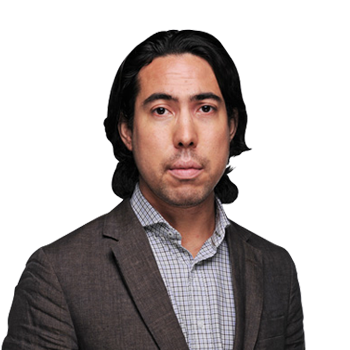
Jahangir Hajiyev
Jahangir Hajiyev worked for Azerbaijan’s largest bank between 1993
and 2015, rising to become its chairman. It was a nationalised company,
and his official salary was never high – in 2008 he received £54,000.
Surprising then, that he managed to send his wife in London at least
£20,000 every single month, at the same time as amassing a UK property
portfolio worth £22 million. Now serving time in an Azerbaijan prison,
Hajiyev is still listed on the UK’s official register, Companies House,
as the controlling interest in a company that in 2012 and 2013 secured
loans of more than £42 million to purchase a private jet.
You might think it would be hard to imagine a better candidate for
the UK’s first ever Unexplained Wealth Order than Hajiyev’s London-based
wife, Zamira, officially named in the courts this week. Mukhtar Ablyazov arrested in France
However, the case is hardly unique. Take former Kazakh Minister for
Energy, Industry, and Trade, Mukhtar Ablyazov. He is accused of
embezzling £7.25 billion from the bank he once chaired, making it the
largest case of financial fraud in history. Money was funnelled from the
BTA Bank in Kazakhstan through an enormous, worldwide network of shell
companies under Ablyazov’s ownership, more than a thousand of which have
been identified to date.
In the High Court of Justice in London, there are now $6 billion
(£4.6 billion) in outstanding judgments against the oligarch – again,
the biggest fraud case ever in the UK. In February 2012, after “failing
to disclose assets, lying in cross-examination and dealing with assets
in breach of the Freezing Order,” Ablyazov fled to France to avoid three
consecutive 22-month prison sentences.
Also evading punishment is Ablyazov’s associate and son-in-law, Ilyas
Khrapunov. He now resides in Switzerland, and claims he is in danger of
extradition to Kazakhstan or Russia if he returns to the UK – a claim
with “no merit whatsoever,” according to the High Court. However, with a
fine of about $500 million waiting for him – imposed by the Court in
late August – there is little to attract him to the UK. Among other
crimes, Khrapunov is thought to have laundered some of the stolen funds
through Donald Trump’s property empire. Ilyas Khrapunov.jpg
Victims of what the presiding judge, Mr Justice Teare, has called
“fraud on an epic scale” include Kazakh home buyers whose properties
were never built, and pensioners who saw their retirement funds
disappear. Among various British organisations which were hit was RBS.
It sustained losses of over £1.3 billion, helping to bring the bank to
its knees before its rescue by the British taxpayer.
Although there are still many, many mysteries around the Ablyazov
affair, what we do know provides a picture of how the UK has become a
safe haven for ill-gotten gains of oligarchs and kleptocrats.
Blind faith and golden visas Madiyar Ablyazov
Mukhtar Ablyazov sent his son, Madiyar, to London when he was ten.
The young boy lived with his aunt and uncle in one of his father’s
sumptuous London properties – Carlton House on The Bishops Avenue in
Highgate – a street often called Billionaire’s Row. Here young Madiyar
lived a life of luxury, apparently often availing himself of the indoor
leisure complex, complete with swimming pool and a 10-person Turkish
bath.
By 2008 however, the vast hole in BTA Bank’s finances had been
discovered, and the Kazakh government’s investigations were all pointing
to Ablyazov senior. So the family looked for ways to keep Madiyar in
the UK after his student visa expired, and decided the best option was
the Tier 1 Investor scheme. At that time, the visa granted individuals
residency as a path towards citizenship if they made an investment of £1
million in the country. The sum, along with any interest accrued, would
be returned to the applicant at the end of the investment period.
Between 2008 and 2015, the Home Office issued Tier 1 Investor visas
without any due diligence checks – they assumed these would be carried
out by the bank when the applicant opened an account. However, the banks
took the fact that the visa had been approved as demonstrating that due
diligence had already been carried out by the Home Office. Those seven
years came to be known as the “blind faith” period and resulted in three
thousand “golden visas” being issued.
The idea for the Golden Visa was born on the tiny Caribbean islands of
St Kitts and Nevis in 1984. In return for a $250,000 investment in the
Sugar Industry Diversity Fund, you could apply for citizenship.
However, in Europe the Golden Visa really took flight following the
financial crash of 2008, particularly in countries most affected by the
collapse who urgently needed to generate revenue and were quite prepared
to sell passports to achieve that aim.
Cyprus requires a 2m euro investment in property or 2.5m euros in
government bonds to be eligible for citizenship. Apart from the money,
the only requirement is to visit the island once every seven years.
The cost of Irish residency is half that of Cyprus, 1m euros. In
Portugal the Residence Permit for Activity Scheme requires a
500,000-euro investment in Portuguese property, 1m in the wider economy
or setting up a business that employs 10 or more people.
Since its introduction in 2012, more than 6,400 people who have
invested 3.9 billion in the Portuguese economy have been granted a
residency permit and the freedom to travel throughout the European
Union. Eighty per cent were from China. Only 11 of those 6,400
applicants opened a business.
Nearly all the money went into property in Lisbon and Oporto. As Luis
Lima, the general secretary of Portugal’s largest estate agency
association, APEMIP, told the BBC: “Without the Golden Visas, the
construction industry in Portugal would have collapsed.’
Documents released in March showed that Cyprus has earned at least
4.8 bn euros from its visa scheme which has granted citizenship to 1,685
foreign investors, mainly from Russia, China, Iran and Saudi Arabia.
One of those was the Russian aluminium billionaire, Oleg Deripaska,
who has been accused of acting as the link man between Vladimir Putin
and Donald Trump’s campaign manager, Paul Manafort, during the US
Presidential elections.
Malta’s Golden Visa programme which has raised 850m euros in four years,
was being investigated by the journalist, Daphne Caruana Galizia when
she was assassinated by a car bomb in the north of the island.
Keith Schembri, chief of staff to the prime minister, Joseph Muscat,
was forced to issue a denial he had been involved in the corrupt issuing
of Maltese passports that enable its bearer to travel visa-free to 44
more countries than the holder of a Russian passport.
Back in the UK, after £1.1 million had been deposited into an account
in Madiyar Ablayzov’s name at EFG Private Bank in London, the Ablyazov
family registered a “memorandum of gift” with the UK Border Agency,
stating that his father was the source of the funds. In May 2009, about
the same time as Mukhtar absconded from his homeland, Madiyar was
awarded a Tier 1 Investor visa with, apparently, no awkward questions
asked.
By September 2013, the briefest of Google searches would have
revealed Mukhtar Ablyazov as the chief suspect in a massive embezzlement
case, and a wanted man in Kazakhstan. However, this didn’t stop Madiyar
being granted indefinite leave to remain in the UK that month, even
with the government holding the memorandum identifying Mukhtar as the
source of the £1 million.
“It beggars’ belief that when the Home Office granted Ablyazov his Tier 1
visa in 2009 and then indefinite leave to remain in 2013, they did not
know about his father and the allegations made against him by the bank,”
says Naomi Hirst, Senior Campaigner at Global Witness.”
Her Majesty’s Government Lord Wallace of Saltaire
“We have preferred as a country not to look too closely at where
money is coming from” says Lord Wallace of Saltaire, previously a UK
government whip as well as House of Lords spokesman for the Foreign
Office.
The government did bring in enhanced due diligence checks to the Tier
1 Investor scheme in 2015, and the minimum investment has been doubled –
although of course £2 million is still scarcely enough to make serious
money launderers bat an eyelid.
In the financial year 2015-2016, the number of Tier 1 Investor visas
declined sharply, especially for the two largest national groups. The
total for Chinese citizens fell from 488 to 35, while the number of
Russians dropped from 196 to 34. However, increased due diligence was
only partly responsible for the drop, with other factors including
Brexit uncertainty and the success of competing
citizenship-through-investment schemes operated by other EU members like
Portugal, Cyprus and Malta.
Still today, no retrospective due diligence has been carried out on
any golden visas. “We’ve long had concerns that applicants who came
through in the ‘blind faith’ period were not subject to proper security
checks,” says Hirst. “Three thousand people came through, some of them
could be citizens by now, [and] we are completely in the dark about the
extent to which the UK government actually knew who these people were
and where their money was coming from.”
The UK Home Office rejects the phrases “golden visas” and “blind
faith period”, saying it believes banks have always undertaken due
diligence, meaning retrospective action is superfluous. It also points
out that anyone who was granted a “golden visa” would have been required
to apply for an extension within three years in order to stay, and
these would have been subject to increased due diligence during this
procedure. Then there are the changes to the Tier 1 visa, which the Home
Office says include new powers to refuse applications and address
concerns about the source of funds for the £2 million investment
requirement.
Glittering property portfolios Mukhtar Ablyazov
At one stage, Mukhtar Ablayzov owned three other properties in and
around London, apart from the mansion on Billionaire’s Row. There were
two apartments in St. John’s Wood, and a 12,000 sq. foot country house
in Surrey, Oaklands Park. Bought using a shell company in Seychelles
2006 for £18.15 million, the hundred-acre estate includes four cottages,
two log cabins, stables and a full-size polo pitch.
Ablyazov is far from alone in acquiring valuable UK real estate. In
2017, Transparency International calculated the number of properties
purchased by individuals with “suspicious wealth” as 40,000, worth a
total of £4.2billion, in London alone. And in 2016, the UK Parliament’s
Home Affairs Select Committee estimated that £100 billion is being
laundered through the UK property market every year.
All this activity is helping to create collateral victims: Londoners.
House prices in Kensington, Chelsea and Belgravia have been pushed ever
higher, and that filters right down through the market. According to
UBS, property in London is more unaffordable for local buyers than any
city in the world apart from Hong Kong, leaving most unable to get their
feet on the lowest rung of London’s housing ladder.
Meanwhile, huge swathes of the exclusive parts of west London are
virtual ghost towns as rich foreign buyers generally look on UK property
simply as somewhere to park their cash, ill-gotten or otherwise. A
spokesman for the Empty Homes charity calls the “lights out London”
phenomenon “a scandal”, and even many estate agents are unhappy. “You
sell some of these beautiful properties to these people and then they
don’t do anything with them – it’s rather disappointing,” says Patrick
Bullick, managing director of premium estate agents Stanley Chelsea and
London chairman of the National Association of Estate Agents.
In From Russia with Cash, a documentary from 2015, an upmarket London
estate agent reveals: “Eighty percent of my transactions, actually more
I’d say now, are to international overseas based buyers, and I’d say
fifty to sixty percent of those in various stages of anonymity, whether
it be through a company or an offshore trust.”
A lack of political will?
Meanwhile, Mukhtar Ablyazov is a free man. He spent three years in a
French jail, but in December 2016 France’s highest administrative court
cancelled an order to extradite him to Russia, citing grounds that the
request was made for political reasons.
Many are dismayed at what they see as a politically motivated climb-down
by the French authorities and point to a low point in Franco-Russian
relations at the time – a situation which shows no sign of lifting. The
Prime Minister, Manuel Valls, had signed the extradition order in 2014,
and in 2015 regional advocate-general, Solange Legras had said
hopefully, “When you have so much money, you can buy everything, but you
cannot buy the French justice system.”
Madiyar Ablyazov now keeps a low profile, working at a start-up and a
financial services firm, both based in Switzerland. Meanwhile, his
father, Mukhtar, still maintains that he is being politically
persecuted, although a spokesperson for BTA Bank responds cynically:
“All the funds poured into [the UK] by so-called “political victims”
successfully fuel the UK economy, which I think is very convenient.
London has become a centre of attraction for fraudsters.”
Unexplained Wealth Orders
The UK does now have a tool to tackle money laundering by the
super-rich: the Unexplained Wealth Order. It gives authorities the right
to demand that owners of assets prove the legality of the money used to
purchase them. Should they refuse, or if their response is
unsatisfactory, those assets can be frozen, seized and forfeited.
On October 10th, ten months after Unexplained Wealth Orders were
introduced, the name of the suspect in the first case was released.
Zamira Hajiyeva had been given a Home Office Tier 1 Investor visa in
2010 – during the “blind faith” period – after her husband, gave her a
“gift” of £1 million to invest in UK government bonds. Jahangir Hajiyev
is currently serving a prison sentence for embezzling more than £100
million.
The first Order against Mrs Hajiyeva covers her £11.5 million home in
Knightsbridge, bought in 2009 by a company registered in the British
Virgin Islands. The property is just a few minutes’ walk from Harrods,
the shop where she spent an average of £1.6 million a year between 2006
and 2016.
The second Order covers Mill Ride golf club in Ascot, Berkshire,
which investigators believe is owned by Jahangir Hajiyev and his wife.
The club was bought in 2013 by a finance company operating from Guernsey
– a company set up the same year and dissolved in 2017.
This problem with anonymity is probably the biggest fly in the
ointment of the new law. It’s revealing to look at corruption cases
involving property which are being investigated by the Metropolitan
Police Proceeds of Corruption Unit. Three quarters of these involve
anonymous companies and a true beneficial owner who is effectively
concealed.
The Future
The Portuguese Golden Visa system has been condemned by MEPs such as Ava
Gomes, vice-chairman of the EU’s financial crime committee, as
‘absolutely immoral and perverse. . .I don’t mind granting citizenship
but not selling it.’
It is also in trouble. In July there was a record low of 47 applications
with some commentators blaming the eight months it sometimes took to
process a visa – and more attractive offers from Ireland and Greece.
The steepest decline has come in the country that seemed tailor-made
for the oligarchs. Latvia is an hour and a half from Moscow, Russian is
widely spoken and if you bought a rural property you needed only 71,150
euros to acquire a five-year residency permit. After an IMF bailout in
2009, the country was desperate for cash and not picky where it came
from.
Between 2010 and 2017, more than 98 per cent of Golden Visa issued in
Latvia were to applicants from the former Soviet Union or China. In the
peak year, 2014, more than 6,000 applications were handled.
Then came Russia’s annexation of Crimea and the Latvian government
began to feel uneasy about whom it was letting in from across the
border. By last year, applications had been reduced to 10 a month.
Ints Ulmanis, the head of the Latvian Security Police, told a
parliamentary committee in December: “Sixty to 70 per cent of all
refusals are related to the risk of spying. Look at the source of the
applications and how the secret services in those countries work. For us
to let people into Latvia and then try to catch them would be absurd.”
Most observers of the UK anti-money laundering scene recount a
mixture of institutional failure, a lack of political will, and
government attempts to dilute EU anti-tax haven legislation. Yet there
is cause for optimism, not least in a long-awaited draft bill finally
published this July. If passed, the bill will establish a register
revealing those benefitting from the overseas companies that own UK
property.
Hames believes, “The bill should eventually leave corrupt individuals
one less place to stash their dirty money. Once this consultation
concludes we expect the Government to make this legislation an urgent
priority.”
That still leaves what many fear is the ticking time-bomb of the “blind
faith” period. Hames again: “The three thousand individuals who
benefitted from the Tier 1 Investor system between 2008 and 2015
represent ongoing money laundering risks… Retrospective source of wealth
checks should be carried out on these individuals to ensure the UK does
not continue to harbour those benefitting from corrupt wealth.”
Lord Wallace agrees that retrospective action would be a step
forward, but believes it would be “inconvenient” for the powers that be.
“One of the things that you rapidly discover when you get into this
world is that there a lot of people in London who make very good incomes
out of servicing all this offshore business: the estate agents, the
accountants and others who service the super-rich who come in this way.”
There is of course a cautious welcome for Unexplained Wealth Orders,
with all eyes now on the case of Zamira and Jahangir Hajiyeva. Ablyazov,
his family and his associates are less likely to face justice any time
soon. But at least they have helped to shine a spotlight onto high-level
corruption and money laundering, across the world and in the UK.
World’s Biggest Banks Helped Clients Steal $63 Billion in Taxes in Europe
Europe’s top banks allegedly helped wealthy clients
across the continent steal 55 billion euros ($63 billion) from multiple
governments by making tax reclaims to which they were not entitled, an
investigation has revealed. The theft centred around a complex scheme of
trading stocks that also involved hedge funds and large international
commercial law firms. Also read: $50 Million Bitcoin Mining Farm Opens in Armenia
Undercover Journalists Uncover ‘the Biggest Tax Swindle in the History of Europe.’
The undercover probe by
37 journalists from 12 countries shows that about a dozen European
countries are affected by the tax scandal, but Belgium, Denmark and
Germany were hardest hit. France, Italy, the Netherlands, Norway, Spain,
Sweden and Switzerland have also seen some damage.
Dubbed the Cumex Files, the
investigation reviewed 180,000 secret documents from banks, stock
traders and law firms over a period of more than a year. Interviews with
anonymous sources and whistleblowers provided extra detail. “They [the
secret documents] demonstrated the extent to which banks and investors
could reimburse taxes on stock deals that they did not have,” the Files
said.
“These windy financial constructs are called cum-cum (cum means
‘dividend’). A domestic bank helps a foreign investor to get a tax
refund that they are not entitled to. The profit is shared between the
participants.”
A variant of the scheme, called ‘cum-ex’ (without dividend), would
see traders refunded twice or, in severe cases, several times, by the
state for taxes buyers or sellers of stock would have paid only once.
Share ownership is often difficult to point out because of the complex
structure of the schemes, which constitute a form of tax evasion or
avoidance.
Both cum-cum and cum-ex went on for decades unnoticed due to different regulations within European Union member countries.
Mixed forms have emerged, the report says, “and new, even more
aggressive mutations for which there are no names yet.” The
investigative journalists claim that they have uncovered “the biggest
tax swindle in the history of Europe.”
“It was a trade that was initially discovered by chance,” a separate
video of the Cumex Files detailed. “Yet a group of masterminds turned it
into an industrialized cottage industry, from Dubai to London, New York
to Dublin taking billions of euros out of the pockets of European tax
payers,” it said.
Banks in Up to Their Necks
The investigations revealed how some of the world’s biggest banks
have been instrumental in aiding the tax fraud. UBS, BNP Paribas,
Barclays, JPMorgan, Meryll Lynch, Banco Santander, Morgan Stanley,
Deutsche Bank and Swedish bank SEB have all been implicated.
They allegedly helped tax evaders drill
a hole of around $2 billion in Danish state coffers. A tip-off from
Danish authorities helped Sweden prevent more than 10 fraud attempts
totaling 380 million kroner ($46 million), according to Swedish news agency Di.
But that was not before local bank SEB allegedly received 70 million
Swedish kroner ($7.8 million) for helping to conceal one billion Swedish
kroner ($111 million) from the German treasury.
In Germany, where authorities halted cum-ex trading in 2012, the
potential tax losses from cum-cum deals between 2001 and 2016 is
anything upwards of 49.2 billion euros ($56.6 billion), according to a
2017 report.
Perpetrators told the investigating team that “it is legal to be
reimbursed for taxes that were never paid.” However, governments “assume
a tax abuse of design, if business is purely tax-motivated,” the Cumex
Files explained.
“The deals are solely for the purpose of collecting taxpayers’ money.
Otherwise, there is no value behind the trade,” said the investigators,
adding that the schemes started to pick up around 2007 during the
global financial crisis, “a time when the state will save the banks from
collapse, again with taxpayers’ money.”
European lawmakers have called for an official investigation into the
cases. “Tax theft is a crime against society. Europe cannot and must
not tolerate this!” MPs in the European parliament said in an online statement.
What do you think about the Cumex Files findings? Let us know in the comments section below. Images courtesy of Shutterstock.
All
assassinated US presidents shared something as off-limits as it gets,
fighting the debt plague of Rothschild central banking; Lincoln,
Garfield, McKinley, Kennedy.
And now, Trump has gone on record with:
— “The Federal Reserve is an unelected cabal of central bankers that is running our economy into the ground, and the only way we are going to fix our long-term economic and financial problems is if we abolish it.”
Regarding
the fed continuing to raise interest rates despite recent market
turbulence, Trump just accused the fed of, “Going loco”…and, “They are
so tight. I think the Fed has gone crazy.”
Crazy, loco…abolish the fed…whoa! One thing history guarantees: Mess with the Rothschild privilege, and you are dead.
Will
Trump be our fifth president to learn what history has guaranteed?
History repeats itself because of the cabal plaguing humanity for so
many centuries. Ultimately, our future depends on The People doing the heavy lifting….
Andrew
Jackson would have been our first president to be assassinated for
attacking that Rothschild privilege; fortunately both of the assassin’s
pistols misfired. Jackson beat the assassin with his cane until the
crowd took over….
Jackson was more colorful back in 1835, when freedom of speech was still healthy:
— “You
are a den of vipers. I intend to rout you out, and by the Eternal God I
will rout you out. If the people only understood the rank injustice of
our money and banking system, there would be revolution before morning.”
The
U.S. has had three Rothschild-controlled central banks. The First Bank
of the United States (1791-1811); The Second Bank of the United States
(1816-1836); “The Federal Reserve” (until death do us part)?
Jackson
vetoed renewal of the charter for the Second Bank of the United States
several years early, July 10, 1832. Not long after his “…den of vipers”
declaration, Jackson told his vice president, “The bank, Mr. Van Buren,
is trying to kill me.”
Whenever asked about what he considered his greatest accomplishment, Jackson always replied: “I killed the bank.”
Instead
of saddling citizens with the 24% to 36% interest demanded by bankers
to finance the Civil War for the North—Lincoln came up with
“Greenbacks”. $449,338,902 of these full legal tender Treasury Notes
were printed.
Lincoln explained:
—
“The money power preys upon the nation in time of peace and conspires
against it in times of adversity. It is more despotic than monarchy,
more insolent than autocracy, more selfish than bureaucracy. I see in
the near future a crisis approaching that unnerves me, and causes me to
tremble for the safety of our country. Corporations have been enthroned,
an era of corruption will follow, and the money power of the country
will endeavor to prolong its reign by working upon the prejudices of the
people, until the wealth is aggregated in a few hands, and the republic
is destroyed.”
Here’s the editorial response from the London Times, regarding Greenbacks:
—
“If that mischievous financial policy, which had its origin in the
North American Republic, should become indurated down to a fixture, then
that Government will furnish its own money without cost. It will pay
off debts and be without a debt. It will have all the money necessary to
carry on its commerce. It will become prosperous beyond precedent in
the history of the civilized governments of the world. The brains and
the wealth of all countries will go to North America. That government
must be destroyed, or it will destroy every monarchy on the globe.”
So here’s what the cabal with their central banks insists must be destroyed:
— “A government furnishing its own money without cost” (usury)
— “A government paying off debts and being without a debt”
—
“A government with all the money to carry on its commerce, prosperous
beyond precedent in the history of civilized governments, attracting
brains and wealth of all countries”
Could there be a clearer revealing of The Peoples’ most profound enemy?
By far, the most prosperous times the US has ever seen were between plagues of central banks.
Lincoln was assassinated in 1865.
President
Garfield warned of the dangers to America should these European central
bankers ever gain power: “Whoever controls the money of a nation,
controls that nation and is absolute master of all industry and
commerce. When you realize that the entire system is very easily
controlled, one way or another, by a few powerful men at the top, you
will not have to be told how periods of inflation and depression
originate.”
Garfield was assassinated in 1881.
President
McKinley began his attack against the central cankers with Secretary of
State John Sherman. They used the Sherman Antitrust Act against the
Rothschild supported and funded JP Morgan financial empire known as the
Northern Trust, which by the late 1800s owned nearly all of America’s
railroads.
McKinley was assassinated in 1901.
President Kennedy was the last president to create a U.S. money system in defiance of the Rothschild Privilege.
On
June 4, 1963, Kennedy signed Executive Order 11110, and the Treasury
issued $4.3 billion in U.S. Notes (“Silver Certificates”) into
circulation.
Kennedy was assassinated in 1963.
President Woodrow Wilson surely dipped a toe into the Assassination Zone with his:
—
“Since I entered politics, I have chiefly had men’s views confided to
me privately. Some of the biggest men in the United States—in the fields
of commerce and manufacturing—are afraid of somebody. They know that
there is a power somewhere so organized, so subtle, so watchful, so
interlocked, so complete, so pervasive, that they had better not speak
above their breath when they speak in condemnation of it.”
Along with:
—
“A great industrial nation is controlled by it’s system of credit. Our
system of credit is concentrated in the hands of a few men. We have
come to be one of the worst ruled, one of the most completely controlled
and dominated governments in the world—no longer a government of free
opinion, no longer a government by conviction and vote of the majority,
but a government by the opinion and duress of small groups of dominant
men.”
Wilson survived by manipulating the US into
WWI, and dooming us in 1913 with the third, likely terminal Rothschild
central bank, the “Federal Reserve”—and the IRS, to lock in funds for
payment of debt accrued from borrowing our currency from the fed…money
conjured from thin air. That Rothschild privilege.
Money from nothing, and your debt for real.
Trump
is doing amazing things regarding exposure of deep-state (cabal) evil,
apparently navigating the razor edge between helping The People, and
serving the cabal.
Can he actually challenge—even “abolish” the fed, and survive?


 Jahangir Hajiyev