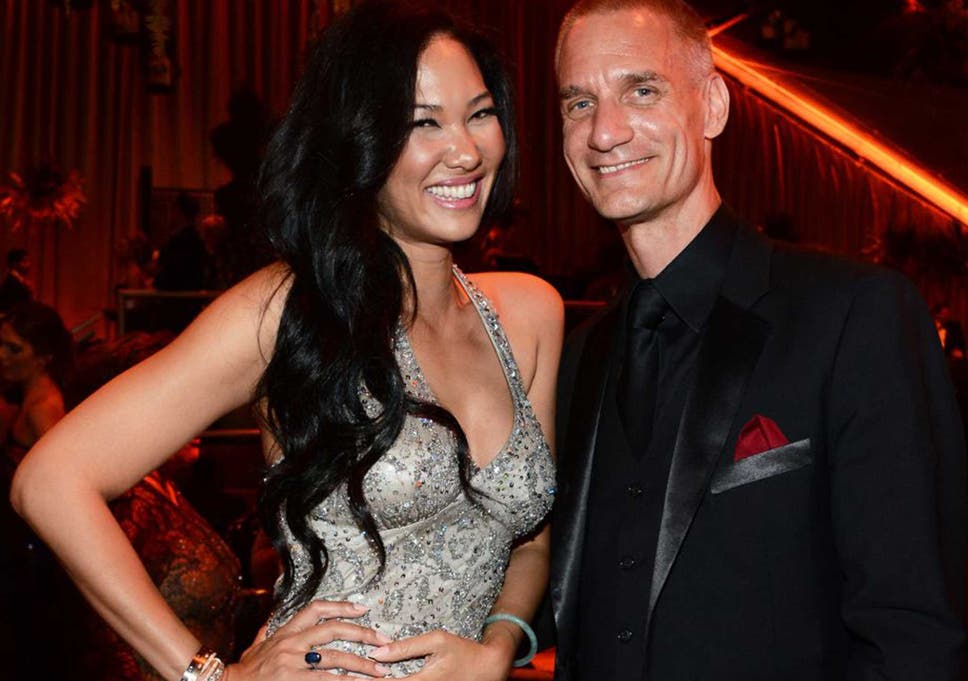
Tim Leissner (right), the senior Goldman
banker on the ground in Malaysia pleaded guilty in New York to
financial crimes related to 1MDB last week
(
Getty
)
Even by Wall Street standards of gouging customers this was one hell of a skim.
In 2012 and 2013, the Malaysian government was raising $6.5bn
(£5bn) from investors to establish a sovereign wealth fund and finance
various domestic infrastructure investment projects. And the cut for
Goldman Sachs – the most prestigious investment bank in the world – for
arranging the fundraising from the global capital markets? Ten per cent, or $600m.
Now we can have a guess as to why the Malaysian authorities were
so insouciant about those extortionate fundraising costs: because they
themselves were, apparently, going to loot the pot in one of the biggest
frauds in history.
Around half of the fund has gone missing. According to
the US Justice Department a fair amount has been pumped into luxury
American real estate and shady art auction bids. Appropriately, some
went into investing in Martin Scorsese’s The Wolf of Wall Street.
At one stage $680m mysteriously appeared in the bank account of
the former Malaysian prime minister, Najib Razak, who chaired the 1MDB
advisory board, and who is now charged in his own country with corruption.
Malaysian Prime Minister Mahathir Mohamad: Former PM Najib Razak 'totally responsible' for 1MDB corruption
Malaysian politicians, officials and financiers had effectively
bought Goldman Sachs’ blue chip reputation to pull in naive investors to
the “1MDB” state investment fund. Ten per cent probably seemed a
reasonable cut in the circumstances.
The question is: what did Goldman know about the theft?
The bank claims today that it was completely oblivious.
But the senior Goldman banker on the ground in Malaysia, Tim Leissner,
certainly knew. He pleaded guilty in New York to financial crimes
related to 1MDB last week, including bribery of officials to ensure
Goldman was the sole fundraiser.
What’s even more problematic for the bank is that Leissner told the court there was a “culture” at Goldman Sachs of bypassing internal compliance. That’s backed up by US prosecutors, who say
Goldman’s business culture in the region was “highly focused on
consummating deals, at times prioritising this goal ahead of the proper
operation of its compliance functions”.
Goldman has been a Teflon bank over the past decade. Scandals have slithered off it and nothing has really stuck. We found out
in 2010 that Goldman Sachs financiers constructed derivatives to help
the Greek government deceive the outside world about the true state of
its finances prior to the country joining the single currency.
It was revealed
in 2013 that, before the financial crisis, the bank had been
deliberately designing mortgage-backed investment products to fail and
then selling them to unwitting clients. There have been some large fines
from regulators for malfeasance over the years but no senior
resignations. The top brass have at every stage deplored the bad
behaviour of underlings, but insisted they personally had no idea what
was going on.
Lloyd Blankfein was one of the few Wall Street
chief executives, along with Jamie Dimon at JP Morgan, to survive right
through the financial crisis, collecting bonuses all the way. In 2007
Blankfein’s total remuneration was $100m. His compensation in 2017: $22m. Clearly austerity in action.
But now Blankfein is implicated in 1MDB scandal. Reports say he personally met the Malaysian prime minister and Jho Low, the Malaysian financier accused of masterminding the theft, in New York in 2009.
Low was notorious in New York for his copious and ostentatious nightclub partying and outrageous spending. At the time, the New York Postquoted one person as saying: “Nobody spends their own money like that. It’s just weird.”
Is it really credible to say that this was all just a local
problem, perpetrated by local rogue operatives? Did it really never
occur to senior Goldman Sachs managers to wonder why the fees on the
fundraising deal were so enormous?
Even if it is unproven that top Goldman executives knew what was
going on, what does it say about the culture of the bank that
individuals like Leissner were employed there? Who is accountable for
that culture?
The incoming Malaysian prime minister, Anwar Ibrahim,
accuses Goldman Sachs the bank, not just corrupt individuals who worked
for it, of being “complicit” in the looting. And he says Goldman Sachs
should return those $600m in fees.
We are about to discover whether the world’s most
politically-connected investment bank – the former employer of dozens of
senior civil servants, from US treasury secretaries to the governors of
the Bank of England and the European Central Bank – can brush off
being close to the heart of the world’s largest financial con.
The answer will tell us something – one way or another – about
how much reform there has been in finance in the decade since the crash.



Nessun commento:
Posta un commento