UNMASKED ECONOMIST

Audit ECB now !

sabato 15 maggio 2021

Morgan Stanley Has Paid Fines for Two Decades for Abusing Customers


Morgan Stanley Has Paid Fines for Two Decades for Abusing Customers with In-House Products, Now It Plans to Stuff Bitcoin Futures into Its Mutual Funds and Retiree Annuities

By Pam Martens and Russ Martens: May 14, 2021 ~

Source: https://wallstreetonparade.com/2021/05/morgan-stanley-has-paid-fines-for-two-decades-for-abusing-customers-with-in-house-products-now-it-plans-to-stuff-bitcoin-futures-into-its-mutual-funds-and-retiree-annuities/

James Gorman, Chairman and CEO, Morgan Stanley

James Gorman, Chairman and CEO, Morgan Stanley

Morgan Stanley has more than 15,000 financial advisors calling clients each day with investment recommendations that are frequently engineered inside the firm. (These are known as in-house or proprietary products.) For the past two decades, we have been reading about regulatory fines against Morgan Stanley for abusing its customers in these home-grown offerings.

In November 2000, Morgan Stanley’s Dean Witter unit was charged by the National Association of Securities Dealers’ regulatory arm with selling over $2 billion of Term Trusts to more than 100,000 customers using an internal marketing campaign that characterized the investments as safe and low-risk. The NASD Regulation complaint said that Dean Witter targeted “certificate of deposit holders and other conservative investors, many of whom were elderly with moderate, fixed incomes…” The risky Term Trusts at one point had lost over 30 percent of their value and had to reduce their dividends by nearly a third.

The NASD Regulation complaint noted that “Dean Witter’s marketing effort for the Term Trusts also included high-pressure sales efforts at the regional and branch levels, include the use of sales contests and sales quotas.”

In 2003, Morgan Stanley was fined $50 million by the Securities and Exchange Commission for improper mutual fund sales practices. The SEC said the firm had set up a “Partners Program” in which a “select group of mutual fund complexes paid Morgan Stanley substantial fees for preferred marketing of their funds.” The firm further incentivized its brokers to recommend the purchase of the “preferred” funds by paying them increased compensation. The SEC said Morgan Stanley also failed to disclose the higher fees imposed on Class B shares of its proprietary funds versus sales of Class A shares.

In November 2019, the SEC again charged and fined Morgan Stanley for selling its customers more expensive share classes of mutual funds when less expensive share classes were available. The SEC noted that Morgan Stanley’s recommendations of more expensive share classes negatively impacted the overall return on the customers’ investments. According to the SEC, the activity had occurred for more than seven years, from at least July 2009 through December 2016.

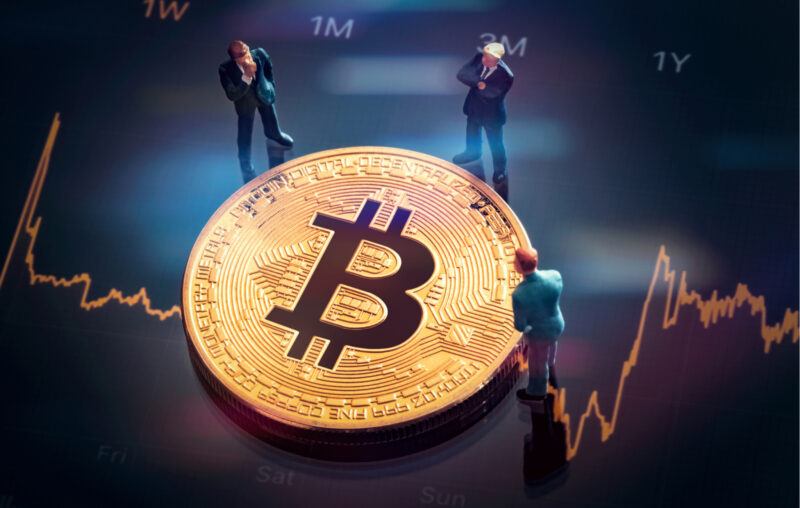
One would think that Morgan Stanley might now be cautious and try to avoid further wrath from regulators over its mutual fund practices. Just the opposite appears to be the case. As we pointed out earlier this week, Bitcoin has been thoroughly discredited by some of the smartest people in the investment community. The only thing more risky than buying Bitcoin with cash is buying Bitcoin with leveraged futures contracts. And that’s just what Morgan Stanley told the SEC in recent filings that it plans to do.

Yes, Morgan Stanley plans to stuff Bitcoin futures contracts into a host of its own mutual funds. If that’s not troubling enough, Cayman Island subsidiaries also come into play with these Bitcoin futures contracts . Per the April 30, 2021 prospectus from Morgan Stanley:

“Special Risks Related to the Cayman Islands Subsidiary. Each of the Advantage Portfolio, Asia Opportunity Portfolio, Counterpoint Global Portfolio, Developing Opportunity Portfolio, Global Insight Portfolio, Global Opportunity Portfolio, Global Permanence Portfolio, Growth Portfolio, Inception Portfolio, International Advantage Portfolio, International Opportunity Portfolio and Permanence Portfolio may, consistent with its principal investment strategies, invest up to 25% of its total assets in a wholly-owned subsidiary of the Fund organized as a company under the laws of the Cayman Islands. Each Subsidiary may invest in GBTC [Grayscale Bitcoin Trust], cash-settled bitcoin futures and other investments…

“While each Subsidiary may be considered similar to investment companies, it is not registered under the 1940 Act and, unless otherwise noted in the Prospectus and this SAI, is not subject to all of the investor protections of the 1940 Act and other U.S. regulations. Changes in the laws of the United States and/or the Cayman Islands could result in the inability of a Fund and/or the Subsidiary to operate as described in the applicable Prospectus and this SAI and could eliminate or severely limit the Fund’s ability to invest in the Subsidiary which may adversely affect the Fund and its shareholders.”

Morgan Stanley includes numerous risks concerning its Bitcoin strategy, including the following:

“Exchanges on which bitcoin is traded (which are the source of the price(s) used to determine the cash settlement amount for a Fund’s bitcoin futures) have experienced, and may in the future experience, technical and operational issues, making bitcoin prices unavailable at times. In addition, the cash market in bitcoin has been the target of fraud and manipulation, which could affect the pricing of bitcoin futures contracts.

“In addition, bitcoin and bitcoin futures have generally exhibited significant price volatility relative to traditional asset classes. Bitcoin futures may also experience significant price volatility as a result of the market fraud and manipulation noted above.”

Assuming that there are investors in America that want exposure to potential “market fraud and manipulation,” we’re pretty sure that group of investors does not include retirees seeking safety through annuities.

And yet, we found this stunning prospectus from Morgan Stanley that was filed with the SEC on March 31 and updated on April 30 of this year. It pertains to the mutual funds offered by the Morgan Stanley Variable Insurance Fund, which it explains as follows:

“The Portfolios are not available for direct investment. Shares of the Portfolio are offered exclusively to certain life insurance companies in connection with particular variable life insurance and/or variable annuity contracts they issue. The insurance companies invest in shares of the Portfolios in accordance with instructions received from owners of variable life insurance or annuity contracts.

“Variable annuities are long-term investments designed for retirement purposes.”

Got that? Retirement purposes.

The prospectus includes the following among numerous risks involved with bitcoin:

“Bitcoin futures expose a Fund to all of the risks related to bitcoin discussed below and also expose the Fund to risks specific to bitcoin futures. Regulatory changes or actions may alter the nature of an investment in bitcoin futures or restrict the use of bitcoin or the operations of the bitcoin network or exchanges on which bitcoin trades in a manner that adversely affects the price of bitcoin futures, which could adversely impact a Fund and necessitate the payment of large daily variation margin payments to settle the Fund’s losses.”

Underscoring just how volatile Bitcoin is, consider this headline from CNBC on March 13 of last year: “Bitcoin loses half of its value in two-day plunge.” Do folks nearing retirement really want something in their investment portfolio that has already demonstrated the ability to lose half its value in the span of 48 hours?

On Tuesday, the SEC sent a tepid warning to Morgan Stanley and other Wall Street firms planning to stuff bitcoin futures into their mutual funds. The statement came from the SEC’s Division of Investment Management (IM) and included this:

“IM staff understands that some mutual funds are investing or seek to invest in Bitcoin futures and that these funds believe they can do so consistent with the substantive requirements of the Investment Company Act and its rules and other federal securities laws. IM staff, in coordination with staff from the Division of Examinations, will closely monitor and assess such mutual funds’ and investment advisers’ ongoing compliance with the Investment Company Act and the rules thereunder and the other federal securities laws. Investor protection and assessing the ongoing compliance of these funds is a top priority for the staff.

“In addition, IM staff, in coordination with staff from the Division of Economic and Risk Analysis and Division of Examinations, will closely monitor the impact of mutual funds’ investments in Bitcoin futures on investor protection, capital formation, and the fairness and efficiency of markets.”

For how the SEC is rapidly evolving into the LifeLock commercial, where it simply “monitors” a situation rather preventing financial crimes against the public, see our previous reporting here.

It should also be noted that Morgan Stanley is the least appropriate firm to be engaging in a high stakes game with its reputation. During the last financial crisis, the firm was in such dire straits that the Federal Reserve had to loan it a cumulative total of $2.04 trillion in emergency bailout funds. (Yes, trillion.) See page 131 of the GAO’s Audit of the Fed’s secret loans here.

A Bitcoin futures contract is a derivative and Morgan Stanley, in particular, does not have a good history with derivatives. Part of Morgan Stanley’s stresses during the last financial crisis on Wall Street came from one of its traders, Howie Hubler, losing $9 billion of the firm’s capital betting on subprime debt. Michael Lewis, in his book The Big Short, describes Hubler as a star bond trader at Morgan Stanley, making $25 million in one year prior to the collapse of the subprime mortgage market. Hubler was one of those who made early bets that the lower-rated subprime bonds would fail. Hubler used credit default swaps (derivatives) to make his bets. But because he had to pay out premiums on these bets until the collapse came, he placed $16 billion in other bets on higher-rated portions of the subprime market, according to Lewis. When those bets failed, Morgan Stanley lost at least $9 billion.

It’s time for the Biden administration to appoint real watchdogs to police, rather than “monitor,” Wall Street.

- maggio 15, 2021 Nessun commento:
Invia tramite emailPostalo sul blogCondividi su XCondividi su FacebookCondividi su Pinterest

martedì 20 aprile 2021

A Trader’s Federal Lawsuit Against JPMorgan Chase Offers a Window into the Crime Culture

A Trader’s Federal Lawsuit Against JPMorgan Chase Offers a Window into the Crime Culture at the Five Felony-Count Bank

By Pam Martens and Russ Martens: April 20, 2021 ~

Source: https://wallstreetonparade.com/2021/04/a-traders-federal-lawsuit-against-jpmorgan-chase-offers-a-window-into-the-crime-culture-at-the-five-felony-count-bank/

Jamie Dimon, Chairman and CEO of JPMorgan Chase

Jamie Dimon, Chairman and CEO, JPMorgan Chase

Donald Turnbull, a former Global Head of Precious Metals Trading at JPMorgan Chase, has filed a doozy of a federal lawsuit against the bank. Turnbull worked on the same JPMorgan Chase precious metals desk that was deemed to be a racketeering enterprise by the U.S. Department of Justice when it handed down indictments in 2019. This was the first time that veterans on Wall Street could recall employees of a major Wall Street bank being charged under the Racketeer Influenced and Corrupt Organizations Act or RICO statute, which is typically reserved for organized crime.

JPMorgan Chase, the largest bank in the United States, has the further unprecedented distinction for a U.S. bank of being charged with five felony counts by the Department of Justice in a six-year span of time, running from 2014 to 2020. The bank admitted to all of the charges while its Board kept Chairman and CEO, Jamie Dimon, at the helm throughout the unprecedented crime wave, giving the impression that crime is an accepted business model at the bank.

Turnbull’s lawsuit, filed earlier this month in the federal district court for the Southern District of New York, alleges that the bank trumped up false charges against Turnbull as a pretext to terminate him when it was actually terminating him for cooperating with the Department of Justice’s investigation.

Turnbull was not one of the traders that was indicted by the Department of Justice. Nonetheless, Turnbull states in the lawsuit that the indicted traders received better benefits when they were released from employment than he did. Despite a seriously-ill wife, Turnbull states in the lawsuit that JPMorgan Chase cancelled his health insurance, did not pay him severance, and took away his unvested stock awards.

The lawsuit offers multiple examples of how indicted traders were treated in a far more favorable manner than was Turnbull. One example, of many cited in the lawsuit, reads as follows:

“Trader C was employed by JPMorgan between 2008 and 2019. JPMorgan recognized that Trader C’s trading practices ‘could be perceived as spoofing’ when it began an internal investigation of his conduct in 2016. JPMorgan—having concluded that his conduct did not meet company standards—issued a verbal warning. But Trader C’s conduct so obviously violated JPMorgan’s ‘could be perceived as spoofing’ ‘standard’ that the Bank used examples of his order sequences in employee training materials as illustrations of how not to trade— because the conduct looked like spoofing. Nevertheless, JPMorgan retained him in its employ until he resigned three years later to plead guilty to eight years of spoofing, and a related CFTC enforcement action acknowledged that he placed ‘thousands’ of spoof orders.”

The lawsuit offers the court this analysis of why Turnbull had to be “neutralized.”

“Mr. Turnbull’s account lent credibility to the notion that the Bank itself was the most culpable entity in the alleged conspiracy; the risk he posed had to be neutralized…JPMorgan sought to reframe the narrative as though the defendants operated in their allegedly manipulative manner without JPMorgan’s knowledge.”

This is not the first time that an employee at JPMorgan Chase has alleged that they were fired and then framed for reporting wrongdoing.

In 2013, one of JPMorgan Chase’s licensed brokers, Johnny Burris, was employed in a JPMorgan Chase branch near Phoenix, Arizona. He complained that the bank was pressuring him to sell its own proprietary mutual funds to clients rather than allowing him the independence to select the funds that he felt were in the clients’ best interests. After Burris refused to sell the in-house funds, the bank terminated his employment. The bank then had one of its own employees draft bogus customer complaints against Burris and file them with FINRA, the self-regulator that also oversees Wall Street’s private justice system known as binding or mandatory arbitration, according to the New York Times. During the arbitration hearing, the JPMorgan employee denied that he had authored the claims for the customers.

In 2015, New York Times’ reporter Nathaniel Popper wrote an article on the Burris matter. Popper quoted the customers, by name, denying that they had made the complaints or had even seen the text of what they were supposed to have alleged against Burris.

In December 2015, the Securities and Exchange Commission appeared to validate the very complaints alleged by Burris, fining JPMorgan Chase $267 million and making it admit to wrongdoing. JPMorgan Chase paid an additional fine of $40 million to the Commodity Futures Trading Commission in a parallel action. Julie M. Riewe, Co-Chief of the SEC Enforcement Division’s Asset Management Unit, stated the following in the SEC’s announcement of the fine:

“In addition to proprietary product conflicts, JPMS [JPMorgan Securities] breached its fiduciary duty to certain clients when it did not inform them that they were being invested in a more expensive share class of proprietary mutual funds, and JPMCB [JPMorgan Chase Bank] did not disclose that it preferred third-party-managed hedge funds that made payments to a J.P. Morgan affiliate. Clients are entitled to know whether their adviser has competing interests that might cause it to render self-interested investment advice.”

There was also the case of Alayne Fleischmann, as Matt Taibbi detailed in a report for Rolling Stone in 2014. Taibbi summarizes the matter as follows:

“Back in 2006, as a deal manager at the gigantic bank, Fleischmann first witnessed, then tried to stop, what she describes as ‘massive criminal securities fraud’ in the bank’s mortgage operations.”

Fleischmann, a lawyer, put her concerns in writing to management. Taibbi writes that she was “quietly dismissed in a round of layoffs” the following year.

The crime culture at JPMorgan Chase has another distinction. As far as we are aware, it is the only major bank on Wall Street to be compared to the Gambino crime family in a book authored by two trial attorneys.

In 2016 trial lawyers Helen Davis Chaitman and Lance Gotthoffer released the book JPMadoff: The Unholy Alliance Between America’s Biggest Bank and America’s Biggest Crook. In chapter 5 of the book, Chaitman and Gotthoffer provide this analysis: (JPMC stands for JPMorgan Chase.)

“In Chapter 4, we compared JPMC to the Gambino crime family to demonstrate the many areas in which these two organizations had the same goals and strategies. In fact, the most significant difference between JPMC and the Gambino Crime Family is the way the government treats them. While Congress made it a national priority to eradicate organized crime, there is an appalling lack of appetite in Washington to decriminalize Wall Street. Congress and the executive branch of the government seem determined to protect Wall Street criminals, which simply assures their proliferation.”

Chaitman and Gotthoffer then offered the path going forward:

“If Jamie Dimon is running a criminal institution, he should be prosecuted for it. And law enforcement has the perfect tool for such a prosecution: the Racketeer Influenced and Corrupt Organizations ACT (RICO).

“Congress enacted RICO in 1970 in order to give law enforcement the statutory tools it needed to prosecute the people who committed crimes upon orders from mob leaders and the mob leaders themselves. RICO targets organizations called ‘racketeering enterprises’ that engage in a ‘pattern’ of criminal activity, as well as the individuals who derive profits from such enterprises. For example, under RICO, a mob leader who passed down an order for an underling to commit a serious crime could be held liable for being part of a racketeering enterprise. He would be subject to imprisonment for up to twenty years per racketeering count and to disgorgement of the profits he realized from the enterprise and any interest he acquired in any business gained through a pattern of ‘racketeering activity.’ ”

But despite the unprecedented and recurring pattern of crime at JPMorgan Chase, neither the bank’s federal regulators nor its Board of Directors has seen fit to dismiss Jamie Dimon without health benefits, severance or unvested stock awards. Instead, the Board has made Dimon a billionaire while they are also richly rewarded. (See If You’re Baffled as to Why JPMorgan Chase’s Board Hasn’t Sacked Jamie Dimon as the Bank Racked Up 5 Felony Counts – Here’s Your Answer.)


- aprile 20, 2021 Nessun commento:
Invia tramite emailPostalo sul blogCondividi su XCondividi su FacebookCondividi su Pinterest

giovedì 25 marzo 2021

Senator Warren: “BlackRock Manages More Assets than the Entire GDP of Japan.”

Senator Warren: “BlackRock Manages More Assets than the Entire GDP of Japan.” (How About JPMorgan Chase Having Custody of Assets That Are 5.8 Times the GDP of Japan.)

By Pam Martens and Russ Martens: March 25, 2021 ~

Source:  https://wallstreetonparade.com/2021/03/senator-warren-blackrock-manages-more-assets-than-the-entire-gdp-of-japan-how-about-jpmorgan-chase-having-custody-of-assets-that-are-5-8-times-the-gdp-of-japan/

Senator Elizabeth Warren Speaking at Senate Banking Hearing, March 24, 2021

Senator Elizabeth Warren Speaking at Senate Banking Hearing, March 24, 2021

Yesterday, during a Senate Banking hearing with witnesses Fed Chair Jerome Powell and Treasury Secretary Janet Yellen, Senator Elizabeth Warren grilled Yellen on why BlackRock wasn’t being investigated for posing a systemic risk to the U.S. financial system. Warren stated:

“BlackRock is the world’s largest asset management firm, overseeing nearly $9 trillion in assets. That’s more than double where it was 10 years ago. It also holds a stake in just about every company listed on the S&P 500. To put that in perspective, Blackrock manages more assets than the entire GDP of Japan, or Germany, or Great Britain or any other nation in the world, except the United States and China.”

BlackRock may, indeed, pose a systemic risk to the U.S. financial system but it’s not because it holds a stake in just about every company listed on the S&P 500. It’s because it produces Exchange Traded Funds (ETFs) which promise intraday liquidity for buyers and sellers, which clearly is not the case during a market panic. During the market panic over the pandemic last year, the Fed gave a no-bid contract to BlackRock to manage its corporate bond buying programs, which included allowing BlackRock to bail out its own junk bond and investment grade bond ETFs that were tanking. (See Icahn Called BlackRock “An Extremely Dangerous Company”; the Fed Has Chosen It to Manage Its Corporate Bond Bailout Programs.)

But if we’re going to seriously talk about systemic risk to the U.S. financial system we need to start at the top rung of the ladder. That’s JPMorgan Chase. According to the Office of the Comptroller of the Currency, the regulator of national banks, JPMorgan Chase “maintains one of the world’s largest and most complex fiduciary businesses with total fiduciary and related assets of $29.1 trillion, including $1.3 trillion in fiduciary assets and $27.8 trillion of non-fiduciary custody assets.”

Not to put too fine a point on it, but $29.1 trillion is 5.8 times the $5 trillion GDP of Japan in 2020 while BlackRock’s assets are just 1.8 times Japan’s GDP in 2020.

In addition, BlackRock has never been charged with a felony by the U.S. Department of Justice. JPMorgan Chase has been charged with five felony counts by the Department of Justice in the last seven years and admitted to all of them.

Making it appear that felonious behavior is a feature, not a bug, at JPMorgan Chase is the fact that its Board of Directors has seen fit to keep Jamie Dimon as its Chairman and CEO throughout this unimaginable crime spree at the largest federally-insured bank in the United States. The Board has also very generously compensated Dimon. (See Jamie Dimon Gets $31.5 Million Pay Despite Bank’s Criminal Charges as U.S. Slides Below Uruguay on Corruption Index.)

And it’s not like the U.S. Senate isn’t aware of the systemic risk that JPMorgan Chase poses to the U.S. financial system. In 2012 and 2013 the Senate’s Permanent Subcommittee on Investigations conducted a nine-month investigation into the London Whale scandal at JPMorgan Chase. The bank had used as much as $157 billion of deposits at its federally-insured bank to make wild gambles in derivatives in London. The bank lost at least $6.2 billion on those trades.

Senator McCain was the ranking member of the Senate’s Permanent Subcommittee on Investigations at the time its 300-page report on the London Whale was released. At the hearing on March 15, 2013 that accompanied the report, Senator McCain said this:

“This investigation into the so-called ‘Whale Trades’ at JPMorgan has revealed startling failures at an institution that touts itself as an expert in risk management and prides itself on its ‘fortress balance sheet.’  The investigation has also shed light on the complex and volatile world of synthetic credit derivatives. In a matter of months, JPMorgan was able to vastly increase its exposure to risk while dodging oversight by federal regulators. The trades ultimately cost the bank billions of dollars and its shareholders value. These losses came to light not because of admirable risk management strategies at JPMorgan or because of effective oversight by diligent regulators. Instead, these losses came to light because they were so damaging that they shook the market, and so damning that they caught the attention of the press. Following the revelation that these huge trades were coming from JPMorgan’s London Office, the bank’s losses continued to grow.  By the end of the year, the total losses stood at a staggering $6.2 billion dollars…”

During the 2008 Wall Street crash, Americans learned the meaning of “too big to fail” when it came to mega banks on Wall Street holding federally-insured deposits while also being allowed by their regulators to run trading casinos in stocks, subprime debt, commodities and derivatives. The banks and the foreign counterparties to their derivative trades were bailed out – to the cumulative tune of $29 trillion in secret loans made by the Fed from at least December 1, 2007 through July 21, 2010.

In the next crash on Wall Street – which is only a matter of when, not if – the American people will finally grasp that the Dodd-Frank financial “reform” legislation of 2010 did nothing meaningful to actually reform Wall Street. It simply allowed these mega banks to grow even bigger and more systemically connected to one another, creating a domino effect of failures when one of the mega banks becomes insolvent.

In 2016 researchers at the U.S. Treasury’s Office of Financial Research (OFR), Jill Cetina, Mark Paddrik and Sriram Rajan, meticulously spelled out for federal regulators and the general public the potential for contagion and systemic counterparty risks building up inside these Wall Street banks. The report found that the Fed’s stress tests were not capturing the real risk on Wall Street. According to the researchers, the critical issue is not what would happen if the largest counterparty to a specific bank failed but what would happen if that counterparty happened to be the counterparty to other systemically important Wall Street banks.

The researchers explained that the Fed’s stress test “looks exclusively at the direct loss concentration risk, and does not consider the ramifications of indirect losses that may come through a shared counterparty, who is systemically important.” By focusing on “bank-level solvency” instead of the financial system as a whole, the Federal Reserve is very likely dramatically underestimating the fragility of the U.S. financial system in times of stress.

According to the 2019 Systemic Risk Indicators released by the National Information Center, part of the Federal Financial Institutions Examination Council (FFIEC), JPMorgan Chase ranks at the very top of the list for risk in eight out of the 12 risk indicators measured.

The scariest statistic is where this five-felony bank stands in the U.S. payments system. According to its own data submitted on its Y-15 filing, JPMorgan Chase was responsible for $337 trillion in payments over the prior four quarters. That’s $168 trillion larger than the next largest bank in the payments category, Bank of New York Mellon.

- marzo 25, 2021 Nessun commento:
Invia tramite emailPostalo sul blogCondividi su XCondividi su FacebookCondividi su Pinterest

giovedì 11 marzo 2021

Eustace Mullins on the Magic Money Machine


- marzo 11, 2021 Nessun commento:
Invia tramite emailPostalo sul blogCondividi su XCondividi su FacebookCondividi su Pinterest

sabato 27 febbraio 2021

The finances of European occupation, with references to Italy


- febbraio 27, 2021 Nessun commento:
Invia tramite emailPostalo sul blogCondividi su XCondividi su FacebookCondividi su Pinterest

lunedì 22 febbraio 2021

Accountants Have Learned To Live With Crypto...

Accountants Have Learned To Live With Crypto

Sean Stein Smith 
– February 19, 2021 Reading Time: 4 minutes
Source: https://www.aier.org/article/accountants-have-learned-to-live-with-crypto/
  1. AIER
  2. >>
  3. Daily Economy
  4. >>
  5. Regulation
  6. >>
  7. Financial Markets
  8. >>
  9. Bitcoin and Blockchain

Accounting standards developed for the 20th century are not equipped to deal with 21st century crypto assets. Assuming otherwise creates inaccurate and diminished financial reporting. 

Recent headlines by the likes of Tesla, Microstrategy, and BNY Mellon, as well as statements by market titans such as Ray Dalio and Jeff Gundlach illustrate one consistent point; crypto is part of the mainstream financial conversation. 

Bitcoin especially has come a long way from its early days as a cypherpunk-themed movement to create an alternative financial and payment system. In the context of 2021, bitcoin and other crypto are actually starting to become somewhat boring; just another asset class and investment opportunity for institutional investors, financial institutions, and retail investors alike versus a world changing idea.

If the story ended there, well, it would all sound pretty mundane. Unfortunately, that is only the surface, and these headlines obscure an extremely important problem that remains unaddressed; the accounting for crypto as it currently stands makes no business sense. That’s right, something as under-the-radar as accounting standards are quickly becoming a significant issue as crypto adoption and investment accelerates. 

Let’s dig in. 

The Problem 

There is currently no widely accepted authoritative accounting guidance for crypto. Certain specific countries have implemented unique approaches that stand apart, but these are not widely adopted outside of these countries. In the accounting world, the two standard setting bodies are the Financial Accounting Standards Board (FASB), and the International Accounting Standards Board (IASB). It is true that the IASB has proven more flexible in terms of crypto accounting; there are no authoritative standards to that effect. In the US, and despite worthwhile efforts by the American Institute of CPAs (AICPA) to publish non-authoritative research, the FASB has so far refused to consider the issue of crypto-specific accounting guidance. 

In the face of no authoritative standards, a consensus has developed that crypto should be treated as an indefinite lived intangible asset (like goodwill) for financial reporting purposes. At first glance this all seems fine since crypto is intangible and has no fixed expiration date. Peeling back the layers of this treatment, however, quickly reveals how inappropriate this classification is for crypto. 

Following the rules of accounting for indefinite lived intangible assets, these assets are held on the balance sheet at the price paid for them (cost) less any impairment charges. Impairment, without getting overly technical, is a process by which assets are evaluated to see whether or not the book value is reflective of market value. If the market value has decreased, the asset is written down and an expense is recorded. Under US accounting standards, there is one other wrinkle to keep in mind; once an asset has been written down it cannot be written back up no matter what the market valuation becomes. 

This accounting treatment might be fine for goodwill, an asset created due to paying more than the fair market valuation of an organization (think M&A) would imply, but does not work for crypto. Under this current treatment, any organization that invests in crypto will have to record this investment at cost, and mark it down whenever conditions trigger an impairment test, and would never be able to mark this asset back up. 

Crypto is still a volatile market, and even just in 2021 there have been double-digit percentage swings in prices for bitcoin and innumerable other crypto. Treating crypto as the current consensus would indicate creates a situation where economic realities are not accurately represented.  

[This blogger note:  The same should be true for banking money. Once the people understand it is just an accounting fraud, the net value will go to zero...]

Think about it, is any other widely traded and free-floating commodity or equity-like instrument treated this way? No. Why? Because it does not make business sense and diminishes the usability of financial reporting.

Potential Solutions 

There are two possible solutions that could ultimately be implemented given the rapid proliferation of crypto on corporate balance sheets. Again, there is no widely implemented crypto-specific guidance, and these approaches do not align with current market consensus. 

Option #1 is the simplest approach, and would involve choosing to treat, record, and report crypto investments as a commodity-like instrument. This would allow the changes in market value to be reported as they occur on the balance sheet, and be reported on the income statement (or through other comprehensive income). Implementing this approach, modifying existing standards to reflect an emerging asset class, would increase the transparency and usability of financial reporting. 

A second option, and one that in a perfect world would already be in the pipeline at standard setters, is the development of entirely new standards for this entirely new asset class. Obviously this would take more time, require more input, and necessitate high levels of collaboration, but the following framework might make sense. Classifying different crypto depending on use case (currency alternative, commodity equivalent, or equity-like instrument) would allow new and more nuanced standards to enter the marketplace. 

As far fetched as this might seem, a similar attempt was made to improve crypto reporting via the proposed (not passed) Token Taxonomy Act of 2019; a refreshing attempt by policymakers to encourage innovation and adoption of new technologies. 

Takeaway

Crypto has rapidly moved from a fringe topic, to a relatively minor investment selection, to an investment being adopted by some of the largest corporations and asset managers in the world. This is fantastic news for wider adoption, but the accounting simply has not kept pace. Accounting professionals need to learn to live and work with crypto, and standard setters need to be proactive in the creation of crypto-specific standards. Applying standards developed for the 20th century economy to 21st crypto assets is already causing issues, and should be rectified to avoid wider market disruptions.

READ MORE

Sean Stein Smith

Sean Stein Smith is a Visiting Research Fellow at the American Institute for Economic Research, focusing on blockchain, cryptoassets, and the economic impact of these technologies. He is an Assistant Professor at the City University of New York (Lehman College), serves on the Advisory Board of Wall Street Blockchain Alliance, where he also chairs the Accounting Working Group, and chairs the Emerging Technology Interest Group of the New Jersey Society of CPAs.  His research has been quoted in dozens of scholarly and practitioner publications, and he is a regular speaker at accounting and technology conferences. Follow him on Twitter.

Get notified of new articles from Sean Stein Smith and AIER.
- febbraio 22, 2021 Nessun commento:
Invia tramite emailPostalo sul blogCondividi su XCondividi su FacebookCondividi su Pinterest

venerdì 12 febbraio 2021

HISTORY OF INVENTION: ITALIAN BOOK-KEEPING "Doppia Scrittura"


Beckmann (Johann). A History of Inventions and Discoveries. J. Bell, 1797

https://babel.hathitrust.org/cgi/pt?id=uc1.$b792561&view=1up&seq=19


HISTORY OF INVENTIONS

ITALIAN BOOK-KEEPING.


THOSE who are acquainted with the Italian method of book-keeping must allow that it is an ingenious invention; of great utility to men in business; and that it has contributed to extend commerce and to facilitate its operations. It requires little less attention, reflection and accuracy, than many works which are styled learned; but it is undoubtedly true that most mercantile people, without knowing the grounds of the rules on which they proceed, conduct their books in as mechanical a manner as many of the literati do their writings.

The name, Italian book-keeping, Doppia Scrittura, with several words employed in this branch of science and still retained in all languages, make it probable that it was invented by the Italians, and that other nations borrowed it, as well as various short methods of reckoning, from their mercantile houses, at the time when all the East India trade passed through Italy.

De la Porte says [1], "About the year 1495, brother Luke an Italian published a treatise of it in his own language. He is the oldest author I have seen upon the subject." Anderson, in his Historical and chronological deduction of the origin of commerce [2], gives the following account: “In all probability, this art of double-entry accounts had its rise, or at least its revival, amongst the mercantile cities of Italy: possibly it might be first known at Venice, about the time that numeral algebra was taught there; from the principles of which science double-entry, or what we call merchants accounts, seems to have been deduced. It is said that Lucas de Burgo, a friar, was the first European author who published his algebraic work at Venice, anno 1494."

This author, who was one of the greatest mathematicians of the fifteenth century, and who is supposed to be the first person who acquired a knowledge of algebra from the writings of the Arabians, was called Lucas Paciolus, e Burgo S. Sepulchri, He was a Franciscan, and so surnamed from a town in the duchy of Urbino, on the Florentine confines, called Burgo S. Sepulchro [3].

Anderson tells us [4], that he had, in his possession, the oldest book published in England in which any account is given of the method of book-keeping by double-entry. It was printed at London, in 1569, in folio. The author, whose name is James Peele, says, in his preface, that he had instructed many, mercantile people in this art, which had been long practised in other countries, though in England it was then undoubtedly new. One may readily believe, that Mr. Anderson was not ignorant of the difference between the method of book-keeping by single, and that by double-entry; but he produces nothing to induce us to believe that Peele taught the latter, and not the former; for what he says of debit and credit is of no importance, as it may be applied also to the method by single-entry.

Of this Peele no mention is made in Ames' Typographical antiquities; bur in that work [5] there is an account of a still older treatise of book-keeping, entitled “A briefe instruction and manner how to keepe bookes of accompts, after the order of debitor and creditor, and as well for proper accompts, partible, &c. by three bookes, named the memoriall, journall, and ledger. Newly augmented and set forth by John Mellis schole maister. London 1588. 12mo.”

Mellis, in his preface, says that he is only the re-publisher of that treatise, which was before published at London in 1543 by a schoolmaster named Hugh Oldcastle. From the above title, and particularly from the three accompt books mentioned in it, I am inclined to believe that this work contained the true principles of book-keeping by double-entry.

The oldest German work on book-keeping by double-entry, with which I am at present acquainted, is one written by John Gotlieb, and printed at Nuremberg, by Frederick Peypus, in 1531 [6]. The author, in his preface, calls himself a citizen of Nuremberg, and says, that he means to give to the public a clear and intelligible method of book-keeping, such as was never before published. It appears, therefore, that he considered his book as the first of the kind ever published in Germany.

It is worthy of remark, that, even at the end of the sixteenth century, the Italian method of book-keeping began to be applied to finances and public accompts. In the works of the celebrated Simon Stevin [6b], published at Leyden in Dutch, and the same year in Latin, we find a system of book-keeping, as applied to finances, drawn up it appears for the use of Maurice prince of Orange. To this treatise is prefixed, in Dutch and Latin, a dedication to the duke of Sully, in which the author says, that his reason for dedicating the work to Sully was, because the French had paid the greatest attention to improve the method of keeping public accompts. The work begins with a conversation, which took place between Stevin and prince Maurice, respecting the application of book-keeping to public accompts, and in which he explains to the prince the principles of mercantile book-keeping.


This conversation commences with explaining the nature of debit and credit, and the principal accompts.

Then follow a short journal and ledger, in which occur only the most common transactions; and the whole concludes with an account of the other books necessary for regular book-keeping, and of the manner of balancing. Stevin expressly says, that prince Maurice, in the year 1604, caused the treasury accounts to be made out after the Italian method, by an experienced book-keeper, with the best success; but how long this regulation continued I have not been able to learn. Stevin supposes, in this system, three ministers, and three different accounts: a quaestor, who receives the revenues of the domains; an acceptor, who receives all the other revenues of the prince; and a thesaurarius (treasurer), who has the care of the expenditure. All inferior offices for receiving or disbursing are to send from their books monthly extracts, which are to be doubly entered in a principal ledger; so that it may be seen at all times, how much remains in the hands of each receiver, and how much each has to collect from the debtors. One cannot help admiring the ingenuity of the Latin translator [7], who has found out, or at least invented, words to express so many new terms unknown to the ancient Romans. The learned reader may, perhaps, not be displeased with the following specimen. Book-keeping is called apologistica or apologismus ; a book-keeper apologista; the ledger codex accepti expensique; the cash-book arcarii liber; the expence book impensarum liber; the waste-book liber deletitius; accounts are called nomina; stock account sors; profit and loss account lucri damnique ratiocinium, contentio or fortium comparatio; the final balance epilogismus; the chamber of accounts, or counting. house, logisterium, &c.

In the end of this work Stevin endeavours to shew that the Romans,, or rather the Grecians (for the former knew scarcely any thing but what the latter had discovered), were, in some measure, acquainted with book-keeping, and supports his conjecture by quoting Cicero's oration for Roscius.

I confess that the following passage in Pliny, Fortunæ omnia expensa, huic omnia feruntur accepta, et in tota ratione mortalium sola utramque paginam facit [8], as well as the terms tabulæ accepti et expensi ; nomina transata in tabulas, seem to indicate that the Romans entered debit and credit in their books, on two different pages; but it appears to me not yet proved, and improbable, that they were acquainted with our scientific method of book-keeping; with the mode of opening various accompts; of comparing them together, and of bringing them to a final balance. As bills of exchange and insurance were not known in the commerce of the ancients, the business of merchants was not so intricate and complex, as to require such a variety of books and accounts as is necessary in that of the moderns.

Klipstein is of opinion that attempts were made in France to apply book-keeping, by double-entry, to the public accounts, under Henry IV, afterwards under Colbert, and again in the year 1716. That attempts were made, for this purpose, under Henry IV, he concludes from a work entitled An inquiry into the finances of France; but I do not know whether what the author says be sufficient to support this opinion.

Those who have paid attention to the subject of finances know that, for twenty or thirty years past, mercantile book-keeping has begun to be employed at Vienna, in order to facilitate the management of public accounts, which in latter times, and in large states, have been swelled to a prodigious extent. For this improvement we are indebted to several works, some of them expensive, intended as introductions to this subject.

One of these is by counsellor Puchberg, another by Mr. st. Julian, chaplain to the charity schools, and another by Adam Von Heidfeld [9]. Stevin's work before mentioned shews clearly that this improvement is not new; and seems to lessen what is said, in a work published in 1777 [10], that count Zinzendorf was the author or patron of that excellent invention, the application of the Italian method of book-keeping by double-entry to finances and public economy.


1. La science des négocians et teneurs de livres, Paris 1754. 8vo. p. 12.

2. Vol. i. p. 408

3. In Scriptores ordinis Minorum, quibus accessit syllabus eorum qui, ex codem ordine, pro fide Christi fortiter occubuerunt - Recensuit Fr. Lucas Waddingus, ejusdem instituti theologus, Romæ 1650, fol. a work reckoned by Beyer, Vogt, and others, among the very scarce books, is the following information, p. 238, respecting this author: “Lucas Paciolus e Burgo S. Sepulchri, prope fines Etruriæ, omnem pene mathematicæ disciplinæ Italica lingua complexus est; conscripsit enim De divina proportione compendium; De arithmetica ; De proportionibus et proportionalitalibus; opus egregium et eruditum, rudi tamen Minervâ, ad Guidobaldum Urbini ducem. De quinque corporibus regularibus; De majusculis alphabeti litreris pinyendis ; De corporum folidorum et vacuorum figuris, cum suis nomenclaturis. Excusa sunt Venetiis anno 1509. Transtulit Euclidem in linguam Italicam, et alia ejusdem scientiæ composuit opuscula.”

The same account is given in Bibliotheca Umbriæ, sive De scriptoribus Umbriæ, auctore Ludovico Jacobillo. Fulginiz 1658. 410. p. 180. The oldest works of this author, as mentioned in Origine e progressi della stampa, o sia dell'arte impressoria, e notizie dell'opere stampate dall'anno 1457 fino all'anno 1600. Bologna 1722. 4to. to the dedication of which is subscribed Pellegrino Antonio Orlandi, are Fr. Lucæ de Burgo S. Sepulchri Arithmetica et geometria, Italice; characteribus Goth. Ven. 1494. fol. Liber de algebra. Ven. 1494. This is the work quoted by Anderson. Those who are desirous of farther information respecting Lucas de Burgo, may consult Heilbronneri Historia matheseos universæ. Lipsiæ 1742. 4to. p. 520. Histoire des mathematiques, par M. Montucla, Paris 1758. 4to. t. i. p. 441-476. Histoire des progrès de l'esprit humain dans les sciences exactes, par Saverien. Paris 1766. 8vo. p. 18 et 38.

4. Vol. i. p. 409.

5. P. 410.

6. The whole title runs thus: Ein Teutsh verstendig Buchhalten fur herren oder gesellschafter inhalt wellischem process, des gleychen vorhin nie der jugent is furgetragen worden, noch in druck kummen, durch Joann Gotlieb begriffen und gestelt. Darzu etlich unterricht für die jugent und andere, wie die posten so auss teglichen handlung fiessen und furfallen, sollen im jornal nach kunstlicher und buchhaltischer art gemacht, eingeschrieben und nach malss zu buch gepracht werden. Cum gratia et privilegio. Laus Deo. [Una contabilità comprensibile in tedesco, per gentiluomini o azionisti, contenente il processo ondoso, la stessa non è mai stata eseguita in precedenza dai giovani, né è stata stampata, ora compresa e creata da Joann Gotlieb. Inoltre, una serie di lezioni per i giovani e altri, sul modo in cui gli oggetti scorrono e si avvicinano, dovrebbero essere tenuti nel diario in modo artificiale e contabile, inscritti e registrati su misura. Con grazia e privilegio. Lode al Signore.]


6b.  See: Chatfield, Michael and Vangermeersch, Richard, "History of Accounting: An International Encyclopedia" (1996). Individual and Corporate Publications: "Stevin was one of the first authors to compose a treatise on governmental accounting. He did this in Vorstelicke Bouckbouding op de Italiaensche Wyse in 1604 (Flesher). This book included four parts: Commercial Bookkeeping; Bookkeeping for Domains; Bookkeeping for Royal Expenditures; and Bookkeeping for War and Other Extraordinary Finances. The book was written for Stevin's patron and friend, Prince Maurice of Nassau. Stevin stressed that the application of double entry for municipalities and governments was very much needed because supervision in municipalities and governments was weaker there than in businesses. Governmental treasurers often became rich, and the government poor on account because of the lack of a strong double entry control system. It is likely that Stevin also had an impact in Sweden as well as in the Netherlands. The Swedish government reorganized its accounting system and introduced double entry for its government in 1623. O. Ten Have (1956), head of the Department of Social and Economic Statistics, Netherlands Central Bureau of Statistics, traced Stevin's effect through the Dutch merchant, Abraham Cabeljau, who headed the Swedish efforts on double entry accounting. Stevin's works were collected in a massive two-volume set entitled Wisconstighe Ghedachtenissen (vol. 1, 1608 and vol. 2 in 1605) which was a collection of the manuscripts of the lessons given from Stevin to Prince Maurice. Stevin's bookkeeping text was included in the set. It is important to note for accounting education that Stevin used the form of a dialogue between himself and Prince Maurice for setting a systematic rationale for bookkeeping practices. The basis of bookkeeping, according to Stevin, is the beginning and the end of "property rights." This idea is a current topic, and there is rich "property rights" literature with emphasis on rights established by contracts. Stevin was one of the first accounting historians, and he made investigations into the antiquity of bookkeeping. Double entry accounting, he stated, has many roots in Roman (or even Greek) times. The importance of accounting history for the development of a sound and realistic accounting theory and a deeper understanding of the accounting heritage by accountants has recently been recognized. The accounting profession has evolved over many centuries. Stevin recognized, too, that book-keeping is first of all a way of sorting financial information, and his balance sheet compilation (staet proef) is carried out to ascertain mathematically the profit of the year. Stevin is considered to be the inventor of the income statement. "Stevin developed the income statement as proof of the accuracy of the change in owners' equity on the balance sheet" (Flesher). There is a great difference between Pacioli and Stevin, too. While Pacioli, for example, began the inventory: "In the name of God, November 8th, 1493, Venice," Stevin omitted all religious notations at the tops of pages or at the beginning of books. This is a fundamental point indeed. Perhaps this is one of the reasons that when in 1645 a proposal was made to erect a statue to this otherwise so illustrious native in Stevin's birthplace Bruges, there was much opposition from the local clergy to the plan. https://egrove.olemiss.edu/acct_corp/168/

7. Bayle says, that the Latin translation of Stevin's works was executed principally by Willebrord Snellius.

8. Lib. ii. Cap. 7.

9. A short account of this improvement, and the writings it gave rise to, may be found in Klipstein, Grundsasse der wissenschaft rechnungen einzurichten [Principles of scientific accounting to be established]. Leipzig 1778. 8vo. and also in another work, by the same author, entitled Grundsasse der rechnungswissenschaft auf das privater mogen angewendet [Basic principles of accounting applied to private life]. Wien 1774. fol.

10. Denkwurdigkeitenvon Wien 1777. 8vo. p. 210.


- febbraio 12, 2021 Nessun commento:
Invia tramite emailPostalo sul blogCondividi su XCondividi su FacebookCondividi su Pinterest
Post più recenti Post più vecchi Home page
Iscriviti a: Post (Atom)

Post in evidenza

The Great Taking - The Movie

David Webb exposes the system Central Bankers have in place to take everything from everyone Webb takes us on a 50-year journey of how the C...

  • Il nodo della BCE
    Dimensione sociale, crisi finanziaria, sovranità nazionale: il nodo della BCE di Claudio Moffa - 14/11/2011 Fonte: claudiomoffa Articolo...
  • Slain bank CEO left no trail
    Nov. 5, 2010 Slain executive left no trail of financial irregularities, bank says BY CHRISTINA HALL FREE PRESS STAFF WRITER Th...
  • Central banks are secretly trading the markets
    Chris Powell: Gold market manipulation update Submitted by cpowell on Wed, 2015-10-28 21:55. Section: Documentation By Chris Powell, ...

Cerca nel blog

Total visitors

Pagina iniziale:

  • Home page

Archivio blog

  • ▼  2026 (1)
    • ▼  febbraio (1)
      • The Epstein Scandal: The Banks That Bankrolled the...
  • ►  2025 (29)
    • ►  dicembre (2)
    • ►  luglio (4)
    • ►  marzo (1)
    • ►  febbraio (12)
    • ►  gennaio (10)
  • ►  2024 (20)
    • ►  dicembre (2)
    • ►  novembre (3)
    • ►  luglio (1)
    • ►  giugno (3)
    • ►  maggio (1)
    • ►  aprile (4)
    • ►  marzo (2)
    • ►  febbraio (3)
    • ►  gennaio (1)
  • ►  2023 (6)
    • ►  luglio (2)
    • ►  aprile (4)
  • ►  2021 (23)
    • ►  novembre (1)
    • ►  ottobre (4)
    • ►  settembre (1)
    • ►  luglio (1)
    • ►  giugno (2)
    • ►  maggio (1)
    • ►  aprile (1)
    • ►  marzo (2)
    • ►  febbraio (5)
    • ►  gennaio (5)
  • ►  2020 (106)
    • ►  dicembre (8)
    • ►  novembre (7)
    • ►  ottobre (8)
    • ►  settembre (10)
    • ►  agosto (5)
    • ►  luglio (4)
    • ►  giugno (12)
    • ►  maggio (11)
    • ►  aprile (11)
    • ►  marzo (18)
    • ►  febbraio (9)
    • ►  gennaio (3)
  • ►  2019 (61)
    • ►  dicembre (8)
    • ►  novembre (14)
    • ►  ottobre (2)
    • ►  settembre (10)
    • ►  agosto (7)
    • ►  luglio (3)
    • ►  giugno (2)
    • ►  maggio (2)
    • ►  marzo (7)
    • ►  febbraio (3)
    • ►  gennaio (3)
  • ►  2018 (66)
    • ►  dicembre (5)
    • ►  novembre (5)
    • ►  ottobre (7)
    • ►  settembre (9)
    • ►  agosto (7)
    • ►  luglio (5)
    • ►  giugno (8)
    • ►  maggio (8)
    • ►  aprile (6)
    • ►  marzo (2)
    • ►  febbraio (4)
  • ►  2017 (86)
    • ►  novembre (1)
    • ►  ottobre (2)
    • ►  settembre (3)
    • ►  agosto (8)
    • ►  luglio (14)
    • ►  giugno (1)
    • ►  maggio (4)
    • ►  aprile (5)
    • ►  marzo (17)
    • ►  febbraio (16)
    • ►  gennaio (15)
  • ►  2016 (378)
    • ►  dicembre (8)
    • ►  novembre (16)
    • ►  ottobre (34)
    • ►  settembre (38)
    • ►  agosto (31)
    • ►  luglio (34)
    • ►  giugno (35)
    • ►  maggio (55)
    • ►  aprile (43)
    • ►  marzo (19)
    • ►  febbraio (38)
    • ►  gennaio (27)
  • ►  2015 (222)
    • ►  dicembre (22)
    • ►  novembre (28)
    • ►  ottobre (31)
    • ►  settembre (25)
    • ►  agosto (20)
    • ►  luglio (14)
    • ►  giugno (15)
    • ►  maggio (20)
    • ►  aprile (19)
    • ►  marzo (7)
    • ►  febbraio (13)
    • ►  gennaio (8)
  • ►  2014 (377)
    • ►  dicembre (15)
    • ►  novembre (36)
    • ►  ottobre (37)
    • ►  settembre (25)
    • ►  agosto (16)
    • ►  luglio (27)
    • ►  giugno (52)
    • ►  maggio (30)
    • ►  aprile (39)
    • ►  marzo (39)
    • ►  febbraio (32)
    • ►  gennaio (29)
  • ►  2013 (318)
    • ►  dicembre (35)
    • ►  novembre (38)
    • ►  ottobre (42)
    • ►  settembre (18)
    • ►  agosto (16)
    • ►  luglio (28)
    • ►  giugno (33)
    • ►  maggio (26)
    • ►  aprile (13)
    • ►  marzo (21)
    • ►  febbraio (18)
    • ►  gennaio (30)
  • ►  2012 (686)
    • ►  dicembre (24)
    • ►  novembre (27)
    • ►  ottobre (39)
    • ►  settembre (53)
    • ►  agosto (60)
    • ►  luglio (55)
    • ►  giugno (22)
    • ►  maggio (81)
    • ►  aprile (38)
    • ►  marzo (89)
    • ►  febbraio (105)
    • ►  gennaio (93)
  • ►  2011 (1124)
    • ►  dicembre (57)
    • ►  novembre (111)
    • ►  ottobre (118)
    • ►  settembre (51)
    • ►  agosto (154)
    • ►  luglio (100)
    • ►  giugno (162)
    • ►  maggio (69)
    • ►  aprile (92)
    • ►  marzo (79)
    • ►  febbraio (82)
    • ►  gennaio (49)
  • ►  2010 (1793)
    • ►  dicembre (103)
    • ►  novembre (101)
    • ►  ottobre (70)
    • ►  settembre (67)
    • ►  agosto (83)
    • ►  luglio (179)
    • ►  giugno (172)
    • ►  maggio (188)
    • ►  aprile (257)
    • ►  marzo (216)
    • ►  febbraio (216)
    • ►  gennaio (141)
  • ►  2009 (2765)
    • ►  dicembre (60)
    • ►  novembre (129)
    • ►  ottobre (399)
    • ►  settembre (538)
    • ►  agosto (60)
    • ►  luglio (222)
    • ►  giugno (452)
    • ►  maggio (634)
    • ►  aprile (271)

Etichette

  • $1-per-watt mark
  • Abraham Lincoln
  • Abruzzo
  • abuse of power
  • accattonaggio
  • administering justice
  • Agenzia Milano Informazioni
  • AIG
  • American Monetary Act
  • American Monetary Institute
  • analista pentito
  • anarchism
  • Argentina
  • Austrian school
  • autogestione
  • Bailed Out Banks
  • Bailouts
  • Banca dei Lavoratori
  • Bank for International Settlements
  • Bank Loan
  • Bank Loans
  • Bank of England
  • Bank of England Nominees Limited
  • Bank of England Nominees Ltd
  • bankers fear
  • Banking
  • Banking law
  • Bankistan
  • banks
  • Belgium
  • Berkshares
  • Big Banks
  • Big Zanza Banks
  • biggest real estate bankruptcy
  • Bilderberg
  • BIS
  • Black
  • black list
  • Bloomberg
  • Board of Governors of the Federal Reserve System
  • BOEN
  • bretton woods
  • Bretton Woods Project
  • British Empire
  • Bush
  • Campaign for Liberty
  • capitalismo italiano
  • carbon mitigation
  • CDS
  • central banks
  • cheating
  • Chernobyl
  • China
  • CIA
  • Cina
  • class action
  • class warfare
  • CLEARSTREAM
  • cleptocrazia
  • Cold fusion
  • COMEX
  • Community Currency Magazine
  • complementary currencies
  • Congressional Research Service
  • cooked books
  • Corporate tactics
  • corruption
  • Court Admissions
  • criminal enterprise
  • Cristiano Lovatelli
  • currency debasement
  • D.C. Circuit
  • debt money.
  • deceptive accounting
  • Democrats
  • Dennis Kucinich
  • Depleted Uranium
  • Derechos Especiales de Giro
  • derivatives
  • DHS
  • DISGRUNTLED MILITARY VETERANS
  • dollar
  • drugs
  • East India Company
  • Economic hit man
  • EHM
  • El Economista de Cuba
  • ESO
  • ETF
  • Eugenio Cefis
  • European Settlements Office
  • exchange
  • Ezra Pound
  • failed bank
  • Federal Reserve
  • Federal Reserve System
  • Field Manual
  • finance minister
  • financial barons
  • financial disaster
  • financial houses
  • Financial Stability Forum
  • financial terrorism
  • financiers
  • financing
  • First Bank of Idaho
  • Florida
  • FOIA
  • fondi europei
  • Founding fathers
  • Francesco Pazienza
  • fraud
  • Freedom of Information Act
  • FSF
  • gambling
  • GATA
  • Geithner
  • General Growth Properties Inc
  • genuine consent
  • Gerald Celente
  • GGP.N
  • Giacinto Auriti
  • Giorgio Steimetz
  • Giuliani
  • global financial crisis
  • gold
  • Goldman Sachs
  • Green New Deal
  • greenback
  • Group of 20
  • Henderson
  • Hitler
  • IFI
  • Il fantasma della povertà
  • IMF
  • Income Tax
  • information broker
  • intelligence
  • interessi
  • interest
  • IRS
  • Israel
  • Ithaca Hours
  • Joseph Stiglitz
  • JP Morgan
  • Justice Department
  • Labour Treasury Certificates
  • ladri
  • Latin America
  • lawsuit
  • lay off
  • LBMA
  • legal tender
  • legge Marcora
  • Lending
  • LETS
  • Lincoln
  • local currency
  • Logan Act
  • low-carbon lifestyles
  • Luttwak
  • Manipulations
  • marco saba
  • market manipulation
  • Mayer Brown
  • Milena Gabanelli
  • ministeri
  • Modelli di controllo
  • Mogambo Guru
  • monetary policy
  • monete locali
  • money
  • moneyboarding
  • moral hazard
  • Mortgage Fraud
  • MOVIMIENTO POR LA SEGUNDA REPUBLICA ARGENTINA
  • Naked short
  • national security
  • negazionismo
  • new American Revolution
  • New School for Social Research
  • New World Order
  • NEXUS
  • Obama
  • Obama administration
  • occupazione delle fabbriche
  • odious debts
  • olaf
  • olocausto economico
  • OMO
  • Open Market Operations
  • PA acefala
  • padroni in fuga col bottino
  • Pajamas TV
  • palliativi econiomici
  • patacones
  • Paul Glover
  • Pedro Solbes
  • Pepe Escobar
  • photovoltaic
  • Pierluigi Paoletti
  • pirates
  • Plunge Protection Team
  • povertà terminale
  • power plant
  • PPT
  • privatization
  • protest
  • Protezione Civile
  • Quantitative Balancing
  • RAN
  • real estate fraud
  • regioni
  • revolution
  • rigged currency
  • rigged gold
  • Rightwing Extremism
  • robber barons
  • Ron Paul
  • Sarbanes-Oxley
  • SCEC
  • SEAL
  • Secrecy
  • secret
  • secret clearing
  • secret legal memos
  • seigniorage
  • shoà economica
  • sick man of Europe
  • signoraggio
  • silver
  • sindacati
  • social-economic academy
  • sovereignty
  • sovereignty movements
  • Spain
  • stimulus
  • subpoenas
  • sustainable consumption
  • Sustainable Economies
  • swindles
  • Switzerland
  • TARP
  • Tax Day
  • taxed to death
  • Tea Parties
  • Tea Party
  • terremoto
  • Testamento economico
  • torture
  • tradimento
  • Treasury Department
  • Tremonti
  • Trends Journal
  • Trends Research Institute
  • trial by jury
  • Troubled Asset Relief Program
  • Tucson
  • U.S. Army
  • U.S. Treasury
  • UBS
  • Unione internazionale del Notariato
  • usura
  • V come Vendetta
  • Wall Street
  • war in Bankistan
  • warfare
  • Warren Buffer
  • Washington
  • waterboarding
  • White House
  • Worker Exploitation
  • world bank
  • World leaders
  • World War II
  • Yuan
  • Zapatero

Segnala una violazione

Our campaign

More blogs to follow:

  • oftwominds-Charles Hugh Smith
    Get the Flock Out of Here - *The government gets the privately collected data and in return dismantles or disables the guardrails that once protected the public from state and private...
    4 giorni fa
  • WEB OF DEBT BLOG
    AI Abundance, Part 5: Meaning Beyond Work - Image by ScheerPost.com. Discussions of artificial intelligence typically begin with the question, What happens when the machines take our jobs? For thousa...
    2 settimane fa
  • Wanta Revelations
    Bedsores In Sandy Springs Nursing Homes: A Sign Of Neglect And Legal Liability - Key Takeaways Bedsores, also known as pressure ulcers, are a serious and all-too-common issue for elderly residents in nursing homes. The presence of bedso...
    4 settimane fa
  • Simon Thorpe's Ideas
    $20.8 trillion: what a simple wealth tax on the world's listed companies would have raised since 2002 - Gabriel Zucman's proposal for a 2% annual tax on the wealth of the world's roughly 3,000 billionaires is finally getting the coverage it deserves — most ...
    2 mesi fa
  • Rendita monetaria e democrazia
    Lettera aperta a un agente di polizia (soggetto W1) - *Lettera aperta a un agente di polizia consapevole* *Agente !* Le scrivo non per mettere in dubbio il suo impegno quotidiano verso la sicurezza della...
    3 mesi fa
  • Le Banquier Garou
    Se moquer du peuple suisse à propos du seigneuriage... - Comment les Suisses ont été trompés sur le seigneuriage Le seigneuriage, c'est-à-dire les bénéfices tirés de l'émission monétaire, a toujours constitué ...
    1 anno fa
  • Rowans-blog
    Spuddling the facts, muddying the waters. - In his very cleverly worded piece in the Sunday Times of 18.8.19, entitled "...It casts itself as the good guy, but the EU's aim has been to humiliate an...
    6 anni fa
  • Blog - Public Banking Institute
    Pennsylvania's public banking movement draws the support of the Black Business Review and key cities - [image: Pittsburgh, PA] *Pittsburgh, PA. Photo by Igor Oliyarnik.* Black Business Review’s Marilyn Kai Jewett writes favorably of Pennsylvania’s publi...
    7 anni fa
  • LewRockwell
    Republicanism: From Jefferson to Van Buren - Out of the American Revolution emerged a unique political ideology or system of belief – republicanism. Whether Anti-Federalist or Federalist, Democratic...
    7 anni fa
  • Affaire Clearstream "Saison 3".
    Today, special Iceland accounts for blog readers - Today, Clearstream Luxembourg accounts "Special Iceland" Clearstream 2001 - Kaupthing Bank On 9 October 2008, following a major banking and fina...
    11 anni fa

Author's Page on Facebook

Buy my book:

Encyclopedia of Chess Gambits

La causa AUDIT THE ECB

RSS: Iscriviti alle news

Post
Atom
Post
Tutti i commenti
Atom
Tutti i commenti

Lettori fissi

Powered By Blogger

Misteri e magie dietro alla moneta...

Misteri e magie dietro alla moneta...
Scarica "Moneta Nostra"

Link consigliati:

  • Fronte di Liberazione Nazionale
  • Blog di Scacchi e Gambetti
  • Blog Le Banquier Garou
  • Centro Studi Monetari
  • Blog su uranio e radiocontaminazione
  • Il blog di ALBAMED
  • Il sito dell'autore del Blog
Tema Viaggi. Powered by Blogger.