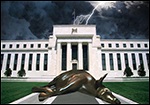
The controversy over the Lebanese central bank’s decision to record seigniorage as an asset
in its crisis-torn balance sheet is no parochial matter. Across the
world, strange things are happening to this important source of income
for central banks and finance ministries.
Described as the profit
made from printing money, seigniorage is the difference between the
amount central banks receive on issuing money and the much lower cost of
producing it, and the usually paltry interest paid to commercial banks
on the reserves they hold at the central bank.
Seigniorage is a
valuable asset, because issuing money and investing it in low-risk
securities has always been a profitable business. Traditionally, central
banks have treated the profits in accounting terms as an income stream
rather than an asset. Yet putting a capital value on the discounted
future income is not entirely outrageous. Indeed, it is odd that what is
arguably any central bank’s most valuable asset does not appear on the
balance sheet.
Provided that a central bank’s liabilities are not
denominated in foreign currency and are not index-linked, the present
value of seigniorage will always guarantee solvency. This is true even
where, under conventional accounting, the central bank is lossmaking and
showing a deficiency of assets against liabilities. Put another way, it
can always print its way out of a solvency trap.
At the Banque du Liban,
one snag is that seigniorage profits have been won at the cost of a
catastrophic loss of confidence in the currency. Lebanon’s economic
crisis has rocked the financial system, the government has defaulted on
foreign debt and yield-hungry investors have turned tail and fled.
Steve Hanke of Johns Hopkins University, an authority on hyperinflation, estimates
that inflation in Lebanon has been running at what he calls a sizzling
52.6 per cent per month. Since the monthly inflation rate has exceeded
50 per cent for 30 consecutive days, it now qualifies as a
hyperinflation, he says.
A second snag is that the seigniorage
asset that the bank has chosen to record on its balance sheet is
completely illiquid. Finance ministries cannot cash in the value in a
crisis by selling equity in the bank — too bad in the Lebanese case,
where the government’s debt mountain stands at over 170 per cent of gross domestic product.
Another
aspect of central bank profitability that entails an Alice in
Wonderland approach to accounting is the biggest liability in the
balance sheet, which is money. Yet to call this a liability risks what
Winston Churchill called a “terminological inexactitude”.
This lie is because, in a fiat system where the currency is not backed
by gold or some other valuable asset, central bank money is
irredeemable. While it is undoubtedly an asset of the holder, the holder
cannot go to the central bank and demand that it pay up on its IOUs.
The
significance of all this for the developed world concerns what is
happening to the net present value of seigniorage more generally. For
the big central banks, quantitative easing after the 2008 financial
crisis caused seigniorage revenues
to surge as they expanded their balance sheets. Meanwhile, the present
value of the future income has soared because it is being discounted at
ultra-low interest rates. The lower the rate, the higher the capital
value.
Willem Buiter, former Citigroup global chief economist, has shown
that with today’s levels of nominal and real interest rates, it is easy
to arrive at infinite quantities for the net present value of future
seigniorage.
This sounds like super-solvency, which would be very
reassuring. But interest rates can go up as well as down, and one day
they will. The climate of moral hazard surrounding the central banks’
unconventional measures since the financial crisis may receive
encouragement.
Since 2008, the public sector and non-bank
corporate sector’s borrowing has rocketed in the big economies. This
underlines that the response to the financial crisis, and now the
pandemic, continues the asymmetric monetary policy that has prevailed
since the late 1980s. The US Federal Reserve has established a pattern of bailing out markets when they collapse, but failing to cap them when they fall prey to bubbles.
Meanwhile,
through asset purchase programmes, central banks have joined in the
search for yield that they themselves prompted, buying risky assets such
as corporate bonds and, in the Bank of Japan’s case, even equities. We
know they can print their way out of trouble. But a real risk is that
what is left of their independence will be under threat when trouble
next strikes, as it surely will.
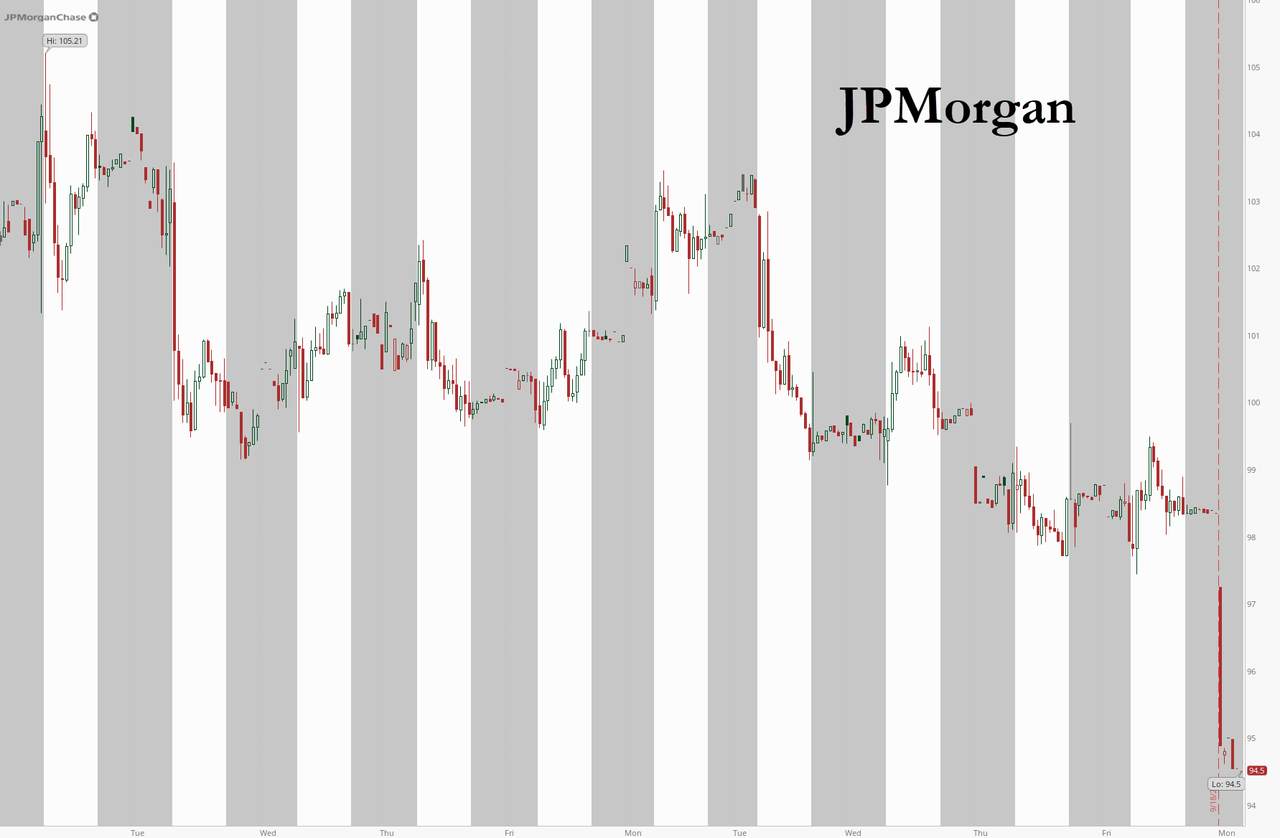
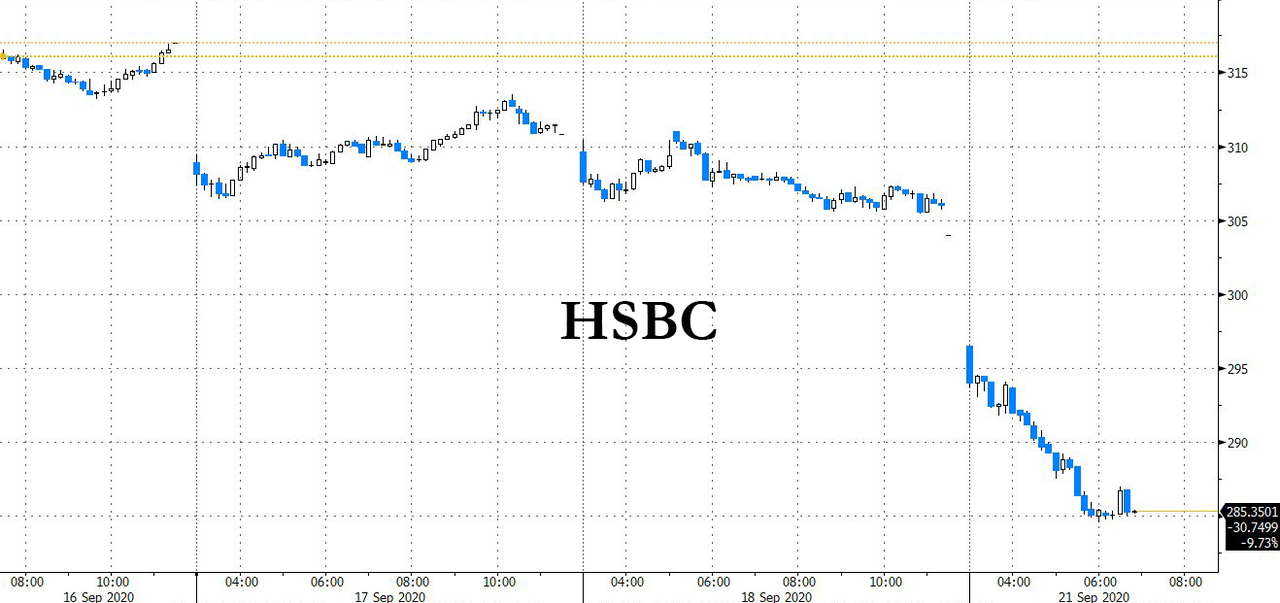
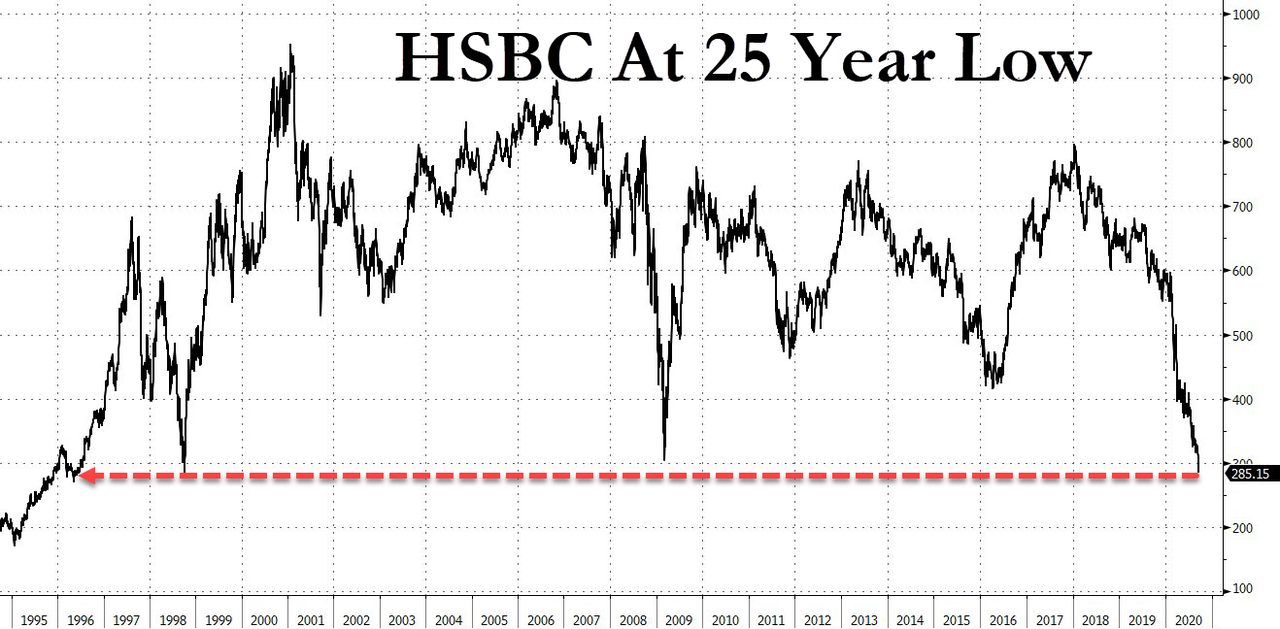
European Banks See Biggest Drop In Months After Massive FinCEN Leak
European banks are now down roughly 43% so far this year. One banking
analyst noted that although the allegations represented in the story
are years, even decades, old, the sprawling report is "yet another
bad-report card for the banking sector," wrote Zurcher Kantonalbank
analysts in a note to clients.
Stefan Grobe:
“...on which we want to talk about money and banking, and I'm very
very delighted to have Richard Werner here, one of the foremost
economists. To say he's not mainstream is an understatement and I'm
sure you'll see, you'll see why. This is a guy who studied in England
and Japan, he worked in England and Japan, and he speaks Japanese
perfectly. Just to let you know here, and he wrote a book on Japanese
banking that was a national bestseller in Japan. Now, who who does
that as an economist and he beat Harry Potter on the bestseller list
for six weeks, right, six weeks, so yeah that's worth a round of
applause. So this is a guy who is just not, you know, familiar with
numbers but somebody who can speak out and in a very very clear
fashion. When I arrived here, two days ago mid-afternoon, I thought I
might get, you know, catch some time at the beach or so, but it was
too windy and then I opened my computer and read his articles and,
believe it or not, I was so fascinated that I couldn't stop. By the
time I finish it was too dark so I dropped the beach altogether. So,
Richard, thank you for coming, a very welcome, thank you, and he also
coined the term a quantitative easing something we're all familiar
with, ten years after Lehman Brothers, and this would be my first
question: we're not celebrating it but we're kind of commemorating
the 10-year mark after Lehman Brothers, what has changed what is the
legacy, what is the fallout, do we still see you know what went wrong
in those days.
Richard Werner: First of
all thank you for the, you know, introduction and for having me here,
and, to answer your question, I think the lesson from the 2008
crisis, in fact from all those banking crises because we've had over
100 in the last 50 years across the world, because not all of them
get as much publicity as the European and North American crisis,
which they immodestly call a global financial crisis, Asia didn't
have any problems and Australia didn't have any problems at the time,
anyway, that one was widely publicized. But we've had many crises,
over 100, and so what is
the lesson from these crises ? I think
there is one clear lesson and that is that we and the key
decision-makers, who are quite sophisticated at central banks and
various institutions, the key lesson is that they don't learn the
lessons because, I fear, we're almost in the similar situation again,
now 10 years after 2008, and the pattern of all these crises is
always the same. In fact I think it's a great point to start with
because it's it's a fundamental question and of course many people
wonder about this: why exactly did we have the crisis ? Well, in the
media you get a lot of detail stories. Oh, subprime mortgages and
some technical concepts, you know, derivatives, credits CDS, and it
all sounds very specific and, therefore, each crisis has its own
acronyms and its own specific terms and so there is the impression
that, while each crisis is different, you know, we didn't have
subprime in the previous...
Stefan: This time will be
different, right ?
Werner: Yes exactly, exactly.
But actually the crises are always the same and although these
expressions the particular instruments that become a trigger or that
are used quite a lot in that particular crisis they vary but they're
all the same kind of instruments and the cause the economic cause and
the mechanism is always the same and maybe we should very briefly
actually start with that because once we understand why we have these
crises and how they work then it'd be much easier to look at, okay,
what's happening next.
Stefan: Right, yesterday we
talked a lot about multilateralism here on stage, and in over lunch
and over dinner, the core question is always can multilateralism work
? Now, on a financial level, we of course talked about the central
bank's. You have been very critical of central banks in your work
give us your sense here, as a major central bank watcher, have the
central bank's learned ? You said they haven't. What are they going
to do ? What are they doing now ? What is, what is not right in your
opinion.
Werner: To answer that question
we need to look at what central banks are and how they operate and
that allows us to explain how banking works and why we have the
recurring banking crises. Let me do that. In fact, it goes back to a
fundamental question: how do banks operate ? And actually there have
been three theories on banking, for over a century, three different
explanations, and I'm sure you will have encountered all three, at
one stage or another.
The currently dominant theory is that
all banks are just financial intermediaries, and this one is being
reinforced a lot by the financial news reporting, by statements from
central bank's, and also their if you look into academic and research
literature, the leading journals, say the Journal of Finance,
American Journal, considered number one in the area, it considers
banks nowadays as financial intermediaries. What does this mean ?
That means the banks gather deposits on the one hand then they do
their thing, their analysis, and their credit risk assessment, all
these things, whatever it is, good or bad, and then they lend those
deposits. so they're just in the middle and middleman. There's the
middleman theory of banking that one is currently dominant and also
bank regulation. How actually regulators look at banks and how they
regulate them. The entire
approach to regulation, which you know
is this Basel approach, we can come back to the specifics but this
Basel approach is also based on the assumption, the belief, that
banks are just the middlemen: they gather deposits and they lend them
out. Now, if you go back in this Journal of Finance to the 1960s you
might get confused because it's the same journal, but in the 60s they
were talking very differently, in this journal, because then still
just about the previous theory of banking was dominant, which was
dominant from the 1920s to the 1960s, and that one you will also have
heard, maybe once or twice before, the fractional reserve theory of
banking. This one is connected to another concept known as the money
multiplier. I think a lot of ears of those who haven't looked in,
into economics and finance, should prick up now. When I was a student
and I heard this money multiplier – whoo, that sounds interesting
– I thought, what is that, the money multiplier, the magic money
tree ? So, well, just very briefly. In fact, there is a similarity of
the money fractional-reserve money multiplier theory banking to the
middleman intermediary theory of banking. Namely, it says yes, each
individual bank is an intermediary. It's also this fractional reserve
theory also says that, but they say, as you put many banks together,
you've got many banks now they interact and they do their things
overlapping, interacting, then something happens. Somehow, in this
system, as the banks interact and operate together, money is being
created. There is money creation going on. It's not the central bank,
we're not talking about central bank money creation, okay ? Now, the
actual technical details are a little bit complex, students are
always confused, and there's actually reason: it's meant to be
confusing. So, don't worry if you think this sounds a bit confusing
you can
look it up later: “fractional reserve
theory of banking”, “money multiplier”. The main point is it
says each Bank isn't is a middleman, an intermediary, but in
aggregate collectively and it's interesting that there's a
recognition we have to look at something systemic which is different
from each individual Bank, something happens and money is being
created. Of course you can imagine if that's true, and if money's
being created, this will have an impact, there will be some
consequence. This therefore means there should be a different
approach to Bank regulation, and the approach to Bank regulation
going hand in hand with this fractional reserve money multiplier
theory of banking, is the old reserve requirement approach to bank
regulation which was dominant, in fact, during that era when
fractional reserve theory itself was dominant, which was until the
early 1980s. Even the Federal Reserve and the Bank of England were
looking at reserve requirements. It's a bit monetarist, you know,
looking at money aggregates, but then that was scrapped as from the
1960 1970s onwards this financial intermediation theory of banking
became dominant, and then we have the Basel approach which is all
about capital adequacy, is all about capital not reserves, we'll come
back to this regulation but, okay, now there's one more theory of
banking. You need to hear the third one now, now that we've come this
far. Namely, until roughly the 1920s this theory was dominant, and
this theory says that no, banks are not financial intermediaries,
neither individually nor collectively. So this is a different theory.
This theory says when a bank gives out a loan, a bank loan, which is
talking about ordinary banks, commercial banks, when they give out a
bank loan, then money is being created. Money is being created
essentially out of nothing. Economists tend to write ex nihilo
because it's a bit embarrassing “out of nothing”. It's too
obvious, it's it sounds too shocking, so put it in Latin, it sounds
more technical. This theory was dominant until the 1920s. Now, we've
got this all these three theories. If the older theory that banks
create money,known as the credit creation theory of banking, is
correct, then you need also bank regulation consistent with that
theory, and it's not the fractional reserve approach to the reserve
requirement approach, and it's not the Basel approach. Notice the
Basel approach has not been very successful. We've had so many
banking crises since the Basel approach was introduced in the 1980s.
Basel 1, Basel 2, Basel 3... it's like these, you know, movie
installments.
Stefan: Could you just briefly
explain what that is, I'm not sure everybody knows Basel 1, 2, 3…
Werner: Yes. This is the
currently dominant approach to bank regulation and the fundamental
idea is that, well, we can somehow contain and control and regulate
banks if we give them a requirement to hold capital, let's call this
capital, now. This capital is just like when you look at the balance
sheet of any company, or also a bank, you've got equity from
shareholders. That's the capital. There's some slightly different
types that can exist but we don't need to go into this. That's the
capital and banks, so before the 2008 crisis, had not much capital.
The large internationally operating banks had capital around two or
three percent of their balance sheet. That, by the way, is already a
quick explanation why we've had all these banking crises, because you
can have them very quickly. Particularly if the oldest theory of Bank
behavior – the credit creation theory – is correct, the banks
create money, this will have consequences, and then the Basel
approach imposes capital requirements, you must hold 8% simplified,
and it's not quite true for the big banks as issues was much less
than 8%, of your balance sheet, in capital, then this is some kind of
security to ensure stability was the thinking, but it's not true the
cause and to answer this we must now ask this fundamental question,
I'm sure you want to finally hear this. So, which of these theories
is true and then I can answer your question properly about Basel.
Which of the three theories is true, because Basel is linked to the
currently dominant theory, that banks are just intermediaries, and if
that was true, then Basel has a chance to work. Now, we have famous
economists supporting all of these theories, and the credit creation
theory is supported by Schumpeter, for instance, austrian economist,
and also the young Keynes supported that one. Then the fractional
reserve theory is supported by Alfred Marshall, famous neoclassical
economist, and also by the slightly older Keynes and by many other
economists; and then we've had the financial intermediation theory
which is supported by essentially all economists, nowadays, but which
one is true ? We need to test this empirically, is what I thought.
Over a century of debates but no empirical test ? What is the
scientific way of doing this ? Empirically test this. Well, all the
three theories differ when it comes to the question of: where does
money come from. It's actually written a book with that title, Where
the money come from, because when you take out a loan from a bank the
question is ‘where is the money for the loan come from’ that's
where the three theories differ. The financial intermediation theory
says, oh the banks take deposits and then these deposits are lent
out, so and alone the money comes from deposits. The fractional
reserve theory says that banks need to hold excess reserves in order
to lend, and so the money for the loan comes from excess reserves;
and the credit creation theory, you may guess this one, says the
money comes from nowhere, the banks create the money out of nothing.
Because that's the most shocking theory, so I ran this experiment a
few years ago. I actually took out a loan from a bank, and the bank
was collaborating with me in this experiment, this empirical test,
because I told him: look, I will take out the loan, I will transfer
the money away from you to my own old Bank, and I want you to show me
exactly what you're doing. Which transactions, what bookings you're
doing internally in your system. I want to see where the money comes
from that is booked into my account – it's a reasonable approach.
It took a long while to get a bank to cooperate. Initially, all said
yes, sure, we'll do that, the big banks, and then when it comes to
actually wanting to see their systems, ‘oh no, no, no, this is far
too sensitive’ and... all sorts of reasons, you cannot see this,
but I managed to find a bank in Germany that collaborated. We
actually had the BBC, there, filming this empirical test. I took out
a live loan 200 thousand euros and it was gonna transfer it away from
the bank, and we looked at the bookings and what they did, and it
turned out where did the money come from. It was not transferred away
from any other account inside the bank or outside the bank. It did
not come from deposits. It did not come from reserves at the central
bank.
In fact, they didn't care about their
reserves. They didn't even look how much they had. Reserves were not
affected. It was newly created. How does that work ? Well, the best
way to understand this if you look at the law, and this is, of
course, one of the reasons why economists don't understand banking,
and why they leave out banks in all their economic models. Because
they never look at the law. Law is reality. If you've got an issue,
well, you can use the law to claim your rights, and the court will
decide, and that is the result, and you can challenge it to a higher
court, but ultimately, you know, the highest court will make a
decision and that is it. That's reality. So, what is the law say
about banking. Economists consider banks as deposit-taking
institutions that lend out money. That's a standard definition by
economists. But when you study the law in the country that invented
modern banking, which is England in the 17th century, and that's also
when this legal system was created and it's still the same, the law
tells us: it's a different story. Banks are not deposit-taking
institutions and they don't lend money, that's what the law says. How
does that work ? At law, and we have Supreme Court judgments on this,
there is no such thing as a bank deposit. It doesn't exist. So what
is it when you deposit your money with a bank ? We have the feeling,
and we are given the impression that when you put your money with a
bank, ‘it's my money’. In fact it did a survey and people respond
no, the money at the bank belongs to me, that's my money and I'm
holding it in deposit. The bank, they're taking care of it, but it's
my money. I can ask it as my money back anytime.But at law that's not
true. At law there is no such thing as a bank deposit. It's not held
in custody, it's not held for you. You are not the owner of the money
at the bank. The money held in deposit at a bank is owned exclusively
by the bank. It was your money before you deposited it. When it's
deposited at the bank, the bank owns it and what rights do you have ?
You're a creditor. So, what that means:
the money at the bank is a loan that you've given to the bank, and
you're just a general creditor. So, that's why banks don't take
deposits: they borrow money we lend it to them. We are general
creditors. They own the money, and they can do as they please.
They're the owners of this money at law. Very clear-cut, okay, but
it's surely they lend money. What else would they do with this money
? No, there is no bank that has ever lend money. At law, again, very
clear-cut, how does that work ? Very intriguing. I thought…
Stefan: That would be my
question...
Werner: You go to a bank, and
you say: I want to borrow money. Now, an important thing is the loan
contract, and they will make you sign it. Now what happens at law is:
the moment you've signed the loan contract that you will borrow X
amount of money and you will repay this money at this date with his
interest, whatever, that moment, once you've signed it, you have
issued a security, a debt instrument. That's what this long contract
is at law. So, what the bank does, when it gives you a “loan” as
we call it, and “lends” you money as we call it, at law they do
no such thing. They're in the business of purchasing securities. They
will purchase the IOU, the debt instrument that you've issued. The
bank will purchase this from you. Okay, fine, I don't care. I just
want the money when I get my loan. Ah, you're right. The bank now
owes you money. So the bank owes you money, well, that's what we call
a deposit. Right ? A deposit is when the bank owes you money, and the
record of how much money the bank owes you we call a deposit, and
that's what you get. You get a record of how much money the bank owes
you, and that's all you get because that's what the banks do. So,
they purchase your debt instrument and then they record their debt to
you, and here's an accounting trick, and actually in another paper
published, find it online, I could demonstrate that there is actually
a slight, well, aspect of incorrectness, let's put it politely, in
banking, because technically, from an accountants perspective, they
now have an accounts payable liability to you, right ? You've signed
the long contract, they should give you money – accounts payable
liability for the banks – but the banks will book this now, this
liability called accounts payable liability, as another type of
liability which sounds much more convenient for bankers. Namely,
“customer deposit”, and that's how they'll show it to you ,and
that's in your account. In other words, the bank will invent a
fictitious deposit for the borrower, and that is how the money
supply is created. I did a survey in Frankfurt of 1000 people,
students helped me to do this, and we asked in the streets around the
University, so probably slightly above average educational standard,
but doesn't matter. Bias may be in the right direction. We asked
them: who do you think creates the money supply in the economy ? The
majority of the money supply, and of course the majority, over 90
percent response: well it's the central bank, isn't it ? Central bank
or the government. But that's not true, the central bank only creates
3% of the money supply, and the correct answer is: the majority, the
vast majority, 97% of the money supply, is created by the banks when
they lend money. So, this was the result of the empirical test as
well. Turns out the money supply is created by banks, and where does
the money come from for a bank loan ? It's created out of nothing by
the banks, and because of that, so, it's the credit creation theory,
the oldest theory, which is correct. It's now been empirically
proven, you can look up the paper if you Google “can banks
individually create money out of nothing” you will get it. It's the
most downloaded research paper of any Elsevier academic
publication...
Stefan: Yeah, Elsevier being a
major scientific publishing house right.
Werner: Thank you, and that
means it's it's the oldest theory is correct, and therefore for bank
regulation, to come back to your question on Basel, we need a bank
regulatory approach that recognizes this reality that banks create
money. The Basel approach uses the financial intermediation theory
and thinks: by having capital requirements we can contain the banks
and avoid crises. But it's not true because it's the credit creation
approach which is correct. Banks create money out of nothing. Have
you heard of Credit Suisse, or Barclays, in 2008 ? Well, how they got
out of the crisis ? They were actually as bust as all the big banks,
remember ? In 2008. But did they go bust ? Did they need public money
? Neither, they didn't. What did they do ? They were clever. They
were aware of this, and the decision makers in the crisis, you know,
in the crisis you're under pressure, they remembered that banks
create money out of nothing. Why should we go bust ? They created
their own capital out of nothing. How do you do that ? Well, you need
a borrower. There was a borrower: the sovereign of Qatar. They had
relations with them, business relations, and so they needed suddenly
ten billion roughly, that's saying, ten billion dollars worth of
capital.
Well, let's create it out of nothing.
Let's lend it to somebody like Qatar, obviously needs to be a big
player to borrow ten billion, and be credible. They will buy our
newly issued shares of ten billion and we can create the money out of
nothing for our capital. That's exactly what they did. In a way, we
shouldn't do what is now being done in the UK: the Serious Fraud
Office is going after them for fraud. Well, they're just doing
banking, and they save the taxpayer billions and billions in money.
In fact, this tells us that we can get out of any crisis without
using taxpayers money and without reducing public welfare spending as
a result in austerity, because we can just use the reality of bank
accounting to get cleanly out of any banking crisis, and this is also
what central banks have done and put in the past when they didn't
want a banking crisis to turn into a major recession. They just
solved the problem like this. You can do it in one morning
and you will not have a real banking crisis, and you will not have a
recession. This is what Ben Bernanke did,
in 2008, and he was actually... I
proposed all these things in the 90s in Japan in these big debates we
had, where I also proposed quantitative easing, and Bernanke was
joining these debates and he was in 2008 the only central banker to
implement my advice, the true quantitative easing, because the
others slightly changed the definition. Step one: you have a bust
banking system. The capital and the Basel approach is not enough, you
know, is a tiny amount anyway, and when the banks had create money,
use it for financial transactions, push up assets price by three four
hundred percent, which is due to banks creating this money for
financial transactions. At the peak if then assets prices drop by ten
percent, you've used up all the equity for the non-performing loans
already, you are bust. So, that's why we have the banking crises. So,
how do you get out of this quickly at no cost to the taxpayer ? It's
very simple. The central bank steps in, goes to the banks, and says:
oh, you've got non-performing assets larger than your equity. You are
bust, all of you. Most of the banking system, always the same story.
No problem. Because we don't want a banking crisis now turning into
big recession. We will let you off this time. We will put in in place
measures to prevent this in the future, we'll talk about what those
are, but we'll get you out of this one now. You don't use tax money,
that's expensive, that increases national debt. Ireland was a fiscal
poster boy but because the ECB forced it to fiscalize all the banking
non-performing assets, Ireland became bankrupt and had to call in the
IMF. No, we don't do that. The central bank steps in, goes to the
banks and purchases the non-performing assets at face value, and the
problem is solved. There's no cost, and this is exactly what Bernanke
did. That's why in September October 2008 the balance sheet of the
Federal Reserve quadrupled in one month. This doesn't create
inflation. Some people thought at the time wow ! We're gonna get
hyperinflation now. They're inflating their way out ! No, no. If
you want to create inflation, some
countries try to do this, allegedly, like Japan for 20 years, it's
not going to work with this method, because it doesn't create money.
Because you're just
shifting assets between central bank in
the banks, in the right way, away from the bank balance sheets where
they are harmful, to the central bank, where they can't do any harm
but you don't eject money into the non banking sector. So, you can't
create inflation. Oh, but hang on,
the dollar is gonna collapse ! Well,
no, as I said at the time, and it strengthened. Why ? Because you're
not creating money. You're solving the problem in the banking system,
the banks are healthy again, have strong balance sheets, and can lend
again, and they did in America who is the first country to get out of
the crisis since then very strong bank credit growth, unfortunately
too much. That's why we're back in the same spot. They continue to
create credit for financial transactions. That's how you prevent
getting into this situation the first place of banks being unstable.
Because banks create money, you have to split the stream of credit
creation from banks into two: for the real economy and for financial
transactions, because they are not part of the real economy. If banks
create credit for financial transactions, you are creating an asset
bubble which is always unsustainable and will always lead to a
banking crisis ultimately, if it's large enough. So in the early
2000s I was warning that, in Europe, the ECB, which is newly created,
was gonna create bank credit driven asset bubbles, banking crises,
unemployment, large recessions in the eurozone. That's exactly what
they did in Ireland, Portugal, Spain and Greece, based on 30 percent
credit growth for – how many years ? – three four years. Way
ahead of GDP growth, this is all credit creation by banks for asset
transactions, property, real estate, that's how you blow up these
countries, and that's what the ECB did.
Stefan: You mention, you
mentioned the real economy. Where are the banks, where is the banking
sector, where are the central banks in all this: do they participate
in as they, you know, create money ? Do they create value ? Are they
part of the larger GDP ? What can you tell us about that.
Werner: First of all, what is
the link and, you know, between banks and GDP ? The banks have a
crucial role. They are, in what we call our market economies, the
decision-making control center of the entire economy. Why ? Because
they create the money supply and they decide who gets money for
what purpose. Is this an important decision ? You bet, it is. In
fact, that is the decision that completely reshapes the economic
landscape in just a few months, or years. The
decision of who gets purchasing power,
for what purpose: newly created money. So, the banks are the control
center of the economy, and that's why we need to distinguish between
bank lending for transactions that boost GDP, then you get
high economic growth and no inflation, job creation, everything is
stable, you get also less inequality, you get more quality, but if
banks create money for unproductive purposes, either for
consumption, then you get only nominal GDP growth but lower real GDP
growth, you get inflation that's not good, that's well-recognized,
but the biggest problem has been the last 30 years banks creating
money for unproductive purposes that are asset transactions. That's
not part of GDP, and when banks do this bank lending for property,
bank lending for asset, stock market, whatever financial instrument
transactions, lending to private equity funds, to hedge funds,
investing in financial instruments, which banks do a lot because all
the leverage of these funds comes from banks, plain old bank lending,
bank credit creation. So, this money creation for asset transactions,
of course, is pushing up asset prices creating these asset bubbles.
While it happens it looks stable because we're all making money,
we're all having returns, but they're all based on the capital gains,
and the expectations of capital gains, and that will continue only
as long as banks continue to create new money for asset transactions.
It's a game of musical chairs. If we took out all the chairs where
nobody's sitting, and then only have all the
chairs where you're sitting in the
room, and then we take one out, and we ask you all to stand up we
take one chair out. Right, this game of musical chairs and we have
the music on, and if the music stops everyone has to sit down. But
one chair is missing. Well, this is the credit creation for financial
transactions. It's a game of musical chairs: when the music stops
that's when the banks do not anymore expand credit creation for
financial transactions. But when they stop it, or slow it, then there
won't be enough chairs for the speculators – those who've borrowed
money and invested in financial instruments – to sit on. There will
be bankruptcies. But the moment there are bankruptcies, banks will
have non-performing loans. The banks get more risk averse, they
reduce lending, then as they reduce lending, as the prices come down
further, there's fewer and fewer chairs, there's more bankruptcies,
and of course you will end up with a massive banking crisis. That is
the mechanism. So, therefore the answer to your question is: one link
is that actually banks at the heart of the allocation of resources,
and they can determine by their decision to lend to whether we'll get
high and stable equitable economic growth, without crisis, without
inflation which is possible, that's the scenario that East Asian
economies have implemented through. In fact, I haven't told you what
is the regulatory bank regulation regime in line with a credit
creation approach to bank, to understanding banks, which is the true
approach. It is credit guidance, direct guidance of bank credit,
window guidance, also known as credit controls. Sounds a bit harsher,
but it's good credit
guidance, is more in line, and that's
being the key tool used in Japan, in Korea and Taiwan, and then
adopted by banks helping in China to create the Chinese economic
miracle of high growth, and, if you do that, you will get your high
growth. But if banks create credit for asset transactions, you will
just create these asset bubbles, and banking crises, and higher
inequality, and all these problems, and that's of course what's
happening in most other countries because the bank regulators have
not asked the banks to create credit for productive purposes. It's
quite extraordinary, you know, the banks make these key decisions but
nobody's told them, oh, be careful, when you make this decision, you
should create credit and lend mainly for productive purposes for
business investment, for implementing new technologies, for
increasing productivity which creates jobs, is non-inflationary even
at full employment. You can have more growth if you have productive
credit creation. There's almost no limit to growth because the limit
is the technology, the ideas coming from humans, as long as we have
humans, and we can have more humans if we have quantitative easing
for having more babies. QE baby bonus created by credit to have more
babies, fertility shoots up, you know, all these things are possible
once you understand credit creation. All the
problems that we have, that have to do
with the economy, including demographics, can be solved. But the
second answer to your question is how do banks fit into our standard
statistics of GDP, and that's a very profound question you're asking
there. because even the statistics doing, you know, making our GDP
accounts, national income accountants as they're known, and every
country has big agency calculators with very smart people. Even they,
haven't really solved this problem.
The other answer to your question,
because when we calculate GDP, you know, we've got the expenditure
measure, we've got the income measure and the output
measure, three approaches. Normally we talk about the
expenditure method measure, you know, consumption, government
spending, investment, net exports, where do banks fit into this ? How
do we get banks into this ?Actually, it's really not clear. Why ?
Because the approach in national income accounting is that while you
measure value-added, you measure value-added, and you add it up.
So where do banks fit in ? What is
their value-added ? Good question. They're supposed to be, according
to the official theory, they're supposed to be only an intermediary,
a middleman. There's no stuff not really meant to be a net
value-added because the middleman margin that they charge, if we call
that the value-added, will be tiny, supposed to be tiny, but of
course that's not what what's happening. The banks are essentially
claiming a lot of resources that they're paying out to them,
themselves, and that is somehow, this, they're actually not a
value-added, in reality, in most countries, to the economy. They're
like a net drain, a cost, a loss.
So, the national income accounts if to
say, okay, but it's too complicated to try to figure out what banks
are adding value in the economy. Maybe there is not much visible
going on. So let's just create a theoretical value that we call it
“imputing”, and let's just assume a number, and let's wait, let's
just plunk that there and add it on to GDP, and that's what they're
currently doing. Because the fact is, with the sort of banking system
what we have currently in most countries, is not clear what value the
banks are adding to the economy.
Stefan: Yeah, that's very
interesting. I want to open up to questions from the audience. I can
imagine that anybody doesn't have any questions, but while you think
about it, I want to ask you to talk about your current projects. I
know you're working with and about community banks. Tell us
about this, please.
Werner: Yes. thank you very
much. In fact, another part of the earlier question you asked was
where do central banks fit into this, and that's also in response to
that I'll talk about community banks. So, briefly, where do central
banks fit into this ? Well, central banks in many countries are
guilty of dereliction of duty, because they have not insured that
bank credit creation takes place for productive purposes. As a
result, we have not received what we can get, in quite easily stable
high economic growth that delivers job creation, no inflation, and no
banking crisis. That's not what we've, what we've got, but what we've
got is central banks getting ever more powerful but not using these
powers to give us good results. In fact, in my book “Princes of the
Yen”, and also “New paradigm in macroeconomics”, Princes
of the Yen is the one that was a best-seller in Japan,
I warned that the next – this came
out before the 2008 crisis, Princes of the Yen and now is the new
second edition just come out – I warn that there will be another
major financial crisis, a global financial crisis even in Princes of
the yen, and the central banks will demand more powers, because they
will argue “it's because we were not so powerful that's why we have
this crisis”, which is not true, and I pointed this out before the
crisis, but then is exactly what I warned would happen,
unfortunately, did happen. We had the crisis, and what was the result
? Central bank saying all-the-way at the crisis, because the central
banks are not powerful enough we need to give them even more powers,
and we need to create more agencies, and so the central banks were
given even more powers. In the last 40 years central banks have been
made independent from governments, globally, and the idea was that we
give them more powers, we get better results, and that's really
absolutely not been true. We've had more and more banking crises,
boom and bust cycles, credit creation not going, not being used, for
productive purposes, and yet they claim more and more powers. But
it's not true for some countries, you
know, I'm slightly generalizing because we do have some very good
central banks out there, that do their job, that work with the
government not necessary being totally, you know, under control of
the government, but they realize we are in the same boat. We want the
same result as the government, and they collaborate very positively
constructively with the government, and they deliver stability and
high growth. It is possible, there are some examples. Anyway, but the
tendency is for central bank's to grab more and more power and not
deliver the right results, and I've worked in Japan for 12 years. In
the end I was, well, fairly well known
financial figure, with a best seller
out there, all over the media, and so on, and I was also asked by the
ruling Liberal Democratic Party to advise them, as the official
adviser, to their monetary reform group, and so I came close to the
levers of power: the Prime Minister, the Finance Minister – before
he became Finance Minister he advised me round many times – and
what I found is that even when they understand what I'm saying, and
they agree, and they agree on what needs doing, it was not happening.
It was absolutely not happening, and I did this for a few years, and
I became a bit frustrated, and I... so why is this... and the answer
is that the resistance on the top-level, central government level, is
very strong, because the vested interests, including the central
banks and big banking groups, are very entrenched. They essentially
can play the politicians, and they can make sure that things are
being immunized from change. So, I left Japan and went to the UK, and
there also trying to think about what can we do to improve things. It
is possible to have this stable growth without crisis, deliver job
creation in an equitable fair manner, without inflation, you know,
all these things are possible. We can have full employment, we can
have thriving communities and societies. I gave up on the centralized
approach, and I thought no, we've got to do this bottom-up. Because,
when we do it bottom-up we can implement with grassroots support from
local groups, and, really, literally geographically local groups,
community groups, we can establish alternative networks, and studying
banking systems across the world I realized, actually, in your own
home country, in Germany, also my original home country although I've
been abroad for 32 years, there is an amazing banking system that is
the best in the world, I had to conclude. I didn't start with this
conclusion at all, compared with all the banking systems. In Germany,
70% of all banking is not-for-profit, local community banking, and
these are small banks. They mainly lend to small firms. Small firms
are the main job creator in the world: 70, in some countries 80%, of
jobs are with small firms, SME, small
and medium-sized enterprises, SMEs, and small banks lend to small
firms. Actually, we did a study on America. America is the biggest
banking sector: 15,000 banks. In America we did took all that data
over 20 years, just to ask what's the link between bank size and
lending, and customer size, borrower size, and the result was very,
it's very obvious really to you but, you know, we economists need to
crunch the data to see reality. Turns
out big banks only lend to big firms.
Medium-sized banks lend to medium-sized firms. Who's lending to small
firms micro businesses ? Only small banks. So, in countries like the
UK, where you have a very concentrated banking system, five big banks
dominated banking. 90% of
banking is these five big banks, in the
UK, already for the last century. That's why we have no thriving SME,
small medium-sized firm sector in the UK, because the banks don't
lend to them. Big banks, it doesn't make sense for them. It's not
rational, it's too costly, when you're big, and you need big returns
and big results, to deal with small-fry. So, the conclusion was:
well, we're gonna change the banking system by setting up new banks,
grassroots local community banks, not-for-profit community banks,
modeled on the successful German example. Do you realize that Germany
has exports essentially as large as China ? China currently slightly
ahead, for the last three years, but only slightly. But Germany is a
fraction of China in terms of population. How is that possible... and
then if you'd break down those exports, more than half of the German
exports are from small and medium sized enterprises, not the big
Siemens and BMW, and whatever you name it. No, it's these unknown
small firms. They're known as the hidden champions, they are market
leaders in their niches, market leader champions when you're number
one two or three in terms of market share, and you're in your
industry segment. Germany has the largest number, by far, of any
country in the
world, with a large number of these
hidden champions small medium-sized enterprises that are world
leaders in their market. Hidden champion because these are small
firms nobody knows their name, but they're globally dominant in their
market. Germany has almost 1500 of those, number two, in the ranking,
is the U.S. as you might expect that they do well, although they're
fraction of the German number: only 300 in the US. Why is that ? So,
this is the secret of German economic success for the last 200 years,
it's the small banks, the local banks. The large number of banks in
Europe is in Germany, is the local
community banks, 1500 of them. Unfortunately, at the moment, war is
being made on those by the ECB. The ECB is out to kill them and this
is happening so their numbers are shrinking, you know, it's official
policy. Mario Draghi said that there's too many banks in the euro
zone. Was he talking about Goldman Sachs ? I don't think so. He's
talking about the large number of banks which are in Germany, and
they are those not-for-profit community banks. That is the
alternative, that's the future. There's also what delivers grassroots
democracy, because they're locally accountable. Their stakeholder
banks, cooperative banks, local public banks, where local opinions
are being reflected, and they don't lend for speculative purposes,
they don't lend for projects which are crazy and which lead to
problems, because they're locally accountable, because they reaches
only geographically within the local area. So, yes, we're setting
this up in the UK.
We're starting it with Hampshire, where
I live, the Hampshire community bank. We raise money from the local
authorities, and the universities, because you don't need that much
money to start a bank, and, in five years time, it will have a
balance sheet… you raise fifteen million pounds as capital, and
after five years you will have a balance sheet of over three hundred
million pounds lend to local SMEs. This will start to change the
economic landscape as credit creation is used for productive
purposes, delivering stable and equitable economic growth without
inflation, without crises.
Stefan: That might be a great
project after Brexit. Now I want to make good on my promise that I
made fifteen minutes ago, and let the audience ask some questions. I
think the gentleman over here was the first. There is a microphone
coming... thank you... yeah, you could just introduce yourself and...
Thank you Richard my name is
Vyacheslav Ivanov and I'm from Moscow, from Russia. I've been working
in energy and finance for more than 20 years but besides I'm teaching
a course in a university in Moscow it's called Bayesian cases and
mergers and acquisitions for my students, and the question we always
debate is a question whether it's to let the regulator run the banks
or give more power to the self regulatory agencies and like let the
banks. You partially started us in this question but it would be
interesting if you can elaborate on that a little bit more and as
well as the the last point about the size of the bank and the small
amount of smaller banks lending to SME companies whether it makes
sense to economics and how'd you regulator, the regulator can impose
their powers to a large amount of smaller banks whether it can lead
to some abuse has been the case in many countries, thank you.
Werner: Thank you very much.
There's an excellent question thank you for that. I appreciate it,
yes, the banks of course have been arguing and these are many the big
banks for self-regulation we don't need to be regulated we'll do this
ourselves. In the UK in fact the regulation approach until the crisis
was famously the soft-touch approach because the banks are quite self
regulatory. In the U.S. as you know Alan Greenspan prevented
regulation of credit derivatives because he was arguing, well, the
markets are very self-regulating but this didn't work and so it's
clear regulation is needed and we need regulatory agencies but it's
the detail here really that's important and also the difference
between big banks and small banks. So I think the regulations are
required mainly for the big banks because they're systemically
important as it's now recognized but we have too much regulation and
too much regulatory burdens for the small banks, the local community
banks, and therefore we need to have two types of regulatory
approaches: one is for the big banks and internationally active
banks, they need to follow one set of regulation which needs to be
stricter, but then we need a separate set of regulations for
domestically active local banks, community banks that are also not
systemically relevant and they need to follow slightly different
regulatory rules not quite as tough. That was the original idea
actually even in Basel 1.
Basel 1 introduced in 1988-89 said that
oh the Basel rules only apply to the internationally active banks,
remember that, they did actually not apply to domestic banks. But
then the EU for some
reason decided whatever this BSBC Basel
Committee decides we're gonna make EU law and force all banks to
follow also only domestically active banks and that was true of Basel
two and Basel three which are only adopted anyway by the EU, nobody
else. Really, we should talk about the EU approach to bank regulation. Of
course it's a Basel Committee International Committee America is a
big influence on that too, but they never adopted, Basel two is not
adopted in the U.S. Basel three is not gonna be adopted in the US
ever. So it's a way for America to regulate Europe really in a way
that is very costly and creates a lot of damage in Europe which
seems to be attractive to those decision makers, but what we really
need is regulation for the big banks and regulations separately for
the small banks, and the regulation needs to recognize banks are the
money creators. That's enormous power and that needs to be used
wisely and it should also not be abused and you're the other aspect
of your question which very good question was the recognition that,
yes, this can be abused because we all know about the abuse at the
big banks but it it can also be abused in small banks. When the small
banks don't have the corporate governance structure to resist being
taken over by a certain interest group so that the small bank then
only works for this one interest group and then it can be exploited
and that needs to be prevented. So I'm glad for there for this
question because that is an issue that needs to be addressed. Now,
how is it done in Germany. Well in Germany the regulators over 20 30
years ago may be introduced because of this issue, because they
recognize this issue, they introduced the rule as a corporate
governance rule that all banks, but of course the majority is small
banks in Germany, must have a separation of front office and back
office so the loan officers that go out and talk to the customers and
they acquire business essentially in their lend, which is the main
business of banks, but in so doing of course they get closer to the
borrowers and they go out and they, you know, they have to have to
get to know them, they have to meet them and maybe privately maybe
for dinner, and so on, you know, it's almost unavoidable but in a way
it's clear that they will be more enthusiastic about those borrowers
and maybe a bit too over-enthusiasm. Maybe they get even captured by
the borrowers so they alone should never be able to make the decision
on the loan. So in Germany they introduced this regulation that this
front office is one side they have to do their job and they have to
file their loan application documents and get all their information
from the applicant, do the credit analysis and come to a decision, a
recommendation, but they can't make the decision because the whole
back office which is not just audit and controlling but it's also in
fact the whole credit risk assessment team, separate, they don't meet
the customer but they don't hang out with the customer they look at
the paperwork they also are supposed to essentially check separately
all the data received on this company get new data separately, do
their own research, and come to their own separate decision and only
when front office and back office come to the same decision, yes, we
recommend going ahead with this loan, would this loan go ahead.
This prevents for example a local
authority which may be involved with the local bank to dominate it
and influence the decision making on loans which is crucial, that's
money creation, or any other interest group a local group or owner of
a small bank so the corporate governments very important and we've
adopted this in the UK we're introducing this in the UK that we have
the separation of front office and back office which goes all the way
up to the board you know front office back of us can't agree and then
one can appeal to the higher level but then if again front office
director and back office director on that level can't agree there can
be appealed to the company board or supervisor and so on. We
introduced that and we also designed the whole shareholder structure
to prevent one group of shareholders that may try to influence the
bank unduly of having too much power. So I think the answer there so
it's regulation and the right type of mix-and-match of regulation big
banks versus small banks appropriate regulation but in addition we
need to be aware of the corporate governance issues and have rules
about corporate governance separate front and back office and ensure
that these banks are not captured because banks are public utilities,
because they create money that affects us all, therefore we should
have to have a right to say well no banks have to follow certain
rules on all levels including corporate governance rules so that we
can prevent excesses and problems.
Stefan: All right sir over
here...microphone is on its way...
Thank you… I am Bankage Pachauri
from Delhi, India. What are the dangers of a government taking over
the regulation, regulatory system of a country central bank in a time
of crisis or bad loans to the tune, do you know, for about 40 billion
dollars. What are the dangers the government takes over the
regulatory powers or the central bank.
Werner: Okay, thank you for this
question I appreciate. I think there is a lot of dangers when the
government does this as for example happen in Ireland but also in
many European countries, governments were essentially encouraged by
the central banks to step in and bail out banks, and then we have all
the problems that you will have heard about, moral hazard, but in
addition to that you've used fiscal money, taxpayers money, and
you've indebted the whole country. Ireland being this great example
because Ireland had a very strong fiscal position before the crisis
but then essentially it felt compelled by the ECB to guarantee the
entire banking system, that's a lot of money.
Ireland was bankrupted and had to call
in the IMF and so, that's I'm entirely against that, it's not the way
to do this. The way to do this is for the institution that's supposed
to work in the public interest and is in charge of the banking
system, and that is the central bank to do this job. They are really
responsible for getting us there. Moral hazard says they got us into
the trouble, they should get us out of it. Why should the taxpayer
and the government bail us out ? It's the central bank that
caused this problem, they should have
not allowed 30 percent credit growth for 3-4 years creating an asset
bubble and the banking crisis so and it turns out it is economically
also most efficient for the central bank to do this. There's no cost
to society. Let me give you an example. In fact Japan is a great
example here. In the 90s Japan was facing the banking crisis which
then dragged on for many years, but I estimated, I was chief
economist in Tokyo at the time working for Jardine Fleming
securities, and I calculated the total bad debts in the banking
system in Japan which is very easy: you just need bank credit granted
for non GDP transaction. So bank lending for property, real estate
construction, for non-bank financial institutions, all that
essentially went into the speculative bubble and if you assume that
everything from 1986 onwards being lent to these three sectors was
gonna go bust, you had your figure. It was 25% of bank balance
sheets. A lot of money. 80 trillion yen was going to turn
non-performing, and so that was pretty bad. It's clear that the
banking system was bust, but compare this now to another situation in
Japan in 1945. Here we are, 1945, the second world war in the Pacific
is over, Japan lost and its banking system was now in dire straits.
If you look at the balance sheet of the
bank's it consisted of two things: forced war bonds greater East Asia
prosperity fear bonds and so on,, of a country just defeated and
carpet bombed with incendiary bombs, you know, in all these wooden
houses of course it's not much standing anymore in the cities, and
most of in the second aspect the second part in their asset side of
the balance sheet of the banks was lending to companies, of course,
but mostly for the last previous seven years was munitions companies
involved in the war effort and most of those were not even in japan
anymore because Japan shrank in size drastically. As you may know,
until forty five, Taiwan and Korea had been part of Japan and so many
companies the Japanese banks had lent to, in Korea and Taiwan. Well,
forget about that because these companies are not even in Japan
anymore but many were in Manchuria, in China, and of course all that
was non-performing to put it mildly. So, the balance sheets of the
banks in 1945 were 100% bankrupt, 100% non-performing assets and in
1991, 25% non-performing assets. Second piece of information: how
important was bank lending to the corporate sector. In 1945 ready for
the previous 15 years stock market's capital markets had been
closed as a matter of government
policy, so banks were the only source and were the route of choice to
get money to the corporate sector external funding. So the companies
were 100% dependent on bank lending and there were 100 percent bust.
In 1991 banks only had 25 percent non-performing assets and capital
markets stock markets were all thriving. External funding from banks
was only forty five percent of total external corporate funding. Is
the quiz question: which of those two situations should lead to a
longer recession ? What's gonna lead to a longer recession: 1945,
where we have complete dependence on bank lending and banks
completely and totally and utterly bust, or 1991, where we only have
25% non-performing assets and banks are less than half of corporate
funding. I think it's fair to a rhetorical question. It's fair to say
that, well, we should have a longer recession after 1945. But what
was the result ? After the 90s banking crisis we had 20 years of
recession, whereas after 1945, how long was the recession ? One year,
that's it. Why ? The difference is central bank policy. What did the
Bank of Japan do in 1945 which it didn't do in
the 90s ? It went out and purchased the
non-performing assets of the banks at face value and the problem is
solved. Let's say, these loans, because the 90s there was some value,
let's say then they're not worth zero, let's say they're worth
twenty. They were used to be worth 100, they're now worth only
twenty, that is: 80% non-performing. that's huge already. The central
bank steps in and purchases these loans from the banks at face value
for 100. The banks have strong balance sheets and they can lend again and the
problem is solved, and the cost of the taxpayer is zero.
Hang on, what are the risks, that's
your question. What are the risk ? Aren't we creating inflation here
? No, this doesn't create any money at all. Money creation is when
the banks and the central bank create money injected into non banking
sector by switching assets from the bank's to the central bank you're
just doing something within the banking sector, this doesn't create
money at all.
But aren't we creating inflation, are
we creating losses on the bank balance sheet of the central bank ?
Isn't the central bank now recording a loss of 80 ? It purchased
something for 100 that's
worth only 20 ? Surely, the central
bank is a loss of 80, maybe the central bank is going bust, oh don't
worry about that: the central bank doesn't have a loss of 80, the
central bank has a gain of 20 !
Right ? Why ? Well, it now owns assets
worth 20. Yes, it paid a little bit more, but if you have a license
to print money does it matter if you go to Harrods instead of Aldi ?
No, it doesn't. So, and central banks don't have to mark the market
either. So you just buy it for 100, keep it on the books, there's no
cost to society. Now, this may sound radical but that's what the Bank
of Japan did in 1945 and that's what Bernanke did in September 2008,
and that is why bank credit creation immediately recovered in the
U.S. while we stayed in recession in Japan for 20 years and in
Europe, many countries, we have been in the long recession Spain and
Greece. So, there are risks but if you
do it correctly they are very low risk.
So we need to make sure that the central bank is using its powers
cleverly recognising credit creation, and ensure stable economic
growth and banks able to lend for productive purposes and then it can
be done.
Stefan: I take another question.
Just very very briefly you said earlier almost in passing that there
are some central banks who are doing a good job. Now, that implies
there are others who don't. You just say. What are the good central
banks at the bad central banks, and just briefly...
Werner: You want me to name
names. Actually, I do this in Princes of the yen. I
name names even down to the central bankers and how they made their
decisions and what was wrong with these decisions, particularly, in
princes of the yen, the Bank of Japan is clearly identified as a
central bank that in the 80s, from the 80s onwards, was not doing a
good job because he was abusing its powers to create economic havoc
instead of stable equitable economic growth.
Stefan: Japan is in the Bad
column.
Werner: Yes, Bank of Japan for a
long time, also there's a chapter on Asia, the Asian crisis in 97
onwards was similarly created by the central banks. I was actually on
an official team, on an official mission from the Asian Development
Bank centered Thailand, once the crisis started in Thailand, and they
put me into the finance ministry and in the Bank of Thailand, and I
quickly could get the evidence of what happened. In a nutshell, it
was the Bank of Thailand that, in 1993, created this offshore
international banking facility, it deregulated international capital
flows, and so on. It had this following set of policies: fixed
exchange rates, and constantly kept saying don't you worry about the
exchange rate we fixed it will keep the the dollar peg fixed exchange
rate. Then it used its guidance of bank credit which it was
clandestinely running, I could also ascertain that,
somebody lost his job over that,
revealing this but, unfortunately, but so they forced the domestic
banks in Thailand through critic guides to reduce their lending to
Thai companies while they deregulated borrowing from abroad, and they
were telling all the companies in Thailand: there's no currency risk,
we're gonna keep the exchange rate. So, essentially Thai companies
were forced to borrow in dollars from abroad, and they're creating
this time bomb which created this very unsustainable situation:
short-term dollar denominated borrowing was going up and up and up, could be pulled out any time, and while
at the same time exports were going down for various other reasons,
you know, Chinese devaluation and so on. So, you're creating this
time bomb and when it went off what did the Bank of Thailand do at
that moment ? Oh, because it still has substantial foreign exchange
reserves, oh, let's make sure we waste every single dollar we have in
FX reserves in trying to maintain this peg, which happened very
quickly anyway so all that was blown, and then, well, then the peg
goes and then of course the currency devalues massively. Now then,
oh, then let's call in the IMF. What does the IMF say ? Oh, well, now
we need austerity and you have to reduce bank credit creation even
further and central bank credit expansion has to go down. The IMF by
the way asks countries to implement free-market policies, except the
IMF policies, themselves, are not free-market policies, they are
credit guidance. You have forced to reduce your credit creation now turning this banking crisis into a
massive recession. So, essentially, is this combination of IMF and
central bank caused this so, that's another example, but there's
others there's some good ones some good central banks...
Stefan: Yeah, in Europe… ECB,
yes or no ?
Werner: Come on come on, it's a
rhetorical question. The ECB has been a disaster from day one, it's
created asset bubbles, banking crises, massive recessions, vast
unemployment, large youth unemployment in Spain and Greece, left,
right, and center, but it's a fair, it's a fair Central Bank. It
wouldn't be, it wouldn't be enough, it
would, it would be unfair just to create these massive economic
pandemonium's in Ireland, Portugal, Spain, and Greece, and not in
Germany, right ? Now it's Germany's turn, because the ECB is now
creating a property bubble in Germany has been since 2009, while it's
killing the community banks the good banks. They're all forced now to
lend for property speculation, so, check me out in five years time,
the property bubble will burst and the tired German banking system
will be bust, and the ECB will be responsible, but it will use this
as nog you know we need even more powers, and they will give them
more powers this is what's gonna happen, so is this a good central
bank ? I don't think so.
Stefan: Alright, on that
optimistic note I take one more question. The gentlemen over here.
Hello my name is Barrows Garlicy
working as a researcher in Dialogue of Civilization Research
Institute, and thanks for the discussion. Richard, you earlier
mentioned about the central bank independence and you say that
central banks claiming more power, and if this is going to happen
more and more, I mean, central banks get independence. What do you
see the future of this phenomenon on a macro level, let's say on GDP,
for example, or on inflation. Thank you so much.
Werner: Okay, thank you very
much that's a great question, thanks for bringing it up. I have
warned against too many powers for central bank's and for too much
central bank independence. Essentially we suffer from regulatory
moral hazard. We've given, each time there's been a banking crisis,
we've given more powers to central bank's. As a result, we've given
them the incentive to create more crises because they will get more
powers. There is the so-called theory of bureaucracy which
recognizes that, you know, bureaucracy
is a group of humans who have interests and they would like to expand
their interests. It's very understandable, can't blame them. But if
you, essentially, if you don't recognize this, that particularly when
it comes to money and creation and allocation of money, which is a
very powerful tool, and you give so much power over this to a small
group of people, and you do not have checks and balances and the
right corporate governance to ensure good governance, and you do not
give the right incentives but you reward failure. You reward and give
more power for having another banking crisis in another boom and bust
cycle, and so on, you are creating disaster and, unfortunately,
that's the road we have been going and that's why we will, of course,
get another financial crisis, another banking crisis, and in many
countries, in fact. That's what we need to recognize, and we need
to change this, and we can change it. Now, there is actually another
trend going on and that has to do with. I started out talking about
my test of how banks actually work, an empirical test, the only first
empirical test in the 5,000 year history of banking, of how banks
actually work, and they create money that's how they work, and once
this information came out in 2014 the central bank's changed their
attitude because now the knowledge of money and banking is spreading
to even ordinary people. The central bankers have reacted and they've
switched to plan B, I'm afraid, and Plan B is... suddenly we've got
all these reform groups springing up, monetary reform groups, and
they say: banks are creating money - that is shocking ! We need to
abolish bank credit creation, we need to get rid of banks, and I
found out that, in some countries, the central banks are supporting
this. Central banks are now, in some countries, essentially betraying
their constituency, the banks, and they are saying: let's get rid of
banks now. What are these monetary reform groups say who should
create money ? Oh, it should exclusively and only be done by the
central bank ! Give even more powers to the central bankers by
turning them into the only creators of the money supply and getting
rid of banks, and let's have central bank's issues central bank
digital currency and essentially every person will then directly have
an account with a central bank, and oh, isn't this appealing we'll
have universal basic income ? Everyone gets, you know, two thousand
pounds, two thousand dollars, either euro, every month from the
central bank in their account ? Isn't that a nice system very
equitable and fair ? Hang on, this is a massive power grab by the
central bankers. There, they're trying to get even more power, get
rid of the decentralization that we have to some extent in the system
with community banks and local banks making decisions about money
creation, and they're trying to monopolize this and get digital
central bank credit creation based on Bitcoin as their next power
tool. They even talking about having this in a microchip that will be
implanted under your skin. Oh, this is pretty scary stuff. That is.
That's where the central banks are heading. They want even more
power. Get rid of cash: this entire debate about we need to get rid
of cash has to do with this power grab by some central banks that
want more power and they want to get rid of all the competition. Cash
is in your control: you've got it you can give it to somebody the
central bank cannot control this. But if it's a digital currency then
it's not only monitored it can also be controlled in certain
transaction can be prevented and stopped, and can be, you know, the
control powers are so enormous and to centralize that into one
institution is extremely dangerous. I think the big lesson of the
20th century has been that, because the big overarching trend of the
20th century has been concentration of power in ever fewer hands, but
that has been disastrous and that's the big lesson of the 20th
century. We need not to centralize economic and political power, we
need to decentralize, we need to decentralize to give power to local
communities and give them more decision-making power even over
economic decisions. That's why we need community banks, that's where
we need the independence, we need it locally not in the hands of
central banks and the historical record is very clear. It's not
worked out well giving more powers to ever fewer players and to give
too much power to central banks. We need to decentralize and have
local community banks and create many more local banks in many
countries which is what I'm trying to do and I hope you can help me
and will support me in this venture to set up more community banks.
Stefan: Alright. Thank you very
much, that was a wonderful conclusion. Thank you very much, thank
you, thank you, it was a fascinating conversation Richard Werner,
thank you so much for being here. Thank you all for coming out on a
Saturday morning. I hope you're enjoying we'll be enjoying the rest
of the forum and enjoy your weekend, take care, thank you very much.
Werner:And thank you to
Stefan for being a fantastic moderator and host in each of you, thank
you, round of applause to Stefan.
[ Note: while the debate seems to rotate on plausible arguments, the unsaid point concerns seigniorage. If the new currency is issued by state treasuries, seigniorage becomes a tax received by states to cover their spending needs. If, on the other hand, it continues to be issued by private bankers, seigniorage will go in favor of their proteges who see civil society as a simple "counterpart". The fear of abandoning cash, for "them", consists in the fact that the liabilities to customers in the bank balance sheet would appear for what they are: a fraudulent accounting gimmick to hide seigniorage earnings. Replacing cash with digital currency instead, the bank accounting sophistry could hold up for a while longer... In the meantime, the pilot project of EquaCoin, born in April 2019, continues, with a popular euro on blockchain, from whose seigniorage 25 thousand people are receiving a guaranteed monthly income...]
Cryptocurrencies
EU Aims for Tight Grip on Digital Currencies to Stave Off Risks
Scholz, Le Maire say issuance of currency remains public task
ECB to discuss creation of digital euro in coming weeks
Christine LagardePhotographer: Thomas Lohnes/Getty Images
Finance chiefs from the euro area said a strict regime is needed
to control digital currencies and keep private initiatives such as Facebook Inc.’s Libra project from threatening financial stability.
Speaking in Berlin on Friday, top officials from the bloc’s biggest economies sought to reinforce the message that the European Central Bank
will be the only institution allowed to issue currencies, and that any
other activities should be forbidden if they undermine the integrity of
the financial system.
“This point is something that cannot be jeopardized or
weakened by any kind of project including the so-called Libra project,”
French Finance Minister Bruno Le Maire said on the fringes of a meeting
with his euro-area peers. Germany’s Olaf Scholz said “what’s a
responsibility of the state must remain a responsibility of the state.”
Digital payments are among the top issues being discussed as
euro-area officials gather in the German capital for a two-day meeting.
The European Commission, the European Union’s executive arm, is expected
to propose legislation
on the subject in the coming weeks, while the ECB will soon debate
whether or not the region needs to create a digital currency of its own.
Facebook
first announced plans for Libra in June 2019. Regulators around the
world have been highly skeptical of the project, treating it as a
wake-up call to discuss similar initiative led by central banks.
‘Urgent’ Choices
Bank
of France Governor Francois Villeroy de Galhau said during a virtual
panel discussion hosted by the Bundesbank that Europe faces “urgent and
strategic choices” on payments, including on the question of a potential
central bank digital currency.
“We cannot allow ourselves to lag behind on CBDC,” he said.
The ECB’s Governing Council will discuss the possible benefits and
challenges of such a project in the coming weeks, once a panel of
experts concluded its analysis, according to Villeroy.
ECB President Christine Lagarde, who spoke at the same event Thursday evening, also stressed the need to be up to
speed on global changes in payments. New technology could improve the
efficiency of financial transactions and put Europe at the edge of
innovation, but it can also bear risks.
“The Eurosystem has so far not made a decision on whether to
introduce a digital euro. But, like many other central banks around the
world, we are exploring the benefits, risks and operational challenges
of doing so,” Lagarde said. “The findings of a Eurosystem task force are
expected to be presented to the public in the coming weeks, followed by
the launch of a public consultation.”
The ECB president added
that while it’s not necessarily a concern that Europe is dominated by
foreign payment service providers, the “evolving global context” and
“increase in protectionist policies” constitute new risks.
“We
have a responsibility to ensure that our citizens have choice and cannot
be excluded from the payments ecosystem due to the unilateral actions
of others,” she said.
Bundesbank President Jens Weidmann, speaking
on Friday, stressed that the deliberations about a digital currency
don’t mean that central banks are planning to abolish cash -- for
example to be able to cut interest rates far below zero with causing a
rush into paper money.
“Many people value cash very highly, and
for legitimate reasons. It provides privacy, and its use does not
necessarily depend on technical infrastructure,” Weidmann said.
Every Wall Street bailout program that the Fed has created since
September 17 of last year has, according to the Fed, been ostensibly
created to somehow help the average American.
According to the Fed’s Term Sheet
for the Term Asset-Backed Securities Loan Facility (TALF), it’s going
to “help meet the credit needs of consumers and businesses by
facilitating the issuance of asset-backed securities.” Not to put too
fine a point on it, but asset-backed securities and related derivatives
are what blew up Wall Street in 2008, creating the worst economic
downturn, at that point, since the Great Depression.
According to the Fed’s TALF transaction data, it has made $2.6
billion in total loans. Forty-six percent of that money, $1.2 billion,
went to a company that has 4 employees (outside of clerical workers)
according to its filing with the SEC.
Much of the Fed’s $1.2 billion was loaned at an interest rate ranging
from 0.75 percent to 1.26 percent. The loans are set to expire in three
years.
Under the CARES Act passed by Congress, the TALF has received $10
billion in taxpayer support from the U.S. Treasury to eat any losses in
this program.
On the most recent transaction data report
filed by the Fed for the TALF, it lists the borrower that received the
$1.2 billion total as Alta Fundamental Advisers SP LLC-Belstar-Alta
Series 1 and 2. It lists the Investment Manager for the borrower as
Belstar Management Company LLC. Both Alta Fundamental Advisers and Belstar Management Company LLC have funds that previously registered in the Cayman Islands, according to their SEC filings.
The Fed is only selectively providing transaction level data for its
myriad of bailout programs. As we previously noted, the Primary Dealer
Credit Facility (PDCF) is one of the first bailout programs created by
the Fed and yet it has never provided a drop of information as to who
received the billions of dollars in loans under that program.
The Primary Dealer Credit Facility was the most notorious of the Fed
programs during the 2007 to 2010 financial crisis. The Fed
secretly funneled $8.95 trillion in cumulative, below-market
rate loans to the trading units of the biggest Wall Street banks and
their foreign derivative counterparties according to an audit belatedly
provided to the public in 2011 by the Government Accountability Office
(GAO).
The Fed’s hubris from 2007 to 2010 and its multi-year court battle to
keep its transactions a secret from the American people make its
actions today a critical area in which to demand transparency.
Unfortunately, the Fed’s dealings are being essentially ignored by mainstream media – which is enabling ever more hubris.
Editor’s Note: This article has been updated to
provide clarification on the amount of total loans made by the TALF and
the percentage it gave to just one entity. The earlier version of this
article cited the H.4.1 data from the Fed, which showed a balance of $11
billion for the TALF. That includes part of the $10 billion of
taxpayers’ money that is being used as loss absorbing capital and does
not reflect total loans made.
The elimination of banknotes and coins would have immediately collapsed the bank accounting perversion of putting the issued currency on the liabilities side. Here then, to replace it, they invented the digital money of the central bank (CBDC).