#RethinkBanks Campaign: Rethinking the Role of Banks in Economics Education
We live in a monetized economy but
when it comes to learning about the role of money and banks, most
universities are still teaching their students the equivalent of flat
earth theories. Myths like the ‘loanable funds’ and ‘money multiplier’
models continue to dominate but are unable to explain many of the
real-world phenomena we see happening around us; such as the great
financial crisis of 2008. Mainstream economics professors were
unable to see the crash coming or provide adequate policy proposals for
how to deal with its aftermath and this intellectual failing left a
terrible legacy. In the UK alone; a UN expert described austerity as “entrenching high levels of poverty”, and wages are only now beginning to return to pre-crash levels.
Since jobs in powerful financial
institutions like central banks, are largely filled by economics
graduates, the syllabus’ and ideas they learn will go on to have huge
consequences in the real world. Before 2010 even the Bank of England omitted the role of banks
from its group of key economic agents. By incorrectly viewing banks as
mere intermediaries between savers and firms, central banks failed to
identify the build-up of debt in the financial sector.
More than ten years on, neoclassical
economics still dominates university departments meaning our courses are
still missing things; like the role banks play in increasing house prices or causing climate breakdown. Thankfully that’s about to change with the campaign: “Rethinking the Role of Banks in Economics Education” a new project from the Rethinking Economics network. It started in Maastricht in the Netherlands when the PINE (Pluralism in Economics) student society I am part of, penned an open letter
to their university. They’d grown tired of statement like “banks lend
out deposits” or “banks are intermediaries between savers and investors”
not only because they were wrong, but because believing them can, as
shown above, lead to dangerous consequences.
If you see money and banks as neutral
actors and leave them out of economic models – it’s no surprise that
you won’t foresee financial crises! If you see money as a scarce and
finite resource like a natural commodity, so that in order to invest
someone else has to defer their consumption – of course you won’t see
financial bubbles!
Since the crash, it’s become clearer to more economists and institutions like the German Bundesbank and the Bank of England
how money works in our economy: it’s loans that create deposits not the
other way around. Sadly that is literally the complete opposite of what
we’re currently taught and we’ll only be able to properly regulate
banks once their function and power is well understood.
As the great financial crisis
revealed, banks are currently more of a liability for the public than an
asset. And since banks have the power to control which sectors of the
economy get money and which don’t, understanding how they work is
becoming even more vital in the face of climate breakdown and the
socio-ecological transition we’ll need to make to avoid it’s worst
consequences.
Economics students need to be
properly equipped to solve the issues at hand. This campaign is an
attempt to demand exactly that: we’re calling on universities to make
the curriculum of all relevant courses fact-based and to reflect the
most up to date evidence on how our modern economies work. Otherwise our
future wellbeing, and the wellbeing of our very planet could be at
stake.
This week marked the publication of Rethinking Economics’ Open Letter
with over 60 signatories from academics and civil society organisations
around the world. If you’d like to get involved with the project too,
please shoot us a message at campaigns@rethinkeconomics.org and to start understanding how the money and banking system really works, head over to this video course.
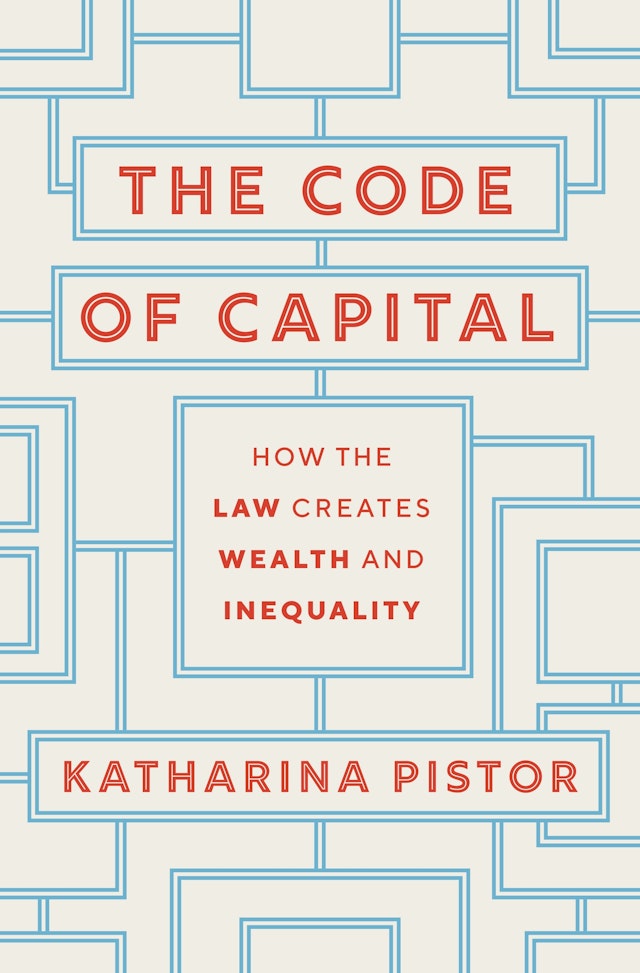
If there is one asset that defines capitalism, it is debt— not any debt, but debt that can be easily transferred from one investor to another, and preferably debt that is convertible into state money at any time on the behest of its holders, the creditors. Convertibility of private debt on demand is typically assumed but is not always an enforceable claim. The logic of a private economy is that you can sell only if you find a willing buyer, that is, a private buyer. If private buyers retreat, demand declines, and asset prices fall, investors who recently thought that they had huge amounts of wealth at their fingertips might lose it in no time. To lock in past gains, investors will try to convert their private assets into state money, the only financial asset that is guaranteed to keep its nominal value. [1] The reason is that, unlike private entities, states do not have a binding survival constraint. They can print money and they have the power to unilaterally impose burdens on their citizens in the form of taxes or austerity measures, thereby ensuring their own survival.
When private parties run out of money, they may request help from their peers, but they cannot force them to deliver. If they fail to garner support, they face extinction; the only alternative is to go to the source of state money: the government or its central bank.
As noted in chapter 1, convertibility is one of the key attributes of capital; its relevance is most apparent in the case of financial assets, in particular, debt instruments. For holders of these assets, convertibility has the same importance that durability had for landowners or major lenders to corporations who sought a stable capital base against which to lend. Investors in tradable instruments are fickle; they are constantly on the move as their holders are out to find yet another profit opportunity. It therefore makes little sense to lock them up behind real or legal shields. But this does not mean that holders of financial assets do not crave certainty; their certainty comes from the ability to convert their assets into cash on demand without a serious loss. The trick is to make these assets look almost like state money, that is, to cloak them in legal modules that enhance the chances that they can be converted into cash on demand.
The history of debt finance can therefore be retold as a story about how claims to future pay have been coded in law to ensure their convertibility into state money on demand, without suffering serious loss. This chapter traces the coding techniques for the most basic forms of debt, the notes and later the bills of exchange that emerged between the twelfth and the seventeenth centuries, all the way to modern- day securitized assets and credit derivatives.
The story also illustrates the shift away from landowners, the privileged holders of property rights who often figured as debtors in the past, to creditors as the asset holders who enjoy the strongest legal protection. Signs for this shift have long been evident, but only after land had been thoroughly dethroned in the late nineteenth century did financial assets come to the fore as a leading source of private wealth. As we shift focus from owners to creditors, and from land to debt, we will encounter the same legal modules that we have seen at play before: contract, property and collateral law, trust, corporate, and bankruptcy law. These legal modules mitigate the risk associated with debt and in doing so have fueled its expansion from one unprecedented height to another— to be followed only too often by equally steep downturns, safe only for the successful intervention of states and their central banks. Huge gains could be made along the way, and losses were often shifted to others.
These losses tend to fall primarily on two groups: The unsecured debtors, that is, creditors who by operation of general bankruptcy rules are last in line to share in the leftovers; and states, or rather their citizens, whose future productivity they commit when bailing out failing entities. In the absence of state backing, debt cycles would draw their natural circles, making and destroying wealth along the way. Many states have smoothed out these cycles by standing by to protect holders of these assets from the abyss, time and again; others that were either unwilling or unable to do so have seen their economies ravaged by debt crises that destroyed wealth and brought economic decline. In addition, they had to cede sovereignty to their creditors, to the International Monetary Fund (IMF), or “the Troika,” comprised of the IMF, the ECB, and the European Commission.
When stepping into the void by offering new credit to borrowers that were shunned by private creditors, or when buying assets from creditors that no longer found any private takers, states have tended to protect assets and asset holders that were critical for the survival of the system and have left the rest to fend for themselves. In so doing, they have helped stabilize finance, but they have also contributed to the massive concentration of wealth in the hands of those at the top of a financial system that is not flat, but deeply hierarchical. [2]
Notes:
1. Morgan Ricks, The Money Problem (Chicago: University of Chicago Press, 2016). See also chapter 1 on this point.
2. On the hierarchy of moneys, see Perry Mehrling, “The Inherent Hierarchy of Money,” in Social Fairness and Economics: Economic Essays in the Spirit of Duncan Foley, ed. Thomas Michl, Armon Rezai, and Lance Taylor (New York: Routledge, 2013), chap. 21.
The Vatican’s former chief auditor believes he was ousted after
investigating secret bank accounts, some of which have now been linked
to a London property deal that has prompted an internal Holy See inquiry into possible financial irregularities.
Libero
Milone told the Financial Times that he thinks he was forced to resign
two years ago because of information he requested about hundreds of
millions of dollars held “off the books” by Vatican entities in
Switzerland.
“Some people got worried that I was about to uncover
something I shouldn’t see,” said Mr Milone, a former chairman of
Deloitte in Italy who was hired by Pope Francis in 2015 as the Vatican’s
first chief auditor.
“We were getting too close to information
that they wanted to be secret, and they fabricated a situation for me to
be thrown out.”
Last month Vatican police raided
the offices of its Secretariat of State, the Holy See’s central
administrator, to seize documents and computers linked to a $200m
investment by the agency in a plan to build 49 luxury apartments in
London’s Chelsea district.
The Vatican Secretariat in 2014 wired $200m from these Swiss
accounts to a Luxembourg-incorporated fund, which used it in part to buy
a minority share in a building in Chelsea. The building was already
owned by the manager of the fund, Raffaele Mincione, and the share was
sold at a significantly higher price than he had paid for it two years
before.
Mr Mincione and his asset management company have denied any wrongdoing.
“Internally
there was no record of the Swiss accounts,” Mr Milone said. “So when I
began to get close to that, some people worried that if I opened this
door, that would lead to this door, and other doors.”
Many of the
entities kept no accounting records, the former auditor said. “There
was one entity with a lot of money which had a sheet with a nun and a
pencil completing the numbers.
“Just a few years before, they were
doing everything on a cash basis, all of a sudden they were being asked
to do things on an accrual basis, and they didn’t have the people,” Mr
Milone said. “The nuns kept doing the same things. They are nice nuns,
but they didn’t have a clue.”
At the "Monetary Policy Forum" in Frankfurt, economists discussed the course of the ECB on Thursday - so bitter that the landlord had to intervene. Image: https://app.handelsblatt.com/images/transp/7252108/1-formatOriginal.png Mario Draghi - The newly retired ECB President is unpopular in Germany. Image: Tim Wegner / laif
Frankfurt - It was a very special conference. The DVFA, the Association of German Financial Analysts, held a "Monetary Policy Forum" in Frankfurt on Thursday, but was mainly invited by critics and opponents of the European Central Bank (ECB). In the morning the discussion degenerated temporarily so that the economics Volker Wieland had to intervene as host of the event in the Frankfurt University.
In the afternoon, the tone became much more objective. Ulrich Bindseil also had the opportunity to speak with a prominent department head of the ECB and defend the monetary policy of his institution.
But the event, which has at least partly gotten out of hand, by the renowned DVFA, shows how much the ECB's policy is now polarizing. Another sign of how difficult it will be for ECB head Christine Lagarde to reconcile monetary policy, both inside and outside the central bank.
The invited economists were in agreement for long stretches. From their point of view, the ECB, with its loose monetary policy, produces "zombies", ie half-dead companies that would not be able to survive at higher interest rates. Or, as Ludger Schuknecht of the OECD put it, the "Schumpeterian process" is questioned in this way.
The economist Joseph Schumpeter had spoken of the "creative destruction" in capitalism. In this view, the ECB is hampering the selection process and is thus responsible for the weak productivity. "The ECB is an obstacle to development, I believe that is also empirically proven," warned the Munich Professor Bernd Rudolf.
Their efforts to raise low inflation are exaggerated and jeopardize financial stability. And again and again came the hint that in reality monetary policy was only for the interests of heavily indebted euro states. In addition, there were frequent visions of bubbles in the markets and future economic collapse.
Against a point target in inflation
Jörg Krämer, chief economist at Commerzbank, argued that the ECB could hardly influence inflation anyway because it was kept low by externalities such as globalization. He proposed instead of a "point target" of just under two percent in inflation, a margin between 1.25 and 2.25 percent. "It's a fairytale that low inflation hurts," he said.
He referred to a study by the Bank for International Settlements (BIS), according to which in the past even periods of slight deflation, ie falling prices, would not have caused any major problems. In his opinion, in addition to stable prices, the ECB should also keep an eye on the stability of the financial system, he spoke of "comprehensive stabilization".
Central bankers like to point out that financial supervisors are responsible for the financial stability.Krämer is convinced that these authorities are permanently overtaxed to fight against an expansionary monetary policy.
Gunther Schnabl of the University of Leipzig complained that the ECB should focus on asset prices instead of consumer prices, which in any case could no longer influence them.
He called for interest rates to be gradually raised, irrespective of inflation, for example by a quarter of a percentage point a year.He assumed a reasonable interest rate of four to five percent."This leads to a stable drive that gives people a positive perspective," he said.
It's a fairytale that low inflation hurts.
Jörg Krämer, chief economist at Commerzbank
The day before, Schnabl had already argued at an event of the asset manager Flossbach von Storch. Their chief economist Thomas Mayer had said: "Nobody will meet Schnabl's demand. We are dealing with an asymmetrical monetary policy: you let the party run, when it goes up, it only intervenes when it goes down. That's why I expect a major financial crisis in the next recession. Then the question arises of a system change. "
Schnabl criticized at the DVFA Congress also, the inflation is reported too low, because there are no quality reductions that are included. "There are quality reductions everywhere, the food does not taste anymore, the toys and the furniture are made of plastic," he criticized. In his opinion, services are getting worse: "Everywhere you have to serve yourself."
Kerber accuses ECB of "omnipotence fantasies"
When the debate got lost in the question of where to buy bread rolls with or without service, Wieland intervened: "Anyone can buy bread, where he wants, that has nothing to do with monetary policy."
He quickly warned that it was very dangerous to demand that monetary policy be guided by direct asset prices. In fact, that would also amount to making the much-bemoaned manipulation of capital markets by the ECB a principle.
It became even wilder when professors Christoph Degenhart from Leipzig, Stefan Homburg from Hannover and Markus Kerber from the TU Berlin came to the podium with well-known ECB opponents. Homburg is an economist, the other two are lawyers and also sharply attacked the European Court of Justice, which had dismissed the ECB's controversial bond purchases. Among the three was Stefan Schneider, a sometimes seemingly intimidated economist of the Deutsche Bank, who occasionally tried to bring some calmness into the discussion.
Kerber criticized the oft-cited promise by ECB President Mario Draghi in 2012, voiced by many of his critics, that he would "do whatever it takes" to save the euro, as exceeding the mandate of the central bank. He pointed out that "Signor Draghi", as he called him, had said clearly that he would pursue this goal "within the mandate".
Kerber added: "The ECB postulates the freedom of law." He accused her of "omnipotence fantasies" and a claim to sovereignty, which is comparable to Hitler's former claim to leadership in the formulation of the notorious state theorist Carl Schmitt.
It was left to a participant of the audience, especially to counter this history clutter. The participant also objected to the allegation, the monetary politicians acted mainly in the national interest of their respective countries of origin.
In the course of the discussion, Kerber hinted that "the Greeks" are not really Europeans and therefore did not belong in the EU. Kerber received support from Degenhart.
The law professor spoke of a "delimitation of the mandate of the ECB and the encouragement of the European Court of Justice". Economist Homburg in turn said: "The ECB is completely contrary to their mandate, and this is taboo by politics and the media."
Schneider and Wieland tried to convey a few basic insights into monetary policy to the professor of economics, who also upset the ECB's various programs - whether it was successful or not.
Wieland finally tried to capture the whole discussion again. He clearly criticized the "one-sidedness" of the podium and commented on the course of the discussion: "We are not just on the wrong track here. We completely slipped. "
The criticism shows that the new ECB boss Lagarde will not have it easy. The hope lies on her that she will explain the monetary policy of the ECB to the German public better than before and thus make it palatable. In this context, she will meet the rejection of many German economists, while she is not an economist, but a lawyer.
Critics see bond purchases as indirect public finance
For a long time now, the ECB has been subject to criticism by renowned economists in Germany. In part, this also applies to former central bankers, as the former ECB chief economist Otmar Issing has often said distanced to today's monetary policy of the central bank.
In addition, especially after the ECB meeting in September, the internal division between supporters of outgoing ECB President Mario Draghi and his opponents has deepened. Immediately after the meeting, Bundesbank President Jens Weidmann criticized the resolutions on new bond purchases. Klaas Knot and Robert Holzmann, the heads of the national central banks in the Netherlands and Austria, also went public with a similar agenda.
These critical economists consider the ECB's response to relatively low inflation to be greatly exaggerated. While Draghi's supporters, and, for example, the new ECB chief economist Philip Lane, want to combat inflation as close to the target of just under two percent as clearly as overshooting, Weidmann believes that much more patience is necessary if inflation is too low. Issing believes that only self-reinforcing deflation, that is, accelerated price erosion, must be resolutely combated.
Bond purchases are considered by critics partly as indirect state financing. For some of them, the blatant accusation that the ECB wants to support weak states in the south of the monetary union, or at any rate its low interest rates, helps to avert the need for fundamental reforms.
For a while, the discussion about the so-called Target 2 balances played a role in Germany, through which payments between national central banks, which run via the ECB, are charged. The well-known economist Hans-Werner Sinn has repeatedly described these balances as loans and demanded a reduction or collateralization.
However, by far not all German economists are in this criticism. Isabel Schnabel, for example, who was newly proposed for the ECB Executive Board, endeavors to differentiate his arguments and resolutely opposed Sinn's allegations.
At the DVFA event, the ECB head of Bindseil had the chance to bring a slightly different perspective to the discussion in the afternoon. He explained that the ECB is guided by the "natural equilibrium interest rate", which can also be estimated as the sum of growth and inflation expectations. Because this sum is very low, the ECB is controlling it.
In his view, the euro zone would be much worse off without this monetary policy. An assessment with which he would have felt rather lonely on this day, in this place.
Nov 1, 2019 A Luxembourg court has adjourned its upcoming hearing on a spy scandal case after former Prime Minister Jean-Claude Juncker announced plans to undergo surgery.
The President of the European Commission will undergo surgery on 11 November for an aortic aneurysm in the abdomen. This is the reason why he cannot appear as a witness in the case, scheduled for November 19. It envisages 12 interrogations. Three agents of the SREL intelligence service are charged with tapping. The prosecution said the crime was committed in 2007 when Juncker was still prime minister.
Prosecutors are in contact with various countries to propose another delay in the process, hoping it could start this year, a source told AFP.
The case was originally supposed to start in November 2017, but was postponed due to a loaded Junker program headed by the EC.
Prior to becoming President of the European Commission, Juncker was Prime Minister of Luxembourg for 18 years. However, the SREL scandal led to an election, after which Juncker fell out of power. Officers for whom he was responsible were charged with various abuses between 2004 and 2009, including unlawful wiretapping to keep informants under control. The case is also linked to a series of undisclosed explosions of electric poles and public buildings that occurred in 1984 and 1986.
Two former gendarmerie officers have been investigated in a separate case, suspected of involvement in a bomb attack in which 5 people were injured. So far, these attacks have not been fully elucidated.
Meanwhile, SREL chief Marco Mill in 2003-2010 accused Juncker of allowing wiretaps when the service investigated the bombings.
In
short, when a bank creates new money that is entered as a client
deposit, an
outflow is recorded in the cash flow account as if the bank were
intermediating pre-existing funds. But no matching entry exist of a
previous inflow in
the cash flows account due to the same bank decision of new money
creation. This inconsistency was confirmed to me by ECB in an email
dated December
3, 2018:
https://view.publitas.com/p222-14223/third-ecb-answer-terza-risposta-bce/page/1 "...an
extension of a loan would have an impact on “Cash flows from operating
activities”. “Funds advanced to customers” would show an outflow
reflecting a loan extension, while “Deposits from customers” would show
an opposite inflow due to increase in customer deposits. Therefore
initially there would be no net impact on the bank’s cash position."
I.e.: creating new cash don't affect the net cash position ! The ECB has
the same problem when creating new money: negative cash flows are
netted with future repayment of loans as if money creation didn't
happened anytime. The ECB solution was to not publish his own Statement
of Cash Flows - as if hiding a problem could solve the problem...
This
banking practice of not accounting for a cash inflow at the moment of
cash creation - deposits are defined as cash BOTH under GAAP and IAS/IFRS accounting
standards - creates the false appearance of a continuous need
for new cash inflows to net an unreal negative position on the cash
account, thus putting an enormous stress on the whole economy at large and on
the same banks' books.
This practice and policy may subject the
bank itself - the ECB - to two kind of liabilities - in the trillions - for future claims at ECJ (European Court of Justice) for damages pursuant to article 340 of the
TFUE, second paragraph:
https://eur-lex.europa.eu/legal-content/EN/TXT/?uri=CELEX%3A12016E340
The first ground of liability is the wrongly accounted activity of money creation effected by ECB itself. (Time ago I wrote to the German ECB auditor E&Y on that matter, but received no answer in return...See the attachment below);
The second ground of liability lies in the supervisory activity over member states commercial banks
by the ECB; in fact, the latter omitted to halt and correct this
accounting perversion that is causing enormous damages both to the
member states finances and directly to the involved banks themselves, as
it manifest when we consider, e.g., the current situation of the
Italian Bank CARIGE under ECB "special" administration.
1) Are you sure that the Central Bank Annual report without a 'Cash Flow statement' is a true and fair view of the ECB' financial position ?
2) Are you sure that the Central Bank liabilities regarding euro money creation must be exposed for the full capital nominal value of the money created and not just only for the cost of production ? I.e. seigniorage on capital creation is actually not considered and/or disregarded.
3)
Have you been subjected to any kind of pressures or other ways of
influencing for disregarding such obvious accounting matters ?
Thank you for your answer,
Marco Saba
Forensic accountant
c/o Studio Legale Orlandi - 28, Via Alfieri Vittorio – Firenze – ITALIA
The globalists and banking elites have been running the “order out of chaos” scam for a long time, centuries in fact.
One thing that practice does is make people of otherwise average
intelligence appear brilliant. One thing that organized conspiracy does
is make a group of highly vulnerable criminals appear omnipotent and
untouchable. Ultimately, it's all about time. The globalists have had lots of time to tune and refine their methods for manipulating the collective psyche of the masses. They make mistakes often, but as long as no one confronts
them directly and removes these people from the equation, they simply
set up shop elsewhere under a different name using different masks and
continue their insidious work. As long society is still
stricken with ignorance and assumes that such conspiracies are
“impossible”, the elites have a free hand to victimize the population
further. As long as academic idiots misinterpret Occam's Razor and
insist that the evidence of conspiracy does not matter because it does
not fit with their narrow notion of “the simplest explanation”, they
prop up the banking cartel and allow it to thrive.
On the positive side, I see an awakening taking place among a
subset of the population which is savvy to the games of the globalists.
I believe this subtle wave of analytical samurai has the elites
worried; they realize that time for them is, for once in history,
starting to run out. One day soon, they may find themselves the direct
targets of a revolution, and they don't like that idea.
Hence, the globalists need a plan, a con game of epic
proportions on top of one of the largest economic bubbles in recent
history. The plan relies first on a tried and true weapon of
the elites: Co-option of the people that oppose them. And how does one
co-opt a movement? By taking over their leadership. Second, for global
change the cabal needs a global distraction, or a firestorm of numerous
distractions to keep the public enthralled or in fear. Third, they need
to divert blame away from themselves by presenting the public with
believable scapegoats.
When it's all over, they want people dazed and shell-shocked,
wondering how it happened and searching for anyone to point a finger at.
The narrative will be that “it was a perfect storm of
coincidences”, that it was “the evil of the political left”, or the
“evil of the political right”. They want to turn public
confusion into civil war, all while they sit back and enjoy the chaos
from a comfortable beach chair and wait for the moment they can swoop in
and act like saviors seeking to “end the madness”.
This process is happening today, and only the most blind have problems seeing that the world has gone over the edge of an ugly precipice.
Disinformation agents call it “doom and gloom”, because that is
supposed to dissuade you from taking it seriously. But the facts are the
facts. This is why I focus so much of my time on economics – While
numbers and stats can be rigged, the effects of a financial crash cannot
be hidden. It is undeniable, and all the critics of this information
can do is try to trick people into not looking at it.
The reality is this: The US economy is in steep decline and this is an engineered event.
The Federal Reserve spent the better part of the past decade
inflating what we now call the “Everything Bubble”, a bubble that
spreads through almost every facet of the economy from equities to
housing to GDP to employment to corporate debt, consumer debt and
national debt. I don't think anyone denies the existence of this bubble
except the central banks and a few mainstream media outlets.
Jerome Powell, now the Fed chairman, warned back in 2012 that
the markets had become addicted to Fed stimulus and that any tightening
of liquidity by the central bank, including cutting the balance sheet
or raising interest rates, would cause a sharp reversal or crash. As
soon as Powell became chairman, he ignored his own warnings and
tightened liquidity anyway.
People confused about why Powell would take such action
knowing full well that it would trigger a crash should look into the
history of the Bank for International Settlements and how it dictates the policy decisions of all its member banks. The
BIS is the “central bank of central banks” and is the central global
manager of all national central banks. Powell and the Fed board do not
write policy alone, they merely carry out policy decision made by the
BIS.
As Powell hinted at in 2012, the Everything Bubble was
popped in 2018 by the Fed through rate hikes and balance sheet cuts.
Once the avalanche is triggered there is no stopping it. The rupture in
fundamentals is ongoing. Only stocks markets and certain rigged
statistics remain in blissful levitation.
The plunge in stock markets in December was stalled as corporations
stepped in with stock buybacks and China pumped billions in stimulus
into the global system. However, stocks are not long for this world as
buybacks are set to slow down and stimulus measures from various central
banks are seeing limited gains.
US housing starts fell sharply in Septemberand
new home building declined. This indicator usually precedes a fall in
overall housing sales by a few months. This would mean a return to the
plunge in housing sales last seen during the summer. In other words,
the recent pop in sales is a one off driven by lower mortgage rates, and
is set to end.
US retail sales are following a similar pattern to housing markets,
with a recessionary decline earlier this year, followed by a short term
rebound, and now a return to negative territory as the trend reasserts
itself.
Retail stores are closing at a record pace in 2019. Over 8500 stores are already closing this
year, with a predicted 12,000 store closing by the beginning of 2020.
This is often blamed on “online shopping”, but online retailer only
account for around 14% of the total retail market.
This hardly explains why brick and mortar stores are closing in
droves. Not only that, but major online retailers like Amazon are seeing declining profits, with projected holiday profits set to fall even further.
Corporate profits have tumbled in 2019 and earnings growth estimates have been drastically adjusted to the downside.
Only certain companies, like Apple, have come out of the fray untouched
so far, but this is common during recession and depression level crisis
events - a handful of corporations survive and consolidate while the
rest collapse.
Corporate debt is at all time highs while cash holdings of most corporations are minimal; so much so that these companies are turning to the Fed's repo overnight loans more and more to stay liquid.
Consumer debt is at all time highs, with American households owing a total of more than $13 trillion.
While there has been a recent steepening of the 3 month to
10 year yield curve as well as the 2 year to 10 year yield curve, this
is actually a bad sign. A long term inversion of the yield curve is a sure signal of economic recession. When the yield curve steepens, this is the point historically in which a sharp crash in fundamentals and markets takes place.
In other words, the crash is happening now.
Many analysts have wrongly assumed that that the Fed's recent asset
purchases indicate that they are seeking to “kick the can” on the crash.
It's much too late for that. If the Fed wanted to stall the crash then
they would have initiated full bore QE4 around 8-10 months ago just
after the December plunge. International banks and central banks have
been warning about dollar liquidity issues since mid-2018. The Fed
continued to tighten and did not act until the past couple of months,
coincidentally, right after multiple polls showed that a majority of Americans were becoming worried about a recession. That is to say, the Fed kept liquidity conditions as tight as
possible until the public finally became aware of the crisis. The
truth is, nothing has changed as far as liquidity is concerned.
The Fed launched asset purchases to make it look like they care about
trying to fix the problem. However, the Fed's repo stimulus and balance
sheet increases are not enough to make any difference. Calling Fed repo
actions “Not-QE” is a funny means pointing out that the Fed is not
being straightforward about its intentions, but when comparing current
repo loans and asset purchases to an event like TARP back in 2008, which
by itself injected over $16 trillion in liquidity into
the financial system (no audit of the other QE programs has yet been
undertaken), the current stimulus is nothing but a drop in the ocean. The Fed is definitely NOT being honest in its intentions,
but not in the way many alternative analysts seem to think. The Fed's
not trying to hide QE4 measures, the Fed is continuing to do the bare
minimum necessary to appear as though they are taking action while
actually accomplishing very little.
They clearly have no intention of kicking the can any longer. The Fed
WANTED a crash, and now they have it. The reason why is perfectly
logical: The central bank, under the control of globalists at the BIS,
needs economic chaos to provide cover for what they call the “global economic reset”. Essentially, it is the controlled demolition of the old world order to make way for their “new world order”.
As I've noted in previous articles,
they've done all his before and openly admitted to causing crashes in
the past, including the Great Depression. After each of these financial
crisis events, globalist institutions have been formed and leaps forward
in global governance have been taken. The implosion of the Everything
Bubble appears to be the last intended economic crisis event before
total centralization is achieved.
If you were wondering why the globalists stalled for
ten years on crashing the system, now you know. If they launched the
crisis a few years ago, they would have been blamed for it.
Today, it's hard to say. The growing contingent of liberty activists
immune to the scam (and immune to the Kabuki theater involving Donald
Trump) might be able to turn the tide enough to force the hand of the
elites. Maybe they will have to back off of some of their centralization
efforts, or drag out the economic downturn longer than they wanted. I
suspect they have already had to do this on a number of occasions
because of liberty analysts.
Ultimately, the crash is about us. It is about affecting
changes to the public psychology, making us more receptive to extreme
globalization. If they don't care what we think, then why spend
trillions of dollars and endless hours and manpower trying to influence
our perception? They need the vast majority of us to consent to the
“new world order”, otherwise they will have failed.
* * * If you would like to support the work that Alt-Market does while
also receiving content on advanced tactics for defeating the globalist
agenda, subscribe to our exclusive newsletter The Wild Bunch Dispatch. Learn more about it HERE.