From: THE MODERN IDOLATRY being An Analysis of Usury and THE Pathology of Debt, Jeffrey Mark
1934
PREFACE ON USURY
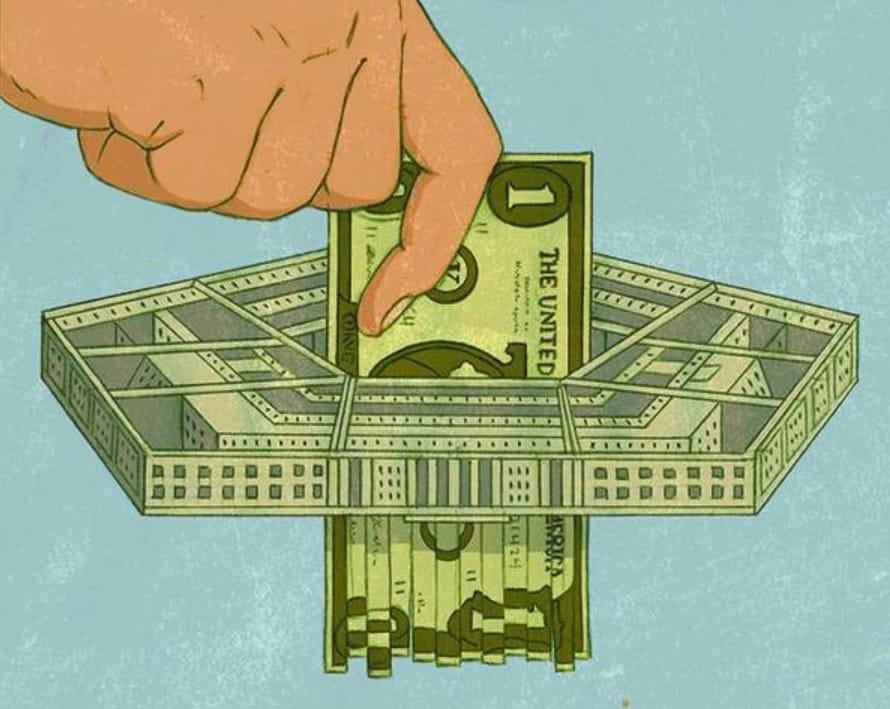
The aim of this book is to show that the causes for the
present widespread individual, industrial, political and
international unrest must be sought in the financial system, and
in that only. More specifically, that this system, under whose
archaic dictates we all necessarily live and suffer, is based on
and entirely motivated by usury — which is itself the genesis of
all hatred, fear, suspicion and war.
In order to do this, a somewhat detailed examination of
existing financial processes has been undertaken. This has
hitherto been considered the exclusive province of financial
and economic experts. It is imperative to-day that it should
be regarded as a matter for everyman’s judgment.
The fact that certain sections of the book are somewhat
technical, does not mean, therefore, that it has been written
solely as a challenge to financial theorists. This book is
written for the ordinary man, and its main implication is
sociological.
The present intolerable position, which the writer believes
to be merely the preliminary stage in the complete breakdown
of the monetary system throughout Western civilization, is the
living ‘ reductio ad absurdum ’ of a condition which is implicit
in all forms of sociology under usury.
Modern civilizations, as well as those of the ancient world,
have been built up on and were or are being broken by usury.
The expansion of a nation or empire depends fundamentally
on the expansion and maintenance of its debt-structure. So
long as interest-payments can be made with respect to an
increasing debt-structure, national or imperial entities can be
supported or extended. In the last analysis, however, these
interest-payments can only be transferred through the complementary degradation of certain classes within these entities
and the commercial exploitation of retrogressive or undeveloped
countries outside them. The spectacular rise of communism
and socialism in the last eighty years shows that this internal
exploitation is now receiving organized opposition on a world
scale. The position with regard to external exploitation will
be discussed in some detail in the succeeding paragraphs.
For hundreds of years, the civilizations of the West have lived
at the expense of the East. Interest-payments due on Western
capital have been made possible by the creation of slavery conditions in the Eastern countries. The jingoistic paraphernalia
of Western military power, state, church, and law derive from
and are entirely subordinate to the financial and commercial
processes which brought about those conditions- For if, in
the military campaigns which extended the areas for Western
exploitation, the Bible has followed the sword, both priest and
soldier have followed the usurer.
In this century, the Eastern countries have come to an awareness of these financial and commercial processes, and are now
prepared to accept, to some extent, the continuance of slavery
conditions, at the dictates of financiers, so as to further a new
and aggressive policy in the world market, with respect to both
industrial and agricultural products. In this policy, the most
powerful weapon of the East is the low standard of living to
which its workers have become inured during centuries of
Western oppression. They are, therefore, able to produce and
sell at prices with which the West cannot compete.
The chief advantage '' of the East, that is to say, in the
coming suicidal struggle for economic supremacy, derives from
the miserable conditions which have been created there by
Western domination. Under usury, it is the exploited who
finally exploit the exploiters, until the wheel once more comes
full circle and the same punitive justice again comes into play.
The rise and fall of civilizations are but episodes in the history
of usury.
There are two forms of usury. The major form is that
represented by bank loans, and the minor form by the creation
of interest-bearing savings and investments which go to make
up the debt-structure in every country.
A fact which is not, but which should be, common knowledge, is that all money in and out of circulation, now comes
into existence as an interest-bearing loan in favour of the banking systems of the world. This major principle of usury is
administered by an international organization which functions
through the central banks and large financial agencies of Western civilization. The minor form of investments is sporadic
and individualistic — even when controlled by international
commercial combines — but derives from, and, in practice, is
dominated absolutely by the major principle of bank loans.
It is important, therefore, to realize that we are all usurers —
from the child who deposits his mite in the penny savings-bank
to the international syndicate of money-lenders which operates
through the Bank for International Settlements and the League
of Nations machinery at Geneva — and that the universal adoption of this evil and disruptive principle, against the teaching
of all the highest philosophical and religious examples, is ratified
by common consent and full legal authority.
Psychologically, usury is based on the desire to get something for
nothing. In practice, it promotes a process of interference, by the
accumulation of debt-claims, in the flow of the
medium of exchange, i.e., money. The spending of money is,
at one and the same time, the promotion of this flow and the
creation and consumption of commodities. The progressive
accumulation of savings and debt-claims (misleadingly called
capital) is the damning up of this flow and the progressive
restriction, first of consumption, then of production, and so,
finally, of both. The secondary flow created by the investment of
debt-claims can only be maintained by the indefinite
extension of the area for exploitation.
As the world is a self-contained entity, and as we are all
simultaneously both usurers and consumers, the progressive
accumulation of debt finally operates to restrict the creation and
exchange of material and psychological values throughout the
whole of society. Debt, in fact, is nothing more or less than
a fantastic abstraction, called out of the deeps of man’s subconscious, ultimately to confound debtor and creditor alike.
For, as statistics go to prove, debt automatically increases
at a faster rate than production, so that there inevitably comes
a time when goods go into pawn faster than they are produced.
When these countries (e.g. of the East) which were formerly
exploited to pay a large part of the interest-claims due on
accumulated debt, not only show less disposition to do so but
begin to establish external debt-claims of their own, an impossible position of tension is created. This attempts to resolve
itself by a desperate competition for the disposal of mounting
“ surpluses ” in the world market, so that foreign currency for
the payment of interest on external debt can be obtained. The
result of this is, firstly, an accelerating competition in internal
wage slavery in all countries concerned, and, secondly, when
these conditions become insupportable, revolution or war. The
World War itself was not a cause but a symptom of the present
decline.
In the past, this progressive accumulation of debt-claims has
brought about the ruin of civilizations as single units. Three
civilizations in the American continent rose and fell. Babylon, Egypt, Greece and Rome fell. But now the nations
are so interlocked by modern means of communication and
transport, by international debt and exchange parities, that a
civilization which encompasses the world is threatened.
The reconstruction proposals in Part III of this book are
therefore concerned with the details of a mechanism to effect
the abolition of usury in all its forms. The end of this would
be the gradual elimination of all debt-claims and the establishment of a system of free money to facilitate and not obstruct,
as at present, the complete distribution of the whole product
of industry to consumers. This would not necessarily involve,
as is commonly supposed by socialists and communists, the
abolition of the profit system and the nationalization of the
productive processes. The abolition of the principle of money
interest on money lent would itself remove anomalies and
desperate injustices which are supposed to reside in capitalism
and the profit system.
Since the writing of “ Das
Kapital ”, Western capitalistic
exploitation, now faced by the aggressive commercial retaliation of the
East, has necessarily given way to purely financial
negation. Nearly all the creations of the nineteenth-century
capitalists — such as, for instance, the power-loom cotton industry of
Lancashire — ^have been broken by usury. International finance, like the
international armaments racket which
it has spawned, knows no boundaries, geographical or cultural, and if
the end of the latter is destruction, the end of the
former, consciously or unconsciously, it matters not which, is
universal degradation and slavery.
In attempting to trace out these developments, the writer
refers specifically to the so-called principles of British and
American banking. As the British system is the more highly
developed, the more “ stable and the more in accordance with
the declared ideals of bankers, he has based his argument mainly
on a discussion of its methods. Eight years’ residence in the
United States has familiarized the author, to some extent, with
the workings of the American banking and industrial systems,
and statistics are given as far as possible, from both American
and British sources, at each stage in the argument. He has
thus sought to interest the reading public on both sides of the
Atlantic.
The writer apologizes for the wholesale use of quotation
marks and italics. He has been impelled to do this, because so many terms used in banking circles, as well as in
ordinary conversation, take on an entirely opposite meaning
when the bogus principles of internal and international finance
are understood. Bank “ credit ” should invariably be thought
of for what it is, i.e. bank debt (and moreover as irrepayable
debt). The phrase “ bank deposits ” is a legal euphemism, as
all bank “ deposits ” derive from the progressive issue of bank
** credit ”. No one, consequently, really “ makes ” money
except the bankers who literally create it. The term “ convertible currency ” is a quibble which has bedeviled mankind
for centuries. Money is not “ convertible ” into gold for the
well-known reason that gold “ backing ” exists in less than a
one-to-ten ratio to bank “ deposits Nothing, in the writer’s
opinion, could be more fundamentally unsound than a “ sound ”
currency. Foreign " trade ” is not primarily the exchange of
goods between nations, but essentially a device to transfer
interest payments due on international debt. Foreign “ investments” are simply part of the mechanism of foreign
“ trade ”. It is criminal to regard unsaleable goods as industrial “ surpluses ” while millions throughout civilization
are faced with the fear or actual fact of starvation. According to financial, as opposed to common-sense reasoning, the
blessings of an ever-increasing abundance and leisure become
insoluble problems of “ over production " and “ unemployment."
If, on occasions, the writer may seem to be a little extravagant
or emotional in his attitude, this is because it is difficult, if not
impossible, to be consistently impersonal when discussing the
principles of so-called sciences which have brought such an
enormous amount of totally unnecessary suffering to humanity.
Banking and economics are not sciences, but academic elaborations of
sinister fallacies, based on superstitions which themselves derive from
the gold idolatry of barbarism. The author
wishes to acknowledge his indebtedness to the writings of the
Editor of, and the contributors to, the “ New English Weekly
a magazine almost entirely devoted to the discussion of certain
aspects of the New Economics. Where direct quotations are
used, acknowledgment has been made. But, in a few instances,
fragmentary phrases as well as paraphrases of incidental material
in editorials and articles have been used without acknowledgment.
He wishes also to thank specially his friend, Mr. Schuyler
Jackson, to whom this book is dedicated. In this enterprise,
as in others, he owes much to the unworldly wisdom of this
Pennsylvanian farmer.


PARIS — The video
shows footprints in blood-red paint tracked by militant protesters
across BlackRock’s French headquarters. Documents litter the floors. On
the walls, black spray-painted graffiti denounces the company as
“criminal.”
Just a few months ago,
BlackRock, the U.S. money-management giant, was barely known to the
general public in France. But as President Emmanuel Macron presses ahead
with a controversial campaign to overhaul the French economy, the
company has become a favorite target for growing anticapitalist
sentiment.
Protesters claim BlackRock
has tried to influence — and stands to profit from — Mr. Macron’s
overhaul of the nation’s pension system. They point to cordial meetings
between Mr. Macron and Laurence D. Fink, the founder and chief executive
of BlackRock. And they fear the huge Wall Street firm — its $7 trillion
under management is more than twice France’s economic output — is
working behind the scenes to pick apart the country’s system of social
protections.
The protests escalated
with the action on Monday morning, when environmental activists who
allege French workers’ pensions could be directed by BlackRock stormed
the company’s offices.
Last
month, trade unions and members of the Yellow Vest movement led a
raucous crowd to the historic Le Centorial building, where BlackRock has
its offices, lighting flares and denouncing what they said was an effort to impose American-style free-market rules on France.
There
is no evidence that BlackRock influenced Mr. Macron to push retirement
savings to it or any other financial giant, although financial firms
could get some business from part of the pension overhaul that
encourages high earners to invest in stocks.
And
BlackRock strenuously denies the claims. “We deplore the fact that our
company continues to be caught up in an unfounded controversy driven by
political objectives,” it said in a statement. “We reiterate that
BlackRock has never been involved in the current pension reform project
and does not intend to be.”
Yet
BlackRock’s role as an adviser to governments and central banks and as a
major shareholder in some of the world’s biggest companies has quickly
made it a symbol in a country that has long been deeply skeptical of
capitalism and the stock market. The social climate here has grown more
tense after recent nationwide strikes to protest the pension overhaul.
BlackRock
has tried to portray itself as an industry leader in responsible
investing. The protesters on Monday cited BlackRock investments in the
French oil giant Total and the construction company Vinci as running
counter to that.
In an influential annual letter to leaders of the world’s largest companies, Mr. Fink said
last month that his firm would make investment decisions with
environmental sustainability as a core goal. On Wednesday, BlackRock
said one of its fast-growing green-oriented funds would stop investing in companies that got revenue from the Alberta oil sands.

Such
actions have done little to placate the company’s growing cadre of
critics in France, where it manages 27 billion euros in assets for local
clients and invests over €185 billion, or $200 billion, in French
equities and corporate and government bonds.
Parliament will start debating next week the bill that aims to overhaul
the nation’s convoluted pension system. Although the system has been
criticized for being too generous, the incidence of poverty among older
people in France is one of the lowest in the world — and far lower than
in the United States.
The
measure seems likely to pass because Mr. Macron’s party commands an
absolute majority, despite attempts by opponents to obstruct the bill
with more than 22,000 amendments. It is expected to move to the Senate
in April.
In the meantime, more
demonstrations have been called, including new strikes and protests on
Thursday. BlackRock is likely to remain a ripe target for frustration.
The
controversy broke open in December when Mr. Macron unveiled details of
his proposal to standardize France’s 42 public and private pension
schemes into one state-managed plan. Critics had already accused the
president, a former investment banker, of favoring the rich with
an earlier measure to reduce taxes on high earners, a step that
resonated in a country where wealth is increasingly associated with
injustice.
Opponents seized on a public BlackRock analyst note
describing pension investment options in France — a sign, they said,
that Wall Street’s biggest asset manager was seeking to profit.
The
document noted that the investment-wary French hold huge piles of
savings in cash, bonds and nonfinancial assets but “disappointingly”
little in stocks. (A recent study by the International Monetary Fund
showed that only 5 percent of French households’ total financial assets
are in stocks. That figure is nearly 34 percent for U.S. households,
according to 2016 data from the Organization for Economic Cooperation
and Development.)
Soon, activists
began circulating photos on social media of Mr. Fink sitting next to Mr.
Macron at a green finance summit in the Élysée Palace in July as proof
of chummy ties.
French media ran articles
highlighting BlackRock’s assessment as a sign that the company is eager
to see France’s state-run pension scheme tilt toward the American
system, where workers often save for pensions through investments.
In
reality, Mr. Macron’s blueprint would instead largely keep France’s
publicly funded pay-as-you-go system in place, a point some trade unions
have recently acknowledged. An editorial on Wednesday in the French
economic magazine Le Point defended BlackRock as being the victim of
“conspiratorial diatribes,” adding that the company was being made into a
“new French scapegoat.”
Opponents insist that Mr. Macron’s plan still opens France to the influence of companies like BlackRock.

They
point to a measure that would cut pension payroll taxes on people
earning more than €120,000 annually — less than 1 percent of France’s
work force — and encourage them to invest in private pension funds.
Addressing
the National Assembly, Olivier Marleix, a conservative lawmaker from
the party Les Républicains, said the proposal would divert money away
from France’s social safety net. “You are offering three billion euros
to pension funds,” he said. “BlackRock’s business will thrive in
France.”
It didn’t help BlackRock’s
image among dissidents when Mr. Macron elevated the president of
BlackRock France, Jean-François Cirelli, a former civil servant who
worked for two previous French presidents, to the rank of officer of the
Legion of Honor, France’s highest order of merit, just as strikes over
the pension changes reached a peak in early January.
The
news lit up social media and triggered a fresh storm of criticism that
the American fund was too cozy with Mr. Macron, and would profit from
the pension changes.
“BlackRock is simply the dark side of the pension reform,” Olivier Faure, the secretary general of the Socialist Party, told French television.
Mr. Cirelli hit back at what he said was “an unfounded and irrational” controversy.
“We
are being used for political ends in a conflict that is not ours,” he
said, adding that BlackRock “is not a pension fund, does not distribute
any retirement savings product and has no intention of doing so.”
Such
statements have not appeased opponents. “BlackRock is an emblem,” said
Benoît Martin, the head of the Paris branch of the militant General
Confederation of Labor union. Mr. Martin said he was among the first
wave of protesters to storm BlackRock France’s headquarters in January.
“You
have Larry Fink meeting with President Macron,” he added. “We’re
concerned about the influence of BlackRock in French politics.”
The
union has called for more demonstrations and strikes to protest the
changes. And BlackRock, Mr. Martin said, is likely to remain a target.
Youth
for Climate France, one of the groups that ransacked the offices on
Monday, said in a statement that the protests were “symptomatic of
capitalism, which is at the origin of these problems.”
“By attacking BlackRock, we’re attacking capitalism,” the group said.
Constant Méheut contributed reporting.
Liz
Alderman is the Paris-based chief European business correspondent,
covering economic and inequality challenges around Europe. She was
previously an assistant business editor, and spent five years as the
business editor of what was The International Herald Tribune. @LizAldermanNYT