domenica 2 febbraio 2020

Influence of Big 4 Auditing Firms on Global financial reporting standards


Extracted from: Timing as a source of regulatory influence: A technical elite network analysis of global finance
Ranjit Lall
Department of Government, Harvard University, Cambridge, MA, USA
2014
https://scholar.harvard.edu/files/ranjitlall/files/lall_rg_2015.pdf

5. Global financial reporting standards

The second test case for TEN theory is the IASB, the transnational regulatory regime responsible for developing financial reporting standards for companies across the globe. Financial reporting standards specify how assets, liabilities, income, expenses, and other transactions and events should be defined and recorded in corporate financial statements. These standards create financial statements that contain comprehensive, transparent, and comparable information about companies’ financial positions. In doing so, they facilitate investment and trade, as well as shaping business incentives in areas as diverse as executive compensation, corporate financing, mergers and acquisitions, and research and development. In short, they “affect all sectors of the economy and are central to the stability of a country’s financial system” (Büthe & Mattli 2011, p. 1).

    Naturally, the harmonization of financial reporting standards has yielded considerable economic benefits for firms and investors around the world. These benefits, however, have not been distributed evenly. Auditing firms in Anglo-Saxon countries have consistently succeeded in ensuring that global standards reflect the emphasis of their domestic accounting systems on measuring transactions at “fair value” – that is, current market prices. The global regulatory shift toward fair value accounting has, in turn, provided these firms with lucrative opportunities to expand their market share in regions that had previously recorded most transactions at historical cost, such as continental Europe.17 By contrast, firms in the latter regions, whose national accounting standards diverge from those adopted by the IASB, have been forced to pay considerable “switching costs” in order to comply with global rules. In addition to learning how to interpret information reported under the new rules, they have had to invest large sums overhauling their accounting systems and recalibrating lending agreements, compensation schemes, and investment plans. In short, the global harmonization of accounting standards has created clear winners and losers.

   What explains these uneven distributional effects? Realists emphasize the magnitude of Anglo-Saxon nations’capital markets, which has enabled them to pressure access-seeking foreign firms into adopting their domestic standards (Simmons 2001). Yet in terms of size, capital markets in Anglo-Saxon countries have been matched – and on some measures exceeded– by those in continental Europe for several years.18 Neo-Marxists would highlight the structural and ideological influence wielded by global auditing firms based in Anglo-Saxon countries. While more promising, however, this explanation has major shortcomings. First, as auditors provide (substitutable) services, rather than investing or lending, they can inflict only limited economic damage on governments that refuse to adopt their favored rules. Second, even if exit threats were effective at the national level, they would not be credible at the global level: as of 2010, more than 120 countries had adopted the IASB’s International Financial Reporting Standards (IFRS). Finally, neoliberalism does not have clear implications for the debate between fair value and historical cost accounting. As discussed shortly, Anglo-Saxon firms’ strategy for influencing IFRS relied less on indoctrinating the IASB with a particular economic philosophy than convincing it to delegate key tasks to them at the crucial agenda-setting and planning stages of the standardization process.

    As this suggests, a more persuasive explanation for the distributional effects of global accounting standards lies in the ability of Anglo-Saxon auditors to consistently secure first-mover position in IASB negotiations. The source of this advantage can be traced back to the very first incarnation of the IASB, the Accountants International Study Group (AISG), a forum of British, American, and Canadian standard-setters established in 1966 to examine differences between national accounting rules. As rulemaking had traditionally been delegated to the accountancy profession in Anglo-Saxon countries, the AISG was mostly comprised of professional auditors. In 1973, the AISG invited standard-setters from six other countries to join it in establishing the International Accounting Standards Committee (IASC) – the IASB’s predecessor – which explicitly aimed to develop global standards. Despite its enlarged membership, the IASC was equally dominated by Anglo-Saxon firms, in particular the Big Six of Arthur Andersen, Coopers & Lybrand, Deloitte & Touche, Ernst & Young, Peat Marwick Mitchell, and Price Waterhouse. No fewer than eight of the IASC’s 12 chairmen were partners in one of the Big Six. In addition, “[t]he greater part of the IASC’s experts that took part in the steering committees and on the IASC’s staff as project managers had their ordinary employment at one of the six major accounting firms” (Hallström 2004, p. 92).

   The influence of major accountancy firms in the IASC expanded yet further in 1993 with the establishment of the Group of Four plus One (G4+1), a forum for discussing major standardization projects comprising standard-setters from Australia, Canada, the UK, and the US (plus an observer from the IASC). Between 1994 and 2000, the G4+1 evolved from “think tank” to “embryonic standard-setter,” publishing 12 papers – many of which resembled fully-fledged standards – that guided the IASC’s work on a variety of complex accounting topics (Street 2006, p. 116). As we will see in the following subsections, these papers also played a crucial role in the development of IFRS.

   Following the IASC’s decision to restructure itself in 1998–a move aimed at enhancing its ability to develop high-quality global standards – G4+1 standard-setters exploited their collective bargaining power to ensure that members of the new regime would be selected solely on the basis of technical accounting expertise, an asset highly concentrated in Anglo-Saxon auditing firms. Consequently, no fewer than eight of the IASB’s 14 original membershad been previously employed by one of the Big Six – a majority large enough to approve the adoption of a global standard under the board’s new constitution. Four of these eight members had also participated in G4+1 meetings, including the group’s first chairman Sir David Tweedie, a former KPMG partner and head of the British Accounting Standards Board (ASB), who served as chairman of the IASB from its establishment in April 2001 until June 2011.
   Accountancy firms were also strongly represented in the IASB’s auxiliary bodies. All of the Big Four auditors that have dominated global accounting since the early 2000s – Deloitte, PricewaterhouseCoopers (PwC), Ernst & Young, and KMPG – were members of both the International Financial Reporting Interpretations Committee (IFRIC),which issues authoritative guidance on conflicting interpretations of IFRS, and the Standards Advisory Council (SAC), the IASB’s advisory body.19

   The concentration of technical expertise in Anglo-Saxon auditors has opened up several avenues for informal interaction between these firms and the IASB. Board members hold regular off-the-record consultations with the firms’ specialized IFRS teams, using them as a“sounding board” for new projects.20 After projects are approved, theseteams are often delegated the further task of drafting, editing, and proofreading the text of discussion papers and IFRS. Anglo-Saxon auditors also form the core of the “Expert Advisory Panels” frequently convened by the IASB to assess whether additional regulatory guidance is needed in a given area of accounting.21 Perhaps most importantly, these firms provide a large proportion of the IASB’s technical staff through an institutionalized secondment system. Under this system, firms pay for senior managers to work at the IASB as “Practice Fellows” for a period of one to two years. Although nominally independent, secondees have strong incentives to promote their employers’ preferences in IASB working groups and steering committees.22

    In the remainder of this section, I examine how membership in the IASB’s exclusive ISN has enabled Anglo-Saxon auditing firms to shape three of most important standards adopted by the IASB during the past decade: IFRS 9 Financial Instruments, IFRS 3 Share-Based Payment, and IFRS 2 Business Combinations. The main findings are summarized in Table 2.

Table 2


5.1. Financial instruments

Since its establishment, the vast majority of the IASB’s work has been devoted to revising International Accounting Standards (IAS) inherited from the IASC. Perhaps the fiercest distributional battle over the revision of an existing standard concerned IAS 39, which dealt with the measurement and recognition of financial instruments. The first attempt to develop a standard governing financial instruments was made in the late 1990s. Under pressure to finalize a set of “core standards” in order to gain the endorsement of the International Organization of Securities Commissions (IOSCO), the IASC had hastily adopted an interim financial instruments standard – IAS 39 – under which some financial instruments were measured at fair value while others were measured at historical cost (IASC 1998).

    To ensure that any long-term solution reflected its preferences for a full fair value approach, the G4+1 established an independent committee – the Joint Working Group of Standard Setters (JWG) – to develop a permanent version of IAS 39. Despite including a handful of standard-setters from continental Europe, the JWG was dominated by large accountancy firms: more than half of the JWG’s 20 members – including both its chairman and project manager –were current or former employees of the Big Four. 23
As expected, the JWG’s draft permanent standard, outlined in a lengthy report published in December 2000, permitted the “measurement of virtually all financial instruments at fair value” (JWS 2000, p. i).

   Following the transition to the IASB in 2001, major accountancy firms had little difficulty ensuring that the JWG’s draft standard became the basis for proposed revisions to IAS 39. Indeed, the IASB’s official project manager for amendments to IAS 39 – Sandra Thompson, a former project director at the UK ASB – was herself a key contributor to the JWG’s draft standard (JWG 2000, p. 300). Furthermore, three of the JWG’s most senior members– Tricia O’Malley, Tatsumi Yamada, and James Leisenring – were now members of the IASB. Most stakeholders only became aware that the IASB had adopted the JWG’s suggestions following the publication of the first exposure draft for amendments to IAS 39 in June 2002. The 337-page draft, which had taken officials more than a year to write,allowed entities “to measure any financial asset or financial liability at fair value” (IASB 2002a, p. 130).

   Unsurprisingly, the proposal encountered stiff resistance from continental European stakeholders – in particular banks – who had traditionally measured financial instruments at historical cost. The French Banking Federation (FBF), for instance, denounced the full fair value approach as “dangerous” and “self-defeating,” predicting that it would result in “an increase, not economically justified, of the volatility of the balance sheet and profit and loss account, which produces inaccurate information in the financial statement” (FBF 2002, p. 1). As opposition mounted, in July 2003 French president Jacques Chirac took the unprecedented step of writing to EC president Romano Prodi to warn him of the proposal’s “nefarious consequences for financial stability” (Dombeyet al. 2003).

   Yet even high-level political intervention could not alter the IASB’s trajectory, and only minor changes were made to the original draft over the following two years. As the European Commissioner for Internal Market and Services later admitted, “The banks [in Europe] . . . engaged in discussion on the issue far too late” (Bolkestein 2004).24

   Unable to defend their interests in IASB negotiations, European banks persuaded the EC to “carve out” the full fair value option from the 2004 Commission Regulation translating IAS 39 into EU law – a move condemned by businesses for jeopardizing harmonization efforts (EC 2004). Under pressure to abolish the exception, one year later the EC adopted a slightly modified version of IAS 39 published by the IASB in 2005 that continued to allow fair value measurement in most circumstances (EC 2005).25

    Controversy over IAS 39 was reignited during the global financial crisis, in which fair value accounting was widely regarded as having exacerbated illiquidity in securities markets. In March 2009, the G20 Working Group on Enhancing Sound Regulation and Strengthening Transparency emphasized the need to “dampen the adverse dynamics associated with fair value accounting,” a message echoed in the G20 leaders’ recommendation in April to “improve standards for the valuation of financial instruments” (G20 2009, p. 5; G20 Working Group 1 2009,p. iii). Yet one year earlier – in a discussion paper drafted in part by auditing firms – the IASB had already concluded that “[f]air value seems to be the only measure that is appropriate for all types of financial instruments” (IASB 2008, p. 4).26 Subsequent amendments to IAS 39 consequently contained no further restrictions on the use of fair value measurement.27 To the contrary, the first part of IAS 39’s successor standard IFRS 9, which was issued by the IASB in November 2009, expanded the application of fair value by requiring new types of embedded derivatives and financial liabilities to be valued at market prices (IASB 2009). EC officials, who were said to be “furious” that they had not been given deserved weight in negotiations, refused to endorse IFRS 9 until the remaining parts of the standard had been finalized.

5.2. Share-based payment 

Timely participation by accountancy firms played an equally important role in shaping the IASB’s treatment of share-based payment transactions – that is, transactions in which payment takes the form of granted shares, share options, or share appreciation rights. Traditionally, few accounting systems provided guidance on such transactions, allowing businesses to keep expensive employee share plans out of their financial statements. In the late 1990s, major auditing firms convened a working group under the auspices of the G4+1 to explore the possibility of harmonizing accounting rules on share-based payment. The working group was headed by two project directors at the UK ASB with close links to the auditing firms: Kimberley Crook, a secondee from the London branch of PwC; and Kathryn Cearns, a former employee of Ernst & Whinney (later Ernst & Young). The main conclusions of the working group, which were published in an IASC discussion paper in July 2000, were that: (i) share-based payment transactions should be recognized in financial statements; and (ii) the “appropriate measurement basis for such transactions is the fair value of the shares or options issued” (IASC 2000, p. 7).

   Following the release of the report, share-based payment quickly found its way to the top of the newly established IASB’s agenda. In a now familiar pattern, the IASB selected former PwC employee Kimberley Crook – the principal author of the G4+1 discussion paper – to lead its standardization project on share-based payment. Unsurprisingly, the lengthy exposure draft for the new standard, which was circulated for comment in November 2002 following several months of technical work, embraced both of Crook’s earlier recommendations. As the draft’s introduction states, “The objective of [the draft standard] is to ensure that an entity recognizes all share-based payment trans-actions in its financial statements, measured at fair value, so as to provide high quality, transparency, and compatible information to users of financial instruments” (IASB 2002b, p. 16).

   While receiving strong support from large auditing firms, the exposure draft provoked a furious reaction from businesses across Europe (see PwC 2003). The European Financial Reporting Advisory Group (EFRAG), a private-sector organization established in 2001 to provide advice to the EC on the technical quality of IFRS, emphasized the“great concern among our constituents that all share purchase plans would be automatically scoped in by the proposed standard,” and argued that the blanket application of fair value to shared-based payment transactions was “too restrictive” (EFRAG 2003, pp. 2–3). The European Employee Stock Options Coalition (EESOC) was even more critical, arguing that the draft “is inconsistent, technically flawed, leaves some important implementation questions unanswered and would, if adopted, impair the credibility of reported numbers by reducing comparability and introducing an opacity to the accounts” (EESOC 2003, p.1). As with IAS 39, however, these objections were submitted too late for the IASB to consider relinquishing its extensive earlier work on the proposal. In November 2004, the exposure draft was adopted virtually unchanged as IFRS 2 Share-based Payment (IASB 2004a).

5.3. Business combinations

The development of global accounting rules governing business combinations (mergers and acquisitions) provides a further example of the success of auditing firms in obtaining their favored distributional outcomes by securing first-mover advantage in the standard-setting process. In the late 1970s, accountancy firms persuaded the IASC to establish a steering committee under the chairmanship of John Bishop, a partner in the Australian branch of Peat Marwick Mitchell (later KPMG), to assess the scope for reconciling national accounting rules on business combinations. These firms were particularly keen to rein in the use of the pooling-of-interests method of accounting for acquisitions, which requires that two businesses’ assets and liabilities are combined at their book values following an acquisition.28 Under their favored option – the purchase method – balance sheets are amalgamated at market values. 

   The standard that emerged from the committee’s deliberations in June 1983, IAS 22, clearly reflected preferences of accountancy firms: the purchase method was required for the vast majority of business combinations, with pooling-of-interests accounting allowed only in “rare circumstances” (IASC 1983).

    During the 1990s, businesses began to circumvent IAS 22’s restrictions on the use of pooling-of-interests accounting, which typically “allowed a wide range for interpretation” (Camfferman & Zeff 2006, p. 137). In the US, for instance, the share of mergers and acquisitions transactions recorded using the pooling-of-interests method soared from two percent in 1992 to 31 percent in 1998 (Boegler & Lewis 1998). In response, accountancy firms assembled a working group of senior accountants from G4+1 standard-setters to draft a comprehensive set of revisions for IAS 22. The working group’s main recommendation for revising IAS 22, published in a G4+1 discussion paper in December 1998, was that the pooling-of-interests method should be eliminated entirely. All business combinations, in other words, should be accounted for using the purchase method (G4+1 1998).

   In October 2002, as part of the so-called Norwalk Agreement to promote convergence between US generally accepted accounting principles (GAAP) and IFRS, the IASB embarked on a joint project with the Financial Accounting Standards Board (FASB) to develop a successor standard to IAS 22. The IASB–FASB exposure draft for the new standard (ED3), published in December 2002, incorporated the G4+1’s recommendation almost word-for-word, proposing “to eliminate the use of the pooling-of-interests method and require all business combinations within its scope to be accounted for by applying the purchase method” (IASB 2002c, p. 5). This move had been strongly advocated by the FASB, which had followed other G4+1 standard-setting bodies in abolishing pooling-of-interests accounting at the domestic level in June 2001. As the Financial Times noted at the time, it was clear that companies in continental Europe, where the pooling-of-interests method was still widely used, would be “hardest hit” by the new rules (Smy 2002).

   Once again, support for the retention of the pooling-of-interests method from European stakeholders was expressed only after the release of the IASB’s exposure draft, a relatively late stage in the standardization process. The European Roundtable of Industrialists (ERT), which represents the interests of around 50 major European multi-national companies, criticized the draft as “arbitrary” and “inappropriate,” arguing that “the cost of acquisition has to be retained because it is the best way to measure the net assets acquired” (ERT 2003, pp. 1–2). Mazars, a French accountancy firm, expressed a similar view, arguing that in the case of mergers between similarly sized companies “the purchase method [does not give] a true and fair view of the economic substance of the new entity resulting from the combination” (Mazars 2003, p. 5). Other European stakeholders, such as the French bank BNP Paribas, missed the deadline for submitting comments altogether. Consequently, in March 2004 the exposure draft was adopted by the IASB with minimal changes as IFRS 3 Business Combinations (IASB 2004b).


Notes:

17 Despite traditionally conducting much of their business in the US, as of 2012 the Big Four derived the largest share of their global revenues – 43 percent on average – from Europe (Big4.com 2013, p. 2).

18 According to recent IMF data, the value of bonds, equities, and bank assets is almost $20 trillion higher in the EU than in the US (International Monetary Fund 2012, appendix p. 11).

19 The Big Six became the Big Four following the merger of Coopers & Lybrand with Price Waterhouse to form PwC in 1998 and the collapse of Arthur Andersen in the wake of the Enron scandal in 2002.

20 These discussions are also an important source of information about the IASB’s agenda for auditing firms. As one partner of a Big Four firm revealed: “Although the IASB eventually publishes its agenda, we usually learn about new standardization projects in advance through private discussions with board members and staff.” Author’s interview with Deloitte partner, London, August 2012.

21 Author’s interview with KPMG partner A, London, August 2012.

22 Author’s interview with KPMG partner B, London, August 2012.

23 Interestingly, a further two members – Patricia Stebbens and Shigeo Ogi – would be made partners at the Big Four shortly after the JWG’s disbandment.

24 Representatives of EU member states, such as the German state secretary for economics Caio Koch-Weser, also lamented that Chirac’s intervention came “too late” to alter the IASB’s decision (Dombey 2003).

25 Specifically, it allows firms to use fair value when there is an “accounting mismatch” between the measurement of assets and liabilities and when financial instruments are managed in accordance with a documented risk management strategy (IASB2005).

26 Author’s interview with KPMG partner A, London, August 2012.

27 In October 2008, however, the IASB issued amendments to IAS 39 allowing firms to temporarily reclassify instruments outof the fair value category in “rare circumstances,” such as the ongoing turmoil (IASB 2008, p. 5).

28 The book value of an asset is its historical cost minus any depreciation, amortization, or impairment costs made against it

lunedì 13 gennaio 2020

Geopolitical blackmail through the FED

Iraq warned to keep US troops or risk financial blow-WSJ

US officials warn Baghdad Iraq could lose access to critical US-based bank account where oil revenues are held-WSJ.
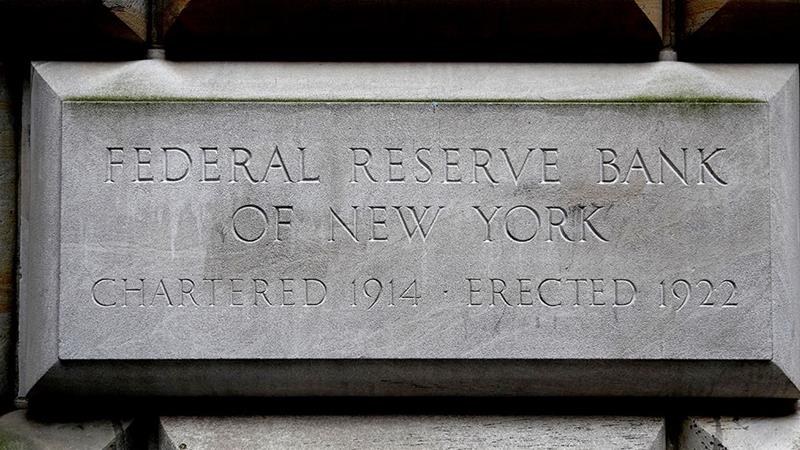
If Iraq loses access to its New York Fed accounts and the funds in them, it would trigger a shortage of foreign exchange vital to Iraq's already fragile economy[File; Carlo Allegri/Reuters]
If Iraq loses access to its New York Fed accounts and the funds in them, it would trigger a shortage of foreign exchange vital to Iraq's already fragile economy [File; Carlo Allegri/Reuters]
The iron grip the United States maintains over the global financial system - and its propensity to use that power to promote its national interests - was reportedly at play this week after Iraq's parliament voted on January 5 to urge caretaker Prime Minister Adel Abdul Mahdi to expel all foreign troops from the country.

The Wall Street Journal reports the Trump administration warned Iraq that if it kicks US forces out of the country, Washington could respond by shutting down Baghdad's access to a key account Iraq's central bank holds with the Federal Reserve Bank of New York - an account that is crucial to the management of Iraq's oil revenues and its overall financial stability.

More than 200 central banks, governments and international official institutions hold accounts with the New York Fed, thanks to the outsized role the US dollar plays in global financial transactions.
The New York Fed provides these foreign account holders with a range of banking services to facilitate cross-border payments, manage dollar reserves, and access banking channels to help stabilise markets during times of acute financial stress.

The WSJ notes that if Iraq were to lose access to its New York Fed accounts and the funds in them, including profits from oil sales, that could trigger a shortage of foreign exchange vital to the functioning of Iraq's already fragile economy.
The US Department of State warned Iraq's prime minister over the potential loss of access to New York Fed accounts in a phone call on Wednesday, according to an official in his office, the WSJ reports.

Spokespeople for Iraq's prime minister, the country's central bank and the Iraqi embassy in Washington did not respond to the WSJ's requests for comment, while the US Department of Treasury and the Federal Reserve Board declined to comment.

Following the assassination of Iranian general Qassem Soleimani in a US air attack, Iraq's parliament voted to urge Prime Minister Abdul Mahdi to work towards expelling the more than 5,000 US troops stationed in the country.
US President Donald Trump threatened to slap sanctions on Iraq should it carry out the non-binding resolution.

On Friday, Abdul Mahdi signalled his intention to press ahead with it, saying he asked Washington to send a US delegation to Iraq to discuss steps for the withdrawal of US troops. The request was flatly rejected by the US state department.

US Secretary of State Mike Pompeo told reporters at the White House on Friday: "We are happy to continue the conversation with the Iraqis about what the right structure is."
SOURCE: News agencies

sabato 11 gennaio 2020

A pan-African CFA activist: rising anti-French sentiment

CFA'S END

A pan-African CFA activist is the face of rising anti-French sentiment in Francophone West Africa

After four days in detention in Burkina Faso for “insulting the president and other presidents,” Kémi Séba, the controversial Franco-Béninois activist, who spearheaded a movement against the regional currency, the CFA, was all set to arrive in Mali on Wednesday (Jan. 8) for demonstrations demanding the exit of the French military.

Instead he posted video on his Instagram account from Cotonou airport in Benin claiming he had been stopped from boarding an Air Burkina flight to Bamako, Mali’s capital city.
And yet, Séba’s battle against the CFA and “Francafrique” is really just getting started.

While many welcomed last month’s news West Africa’s CFA monetary union has agreed with France to rename its CFA franc as the Eco and cut some of the financial links with Paris, there are still plenty of doubters and plenty of concerns about one of the messengers of change.

The fact it was French president Emmanuel Macron, along with president of Côte d’Ivoire Alassane Ouattara, who announced the end of the West African CFA seems to only further convince Séba and his followers that France’s “neo-colonialism” is alive and well.

“Macron shouldn’t be the one to say our CFA is finished,” said Hervé Ouattara, the head of the Anti-CFA Front in Burkina Faso. “They are not respecting us.” The activist also accused both France and Ivory Coast of “acting unilaterally” and overriding regional bodies such as the Economic Community of West African States in its decision.

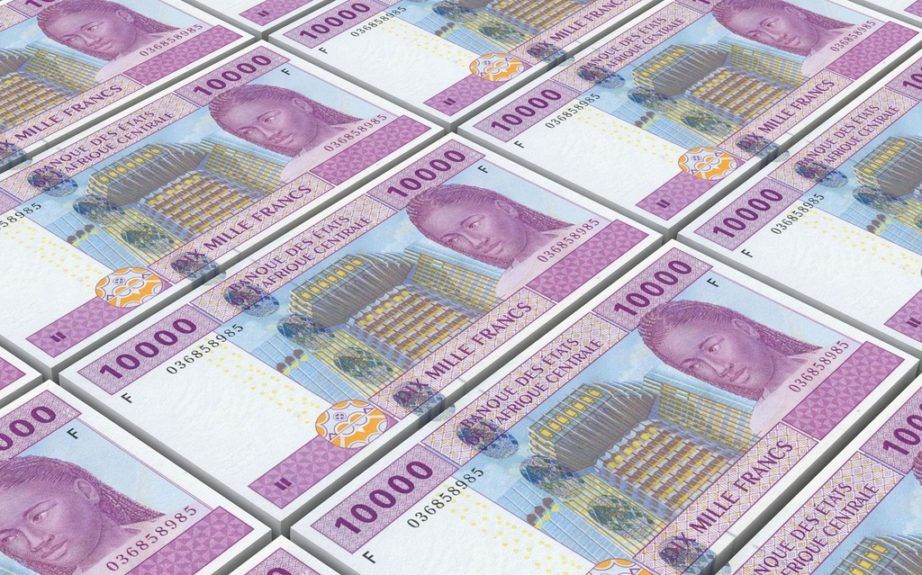
The CFA is a regional currency pegged to the euro and used throughout 14 mainly Francophone countries in West and Central Africa and dates back to the days of colonial rule, when CFA was launched in 1945 as les Colonies Françaises de l’Afrique or  (“French Colonies of Africa”). Even though it has since been renamed as  Communauté Financière d’Afrique (“Financial Community of Africa”) certain scholars and activists like Séba have long argued France has used the currency to undermine national sovereignty and control and manipulate African economies to its own advantage.

The West African CFA is used in eight countries (Benin, Burkina Faso, Guinea-Bissau, Ivory Coast, Mali, Niger, Senegal and Togo) while a separate Central African CFA is used in the other six countries (Cameroon, Central African Republic, Chad, Republic of the Congo, Equatorial Guinea and Gabon).

On Dec. 21, Macron and Ouattara announced plans for a new regional currency called the Eco for West African users of the CFA. It remains unclear how the new currency will be rolled out, however, news reports claim reserves of the new currency will remain in West Africa at the Central Bank of West African States (BCEAO). This would be a key change from the CFA which operates under the requirement that half of its reserves are kept in the French treasury, which has fueled suspicion of French economic control.


While Séba has mobilized young people all across West Africa against CFA, he is at the forefront of a broader regional backlash against the former colonial ruler. Thirty-eight-year-old Séba was born Stellio Gilles Robert Capo Chichi in northern French city of Strasbourg to Béninois parents. In 2004 he established two black nationalist movements named Tribu Ka and then Kémi Séba Generation, that were both shut down by French presidential decrees, claiming the groups promoted antisemitic hate.
Séba has since reinvented himself an anti-colonial and pan-Africanist leader through his group Pan-African Emergency (Urgences Panafricanistes in French) that has thousands of followers on social media.  In January 2017, Séba established the Anti-CFA Front that is active in Burkina Faso, Mali, Niger, Benin and Cameroon and in Sénegal, where Séba was expelled for burning a 5,000 CFA bill (equivalent to $9.20). The group has mobilized around the abolition of the CFA that Séba refers to as “colonial money.”

But as the security crisis in the Sahel worsens, Séba’s focus has also turned toward France’s military presence in the region. “Afrique libre ou la mort!” or “Free Africa or death!” Séba chanted to a lecture theatre packed with students at the University of Ouagadougou, just a few hours before his arrest.
Séba has accused France of fueling regional terrorism and called president of Burkina Faso Roch Marc Christian Kaboré of being a “passoire politique” or “political strainer” for France. A widely-circulated mobile phone video of the conference was posted on Séba’s YouTube channel.

Séba, who has in recent years been arrested in three other West African countries for comments he has made during political rallies, was detained by Burkina Faso’s gendarmerie for four days before appearing in court on Dec 26. He was found guilty and received a two-month suspended prison sentence and a 200,000 CFA fine from the court, that could be enforced if he comes back to Burkina Faso and “insults” the president or other presidents again.

While Séba’s comments drew criticism from some quarters, activists and human rights groups are reading the arrest as a sign that in an election year, the government will be targeting those who speak out against the president, who will be contesting—and against France, whose president last month called on Sahelian countries to address anti-French sentiment. 
Outside the Palace of Justice in Ouagadougou, Séba, who wore a tight black shirt and a giant carving of the African around his neck, remained defiant.
“Nobody will be able to moderate our language,” he said.

Sign up to the Quartz Africa Weekly Brief here for news and analysis on African business, tech and innovation in your inbox

lunedì 6 gennaio 2020

The Franc Zone, a Tool of French Neocolonialism in Africa


The Franc Zone, a Tool of French Neocolonialism in Africa


François Mitterrand warned that France would be irrelevant to twenty-first-century history unless it maintained its control of Africa. Its instrument for so doing is the CFA Franc — a colonial currency entrenching French rule more than fifty years after independence.


The CFA franc, used by fourteen countries yet economically bound to France, is the last colonial currency on the African continent. French and international media had long taken its existence as something of a dirty secret, even though it is used by some 187 million people. Yet it has now broken into the headlines again, thanks to five years of sustained mobilizations by pan-Africanist movements and intellectuals.

The controversy surrounding the CFA franc came into particular focus in late December, following statements by French president Emmanuel Macron and his Ivory Coast counterpart Alassane Ouattara. Their promise for “reform” of the currency — which is now to be renamed the “eco” — was lapped up by mainstream media outlets. They have been quick to declare the currency’s death, bidding “Farewell to the CFA Franc,” as one Wall Street Journal columnist put it.

Yet a closer look at this affair suggests that such triumphant responses were overly hasty — or rather, outright misleading. If little-known outside the French-speaking world, the history of the CFA franc instead points to quite a different reality — and the persistence of what has for decades served as a tool of French neocolonialism.

From the CFA Franc to … Two CFA Francs

The CFA franc’s origins date back to the aftermath of World War II. Postwar conditions demanded a devaluation of the franc used in metropolitan France, but the question remained as to whether one same devaluation should be made across the whole colonial empire — thus maintaining a single currency for a single empire — or various devaluations, given that the war had such unequal impacts across different French-ruled territories.
The French Finance Ministry secretly opted for this latter course of action, which ultimately led, on December 26, 1945, to the official creation of the Franc of the French Colonies in Africa (FCFA). The new currency came with an incredible fixed parity — 1 CFA franc was to be worth 1.7 metropolitan francs. In 1948 this rate was further revised upward, with 1 CFA franc now fixed at 2 metropolitan francs! By contrast, as could be reasonably expected, British colonies in Africa had an exchange rate value lower than the British pound. The CFA franc was thus born overvalued, which translated into enduring low domestic and export competitiveness — two characteristics of economies producing and exporting primary goods and importing nearly everything else.
Indeed, from its creation, the CFA franc was an integral part of an economic mechanism designed to ensure that France’s sub-Saharan colonies would help rebuild a metropolitan economy which lacked the necessary vigor to face up to international competition. Simultaneously, the metropolitan French economy needed access to sources of raw materials that it could buy in its own currency, at below world-market prices.

As former colonies gained their independence, colonial currency blocs around Africa — the pound sterling area, the (Spanish) peseta area, the Belgian currency area, the (Portuguese) escudo area, and so on — were gradually dismantled. The newly independent states chose to issue their own national currencies, as a symbol of their rise to the rank of internationally recognized sovereign states.

The exceptions, here, were the sub-Saharan countries gathered in the franc zone. Indeed, France had conceded independence to such countries only on condition that African political leaders — most of whom had been educated in France — signed “cooperation agreements” governing future relations.
Covering fields ranging from raw materials to foreign trade, currency, diplomacy, the armed forces, higher education, and civil aviation, these agreements sought to entrench French sovereignty and hollow out the promise of independence. In July 1960, French premier Michel Debré wrote to his Gabonese counterpart Léon Mba, “We grant independence on the condition that the independent state endeavors to respect the cooperation agreements … The one does not go without the other.”

As far as currency was concerned, this “cooperation” meant that newly independent countries would have to keep the CFA franc.
Guinea, under the leadership of the trade unionist Sekou Toure, refused to play the rules of the game. After independence in 1958, it exited the franc zone in 1960. In retaliation, French secret services flooded its economy with counterfeit banknotes. According to their accounts, this sabotage was highly successful in disrupting the Guinean economy. Togo, under Sylvanus Olympio, also tried to escape the franc zone. On December 12, 1962, the London School of Economics graduate formally created a national central bank. On January 13, 1963 he was killed by Togolese soldiers trained in France. Togo’s national currency never saw the light of day.

Despite the fierce political repression imposed by the French government, Mali (1962–67), Madagascar (1972), and Mauritania (1972) did, however, quit the franc zone.
In the mid-1970s, the headquarters of the Bank of Central African States (BEAC) and Central Bank of West African States (BCEAO) were transferred to Yaoundé and Dakar respectively. Their initially 100 percent French staff was then “Africanized,” as were the notes and coins.

Today, the acronym “FCFA” in fact refers to two currencies which are not directly convertible with one another. It refers to both the franc issued by the BCEAO for the West African Economic and Monetary Union (WAEMU) member states (Benin, Burkina Faso, Ivory Coast, Mali, Niger, Senegal, Togo, and former Portuguese colony Guinea-Bissau, joining in 1997) and the separate economic and currency community using the franc issued by the BEAC (covering Cameroon, Chad, Central African Republic, Gabon, Congo, and the former Spanish colony of Equatorial Guinea, joining the group in 1985).
These fourteen countries plus the Comoros Islands (which uses its own franc issued by its own central bank, with a different parity rate for its peg to the euro) together constitute a set known as the “African countries of the Franc zone.” Their currencies are subject to the same rules of functioning — and if the CFA franc was once a thinly disguised French franc, today it can be considered a similarly disguised euro.

A Colonial Mechanism

The CFA franc system has, since its origins, rested on four pillars. The first is the fixed parity between the CFA franc and the French currency (the French franc and, from 1999, the euro). Next is the freedom of transfer of capital and income within the franc zone. Third is the guaranteed convertibility of the CFA franc at a fixed rate, namely the French Treasury’s promise to lend the BCEAO and the BEAC the desired volumes of French currency when they no longer have enough foreign reserves.

But as a counterpart to this “guarantee,” France is itself represented in the BCEAO and BEAC bodies — their boards, monetary policy committees, and control organs — with a statutory right of veto that has become implicit over time.

The other counterpart is that these two central banks are compelled to deposit part of their exchange reserves with the French Treasury. In the wake of independence, the obligatory deposit quota stood at 100 percent, before it was reduced to 65 percent in 1973 and then 50 percent in 2005.

This, indeed, is the fourth principle: the centralization of their exchange reserves in the hands of the French Treasury. This implies that the French Treasury is, effectively, the bureau de change of the countries that use the CFA franc. All conversion operations from the CFA franc into other currencies have to pass via the French Treasury. It is worth underlining, moreover, that the Banque de France holds 85 percent of the BCEAO’s monetary gold stock.
If France has been committed to maintaining the franc zone for over seventy years, that is because it benefits from it. This was explicitly recognized in a 1970 report by the French Socio-Economic Council which listed the “incontestable advantages for France.” First, France could pay its imports from franc zone countries in its own currency. This allowed it to save on foreign currency and keep up its own exchange rate. This has been important in a world where the dollar is the main currency for international trade and the French franc weak and unstable.

French companies operating in the zone moreover benefit from large — and stable — outlets for trade. Added to this, the French economy benefits from a trade surplus with regard to the franc zone countries, which also provide it a far from negligible amount of exchange reserves which have sometimes been used to pay France’s debts. French companies also have the guaranteed freedom to repatriate their revenue and capitals without any foreign exchange risk, thanks to the free-transfer policy and the fact that France decides the zone’s exchange and monetary policy.

Lastly, thanks to the CFA franc France enjoys a system of political control serving its own economic interests. This also costs France nothing, since its supposed convertibility “guarantee” has rarely been put into effect. Indeed, the French Treasury has often offered negative interest rates (in real terms) for African exchange reserves, meaning that the BCEAO and the BEAC have been losing money — it is as if they paid the French Treasury to keep their foreign reserves. And on the few occasions that African countries have had foreign-payments problems, France has appealed for IMF intervention or joined with the IMF to demand a currency devaluation, as in 1994.

The CFA franc’s benefits aren’t just for France, however — they extend to importers and to the African upper classes, whose appetite for imported luxuries explains their preference for an overvalued exchange rate. For African political leaders, the CFA franc is a mechanism to facilitate the transfer of financial resources, no matter how they were acquired. And, as long as they stay quiet on the issue, they have the backing of the French government against political dissidents and their own people in times of trouble. This is especially the case in Central African countries, most of whose presidents have been in power for more than three decades.

A Recipe for Underdevelopment

This has had grave effects on African economies. Franc zone membership is synonymous with very low levels of regional trade — 10 percent on average for the whole African franc zone and 5 percent for its Central African component — and with economic stagnation or even decline. In 2016 the largest franc zone country, Ivory Coast, had a real GDP per capita one-third lower than its 1978 peak. West Africa’s second-largest franc zone country, Senegal, had a real GDP per capita in 2016 of the same order of magnitude as its 1960 level. Meanwhile, the franc zone’s three largest Central African economies — Cameroon, Congo, and Gabon — have still not returned to their highest levels of real GDP per capita, reached in 1986, 1984, and 1976 respectively.

Adopting a longer-term perspective, we see that the high growth levels observed in the West African franc zone over the last ten years ought to be ascribed — for now, at least — to “making up” for “lost decades.” Clearly the CFA franc is not the only factor explaining this weak economic performance, which can also be found in some non-franc zone countries. But it has, without doubt, made a specific contribution to this malaise, as a colonial-type extraversion mechanism.

Firstly, this is because the choice of a rigidly fixed parity implies the absence of any adjustment mechanism in crisis periods other than “internal devaluation.” This implies the harsh austerity policies currently being implemented in the Central African franc zone: higher taxes on households and workers, less public spending on key sectors like health, education, and agriculture, increased interest rates on bank loans, massive layoffs following the bankruptcies of private-sector companies and public-sector downsizing, etc. In times of crisis, France and the IMF typically advocate policies aiming at reducing aggregate demand, in order for franc-zone countries to obtain a balance of payments equilibrium.

Secondly, the CFA franc has since its birth suffered from chronic overvaluation, varying according to the country. Its pegging to the euro, which replaced the franc in 1999, has aggravated the price-competitiveness problems of the countries that use it.

Indeed, the goal set for franc-zone countries’ monetary and exchange rate policy — namely, to defend parity with the French currency at all cost — translates into a restriction of the possibilities of financing their economies. Lastly, freedom of capital movements facilitates the straightforward export of local economic surpluses.

All these handicaps associated with the CFA franc system were indicated very early on by African political leaders like Mali’s first postindependence president Modibo Keita and by economists like the Franco-Egyptian Samir Amin (author of Imperialism and Unequal Development), Senegal’s Mamadou Diarra, and Cameroon’s Joseph Tchundjang Pouemi. But France — allied to usually loyal African heads of state — has never wanted to take account of African demands for monetary independence. Rather, it took sustained mobilizations by pan-Africanist movements, intellectuals and economists around Africa and the diaspora to change the game.

Macron the “Magician”

Speaking in Ougadougou, Burkina Faso in November 2017, Emmanuel Macron maintained that the CFA franc was a “non-issue” for France. Recently, however, he has reviewed his position. On December 21 he was in Abidjan, Ivory Coast, alongside that country’s president Alassane Ouattara, who came to power in 2011 with the support of the French government, which helped to overthrow his rival Laurent Gbagbo by military force. They announced three reforms to the West African CFA franc: the end of the French presence in the BCEAO; the end of its obligation to deposit half its exchange reserves at the French Treasury; and a change in the CFA franc’s name, to the eco.

According to former BCEAO governor Philippe Henri Dacoury-Tabley, the reforms announced by Macron and Outtara are a “sleight of hand” — and he’s not wrong. Of the four pillars of the CFA system, the only one affected by these reforms is the centralized control of exchange reserves. But this isn’t the key issue.

Thanks to the renewal of the monetary cooperation agreement which links it to the WAEMU, France has ensured that this formal bond of monetary submission will be maintained. With the eco, both France’s putative role as a “guarantor” and the CFA franc’s fixed parity with the euro will remain.
Despite the triumphant announcement of the withdrawal of French officials and the end of African states depositing their exchange reserves in the French Treasury, the reality is rather more nuanced. The Financial Times describes these reforms as a “revolution” yet notes that France will designate an “independent” representative at the BCEAO and through this figure will control the day-to-day management of its exchange reserves.

These symbolic reforms do not, then, significantly change the conduct of BCEAO monetary and exchange rate policy. Rather, they conform to the logic of ridding the CFA franc of its most overtly colonial symbolism. French representation in BCEAO bodies, the depositing of African exchange reserves in the French Treasury, and the survival of the “franc” name — as well as the production of CFA franc coins and notes in France — are so many symbols strongly challenged by pan-Africanist movements and African public opinion in general.

Kidnapping the Eco

In choosing to rename the CFA franc the eco, Macron and Outtara have at least managed to sow confusion, aided by the lack of clarity thus far seen in French and international press.

But their move is also part of a wider picture. In June 2019 the Economic Community of West African States (ECOWAS), bringing together eight CFA franc countries and seven others with their own currencies, chose eco (short for ECOWAS) as the name for its planned single currency — a project going back to the mid-1980s. ECOWAS decided it would peg its future single regional currency to a basket of foreign currencies, including the US dollar, the euro, and presumably other major currencies.

To join the future eco zone, each country has to fulfill various entry (“nominal convergence”) criteria: a public deficit below 3 percent of GDP, a public debt ratio below 70 percent of GDP, a below-10 percent inflation rate, etc. These criteria were copied from the eurozone, which has, sadly, provided the ECOWAS experts (mostly neoclassical economists) with their main source of inspiration.

The problem is, with the exception of Togo the countries using the CFA franc in West Africa do not meet the ECOWAS convergence criteria. And it is hardly certain that they will do by next year. So why rename the CFA franc, as the eco? For some analysts, Macron and Outtara have “kidnapped” the eco, seeking to short-circuit the ECOWAS monetary integration project and especially to isolate Nigeria. Africa’s biggest economic and demographic force, Nigeria represents more than two-thirds of ECOWAS’s GDP and at least half of its population.
France has never hidden its ambition to extend the West African Economic and Monetary Union (currently grouping the eight West African CFA franc countries alone) to other countries in the region. The exception, however, is Nigeria, too big to be able to benefit from any supposed “guarantee” from France or the European monetary authorities. Former French Economy Minister and IMF director Dominique Strauss Kahn proposed as much in a 2018 report. A similar viewpoint appears in a recent report coordinated by another former French Economy Minister, Hervé Gaymard.

Whatever the liberal Macron says, France is not prepared to give up its domination-by-currency — its last remaining instrument for protecting its economic interests, apart from outright military intervention. Thanks to the unconditional support of Ivory Coast and Senegal it hopes to face down Nigeria and turn the process of regional monetary integration in its own favor.
Indeed, French elites are still unable to think about their own country’s future, except in terms of the continued subjection of Africa. Even back in 1957, the future Socialist president François Mitterrand opined that “Without Africa, France will have no history in the twenty-first century.” This outlook has continued to guide French foreign policy: as recently as 2013, the French Senate expressed the same convictions in a report entitled “Africa is Our Future.”

Today, France faces relative economic decline in a region it long considered its own private preserve. Even faced with the rise of other powers like China, France has no intention of abdicating its mastery — it will fight to the last. Yet happily, this will set it on collision course resistance of a pan-Africanist youth which seeks to turn the page on European colonialism, in both old and new forms.

About the Author

Ndongo Samba Sylla is a Senegalese development economist at the Rosa Luxemburg Foundation, Dakar. He is co-author, with Fanny Pigeaud, of The Last Colonial Currency: A History of the Franc CFA (Pluto Press).

giovedì 26 dicembre 2019

Currency and Bank Notes Act, 1914 (a very rare text)

1914 August 6th

 Currency and Bank Notes Act, 1914: ‘A Bill, To authorise the issue of Currency Notes, and to make provision with respect to the Note Issue of Banks’. 

Issued one day after Britain declared war on Germany, this act permitted the Government to print notes as legal tender in place of gold sovereigns and half-sovereigns. By withdrawing gold from internal circulation, this Act effectively suspended the gold standard and in practice allowed for an inflationary expansion of the money supply enabling the Government to print notes to cover its obligations. Consequently, the Act gave the Government, operating through the Bank of England, great latitude to the Bank of England in issuing notes beyond the limit authorised by law. The Royal Mint continued to mint gold sovereigns until 1917, although with the issuance of large amounts of paper money, gold coins were soon withdrawn from circulation. 

 ——— Be it enacted by the King’s most Excellent Majesty, by and with the advice and consent of the Lords Spiritual and Temporal, and Commons, in this present Parliament assembled, and by the authority of the same, as follows:

1 — 
 (1) The Treasury may, subject to the provisions of this Act, issue currency notes for one pound and for ten shillings, and those notes shall be current in the United Kingdom in the same manner and to the same extent and as fully as sovereigns and half-sovereigns are current and shall be legal tender in the United Kingdom for the payment of any amount.  

(2) Currency notes under this Act shall be in such form and of such design and printed from such plate and on such paper and be authenticated in such manner as may be directed by the Treasury.  

(3) The holder of a currency note shall be entitled to obtain on demand during office hours at the Bank of England payment for the note at its face value in gold coin, which is for the time being legal tender in the United Kingdom.  

(4) The Treasury may, subject to such conditions at to time, manner, and order of presentation as they think fit call in any currency notes under this Act on paying for those notes at their face value in gold. 

 (5) Currency notes under this Act shall be deemed to be bank notes within the meaning of the Forgery Act, 1913, and any other enactment relating to offences in respect of bank notes which is for the time being in force in any part of the British Islands, and to be valuable securities within the meaning of the Larceny Act, 1861, and any other law relating to stealing which is for the time being in force in any part of the British Islands, and to be current coin of the realm for the purpose of the Acts relating to truck and any other enactment. 

 (6) For the purpose of meeting immediate exigencies all postal orders issued either before or after the passing of this Act shall temporarily be current and legal tender in the United Kingdom in the same manner and to the same extent and as fully as current coins, and shall be legal tender in the United Kingdom for the payment of any amount.  
The holder of any such postal order shall be entitled to obtain on demand during office hours at the Bank of England payment for the postal order at its face value in any coin which is for the time being legal tender in the United Kingdom for the amount of the note.  
Provisos (b) and (c) to subsection (1) of section twenty-four of the Post Office Act, 1908, shall not apply to any such postal orders.  
This subsection shall have effect only until His Majesty by proclamation revokes the same, and any proclamation revoking this subsection may provide for the calling in or exchange of any postal orders affected thereby.  

2. Currency notes may be issued to such persons and in such manner as the Treasury direct, but the amount of any notes issued to any person shall, by virtue of this Act, and without registration or further assurance, be a floating charge in priority to all other charges, whether under statute or otherwise, on the assets of that person. 

 3. The governor and company of the Bank of England and any persons concerned in the management of any Scottish or Irish Bank of issue may, so far as temporarily authorised by the Treasury and subject to any conditions attached to that authority, issue notes in excess of any limit fixed by law; and those persons are hereby indemnified, freed, and discharged from any liability, penal or civil, in respect of any issue of notes beyond the amount fixed by law which has been made by them since the first day of August nineteen hundred and fourteen in pursuance of any authority of the Treasury or of any letter from the Chancellor of the Exchequer, and any proceedings taken to enforce any such liability shall be void.  

4. Any bank notes issued by a bank of issue in Scotland or Ireland shall be legal tender for a payment of any amount in Scotland or Ireland respectively, and any such bank of issue shall not be under any obligation to pay its notes on demand except at the head office of the bank, and may pay its notes, if thought fit, in currency notes issued under this Act: Provided that notes which are legal tender under this section shall not be legal tender for any payment by the head office of the bank by whom they are issued for the purpose of the payment of notes issued by that bank.  
 This section shall have effect only until His Majesty by proclamation revokes the same, and any proclamation revoking this section may provide for the calling in or exchange of notes affected thereby.  

5.— 
(1) In this Act, the expression “bank of issue” means any bank having power for the time being to issue bank notes.  
(2) This Act may be cited as the Currency and Bank Notes Act, 1914.  
(3) This Act shall apply to the Isle of Man as if it were part of the United Kingdom, but shall not apply to any other British possession. 

 ——— Source: Great Britain, Parliamentary Papers, House of Commons, 1914, 361, vol. 1. 

§§§§§§§§§§§§§§§§§§§§§§§<------->

An Act to amend the Currency and Bank Notes Act, 1914 [28th august 1914]

Be it enacted by the King's most Excellent Majesty, by and with the advice and consent of the Lords Spiritual and Temporal, and Commons, in this present Parliament assembled, and by the authority of the same, as follows:


1. The power of the Treasury to call in currency notes under subsection (4) of the section one of the Currency and Bank Notes Act, 1914, shall be extended so as to include a power to call in currency notes, on exchanging the notes so called in, for other notes of the same face value issued under that Act.


2. The Treasury may, if they think fit, instead of issuing any notes to any person, give to that person a certificate entitling him to the issue, on demand from the Treasury, of the notes mentioned in the certificate; and the notes covered by the certificate shall, for the purposes of section two of the Currency and Bank Notes Act, 1914, be deemed to be notes issued to that person.


3. This Act may be cited as the Currency and Bank Notes (Amendment) Act, 1914.
 

------Source: House of Commons, House of Commons parliamentary papers, 1914 (London: House of Commons, 1914), vol. 1, pp. 873-6.

mercoledì 25 dicembre 2019

Auditors and the Private Finance Initiative (PFI)

PRIVATE PARTY

Extract from Bean Counters: The Triumph of the Accountants and How They Broke Capitalism

Central to New Labour’s election victory was renouncing high taxes and committing to sound public finances. These twin new commitments were enshrined in a self-imposed limit on government debt. But the party had also distinguished itself from the Tories by promising to improve public services that had been starved of investment. This created a fiscal conundrum. How was the extra spending to be funded without extra borrowing? The answer was something called the private finance initiative (PFI), which had been devised by the previous government but used only to a limited extent for some road extensions and a couple of prisons. The new government would put all its infrastructure eggs in the PFI basket, no longer paying for major projects out of taxes or borrowings. Consortia of banks, construction companies and service providers would borrow the money, construct the school, hospital or other facility and then make it available to the relevant public service under a long-term agreement. The magic in the scheme was that the taxpayer’s commitment to pay fees for using the new infrastructure every year, typically for thirty years, would not usually count as government borrowing. The scheme would be ‘off the books’.

Under cautious government rules, such helpful accounting was strictly possible only if the taxpayer was not on the hook if the scheme went wrong. The Tories had accordingly insisted that the private companies bear all the risks of any deal, which had limited PFI’s appeal to the bankers and builders on whose involvement the scheme depended. So when he took office, anxious to deploy PFI for hospital- and school-building programmes, Gordon Brown set about making it more attractive to them. Under a special task force containing two consultants from Price Waterhouse and one from Coopers & Lybrand working on the all-important accounting, the rules were relaxed. 2

Private companies would be able to shoulder fewer risks, while the government would keep its essential off-the-books accounting. Not for the first – or last – time, the bean counters had written the rules of a game they would go on to play very profitably.

The other knotty problem was that, under a long-standing parliamentary principle, large projects could be signed only if they gave value for money. This was tricky when the price to be paid to the private PFI consortia had to include profits large enough to persuade them into lengthy deals and cover private borrowing costs, which were always higher than the government’s. PFI was inevitably far more expensive than the alternative of conventional government funding. To get over this hurdle, a series of spurious reductions would be applied to the sum of future PFI payments when comparing the cost of a proposed scheme with paying for it through government borrowing and taxation. Many were highly subjective, involving estimates of the likely costs of vague matters such as ‘operational risk’. Then there was an adjustment for ‘optimism bias’, on the soon-discredited assumption that traditional procurement ran significantly more over-budget than PFI. There was even a large discount for tax payments that the private companies operating PFI schemes would supposedly make but in reality did not. It was devised by KPMG at the same time as the firm was advising the PFI companies on how to avoid their tax liabilities. This usually involved treating the costs of building schools or hospitals not as an asset on the PFI company’s balance sheet but as an ongoing expense, which attracted greater tax relief. Many of the country’s largest new hospitals were thus taken off both the government’s and the PFI companies’ books, dispatched to an accounting fourth dimension. One Tory MP (and chartered accountant) taunted Gordon Brown with some justification that he had become the ‘Enron Chancellor’. 3

The fiddles achieved the desired result. Over Labour’s first two terms in government, more than 400 deals for infrastructure worth £25bn were signed (the figure now stands at about £60bn worth, costing £10bn a year for another generation). 4

The complex contracts required the services of financial consultants, almost always from KPMG, PwC, Deloitte or Ernst & Young, on each side. Public bodies such as NHS trusts or local education authorities, for whom each deal was a once-in-a-generation event, were especially dependent on their expert advice. The Big Four would ensure that their value-for-money calculations gave the ‘right’ answer and that they kept their scheme ‘off the books’. One accounting academic who advised the Treasury on PFI, later explained: ‘There became an industry in cosmetic presentation of projects.’ 5

A rich industry it was too, with fees for all advisers coming in at around £3m for an average contract, around half of which would typically go to one of the Big Four firms. 6

By 2014, the same academic reckoned that the Big Four had earned £1bn from the private finance initiative. Small wonder they had been so keen to push it in the first place.

Conflicts of interest proliferated, the bean counters often advising public bodies on signing deals with companies that were also their clients for auditing and consulting services. And with the government’s task force recommending ‘success fees’ for advisers, including the major accountancy firms represented on the task force, the incentive was to get the deal done. There is no trace of any advice that a scheme wouldn’t be such a smart idea. 7

Getting the contract through often involved blatant manipulation, with the cost of a PFI deal usually ending up just a few pounds better value than the publicly funded alternative. In one case reported by the National Audit Office public spending watchdog, a new £130m hospital at West Middlesex had at first appeared to be more expensive to build under PFI. But the trust’s adviser, KPMG, had convened a series of ‘risk workshops’ to identify some more convenient risks associated with the public sector alternative. Hey presto, the PFI deal came out slightly cheaper. 8

The accountancy firms naturally became highly protective of their new golden goose. When critics attacked the early hospital deals – on which financial engineering took precedence over design quality, and extra costs immediately led to fewer beds for the sick – New Labour’s friends at Arthur Andersen & Co. stepped in with a study, in 1999, concluding that PFI schemes came in cheaper than others. It was soon discredited, mainly because it ignored large cost escalations after schemes had been agreed but before they were signed. 9

The leading PFI consultant, PwC, rode to the rescue with another supposedly ‘independent’ report. It was no more than a summary of testimonials from officials who had signed PFI contracts and were not about to admit they had thrown the taxpayer’s money away. Yet it became an official endorsement. When Prime Minister Blair was confronted in Parliament in 2002 with PFI’s shortcomings, he simply referred his questioner to ‘the PricewaterhouseCoopers report on the PFI, which found that it was excellent value for money’. 10 It certainly was for the bean counters, who as so often were paraded as independent authorities on areas from which they were getting very rich.

Meanwhile, the holder of the national public purse strings, Gordon Brown, was ensuring that Whitehall’s biggest investment decisions would be taken by PFI consultants from the Big Four firms rather than civil servants who might be more circumspect. KPMG’s head of infrastructure, Dr Timothy Stone, a former physical chemist who moved into consulting through Arthur Andersen and was known by some as the ‘sage of PFI’, became especially powerful. He could be found variously in the Department of Health’s commercial directorate, at the education department advising on the schools rebuilding programme, on the government’s ‘sustainable procurement’ task force and as permanent adviser to the Ministry of Defence on the biggest PFI scheme of them all, a £10bn project for in-flight jet-refuelling aircraft. ‘I wear many hats,’ the KPMG man would later admit. 11

Special PFI units inside the key government departments across Whitehall were all handed to consultants on secondment from the Big Four. In 2005, PwC bean counter Richard Abadie took over the central Treasury PFI Unit for a couple of years, delivering a 30% growth in the number of deals signed. 12

A few years later, back running PwC’s private finance practice (and having been succeeded at the Treasury by a Deloitte bean counter), Abadie was summoned by a sceptical committee of MPs. Would he ‘be willing to submit some aggregate numbers for the amounts of money [PwC] have earned on PFI in this country over the last 10 years?’ asked one. ‘Probably not,’ replied Abadie. ‘I believe that is commercially confidential.’ 13
Just like the other accountants’ ramps, even if the public were paying a heavy price, PFI was a private affair.


DISASTER MANAGEMENT

In 2008, after a five-year delay, the jet-refuelling scheme on which KPMG’s many-hatted Dr Stone had advised eventually went ahead. It soon became clear that the 27-year Future Strategic Tanker Aircraft contract had lumbered the armed forces with overpriced planes that weren’t even fit for ‘high-threat areas’: something of a drawback in military aircraft. The fiasco prompted one of the National Audit Office’s most damning reports on a major public contract, complete with the ‘not value for money’ black spot. The deal, said the watchdog, had been struck ‘without a sound evaluation of alternative procurement routes to justify why the PFI route offered the best value for money’. 14
 Since KPMG’s top PFI man had been in charge, this wasn’t too surprising.

In 2010, the outcome was summed up by the chairman of Parliament’s public accounts committee at the time, Sir Edward Leigh. ‘By introducing a private finance element to the deal,’ he concluded, ‘the MoD managed to turn what should have been a relatively straightforward procurement into a bureaucratic nightmare.’ 15

Still, a ‘bureaucratic nightmare’ is a consultant’s dream, and with the taxpayer handing over £10m for ‘finance, tax and accounting advice’, once again the bean counters led by Dr Stone came out on top. Nor did the affair harm the head of the MoD’s PFI unit who had signed off the deal, Nick Prior. By the time the extent of the waste was exposed, he had stepped through the well-oiled revolving door between Whitehall and the PFI industry to be Deloitte’s ‘global head of infrastructure’. There he rejoices in the role of ‘lead client service partner’ for the Ministry of Defence. 16

Even with PFI and the big accountancy firms’ role in it largely discredited, the scheme remains another gift from the taxpayer that keeps on giving to the bean counters. When hospital trusts saddled with overpriced PFI contracts inevitably ran into trouble after a few years, the Big Four would be back on the scene selling remedies for the ill-effects of their own snake oil. By 2013, the biggest health PFI scheme, a £1.1bn redevelopment at St Bartholomew and Royal London, was eating up £120m a year of the trust’s budget, plunging it into a deficit of around £50m and forcing thousands of job cuts. In came PwC as ‘turnaround’ specialists, even though the same firm had advised the trust on signing the PFI deal in the first place seven years earlier. Back then, even the trust’s chairman had admitted: ‘If this was the private sector, you’d be in jail. This is what got Enron into trouble. It’s all off the balance sheet. It’s cloud-cuckoo land, Alice in Wonderland stuff.’ 17
Yet not only did PwC go on to earn fees for the remedial financial advice, they then sold the hospital a ‘sustainable operational efficiency and improvement programme’. While the hospital cut thousands of jobs, the firm was shortlisted – without irony – for a Management Consultancies Association award in the ‘performance improvement in the public sector’ category. 18

Across Britain, the bean counters continue to clean up from the financial mess left by PFI bills that will demand payment before doctors’, nurses’, teachers’ and armed forces personnel’s wages for another generation. In 2013, six years after PwC told Peterborough hospital that a £400m PFI scheme was ‘competitive, robust and demonstrate[s] value for money’, the public accounts committee labelled it ‘catastrophic’. By this time PwC was back in there earning £3m a year from telling the trust how to deal with the £45m annual deficit caused by the contract. 19

Up in Northumbria, Deloitte advised the trust running Hexham General Hospital on how to buy itself out of a financially ruinous PFI deal that KPMG had advised it on back in the late 1990s. So expensive had the contract turned out that the trust could pay the PFI company tens of millions of pounds in compensation and still save money. 20

PFI became a huge public sector money-spinner for the Big Four accountancy firms and played a key role in ensconcing them in Whitehall. Once inside, they began creating a more enduring legacy. It would go well beyond the bricks and mortar and into the transformation of public services themselves.


Notes:

2. The consultants on the PFI task force were Ben Prynn and David Goldstone from Price Waterhouse and Tony Whitehead from Coopers & Lybrand.

3. Hansard, 2 April 2003, Col. 285WH.

4. From PFI summary data published annually by HM Treasury.

5. Comments from Professor David Heald, Aberdeen University, in Radio 4 File on 4 programme ‘The Accountant Kings’, broadcast 4 March 2014.

6. Public Accounts Committee report, HM Treasury: Tendering and Benchmarking in PFI, 27 November 2007.

7. Treasury Taskforce Technical Note 3: How to Appoint and Manage Advisers to PFI Projects,
https://ppp.worldbank.org/public-private-partnership/sites/ppp.worldbank.org/files/documents/How%20to%20Appoint2017%20and%20Manage%20Advisers
accessed 9 March 2017.

8. The PFI Contract for the Redevelopment of West Middlesex University Hospital, National Audit Office, 21 November 2002.

9. Professor Allyson Pollock, then of the Centre for International Public Health Policy at the University of Edinburgh, produced a number of papers taking apart the ‘evidence’ of those linked to PFI schemes. A good summary of the flaws of the Arthur Andersen report can be found in her evidence to Parliament’s Health Select Committee on 14 April 2000, available at
http://www.publications.parliament.uk/pa/cm200102/cmselect/cmhealth/308/308ap30.htm; accessed on 16 September 2016.

10. Hansard, 30 January 2002, Col. 286.

11. Evidence of Dr Timothy Stone to House of Lords Economic Affairs Committee inquiry into Private Finance Projects and Off Balance Sheet Debts, 13 October 2009.

12. Based on 47 deals signed in 2004/5 and 61 signed in 2007/8, data from HM Treasury ‘current projects’ dataset.

13. Evidence to House of Commons Treasury Select Committee on Private Finance Initiative, 14 June 2011.

14. ‘Delivering the Multi-role Tanker Aircraft Capability’, National Audit Office, 30 March 2010.

15. BBC report, 30 March 2010, http://news.bbc.co.uk/1/hi/uk/8593788.stm.

16. Nick Prior, LinkedIn profile, accessed 16 September 2016.

17. Reported in Andrew Hankinson, ‘NHS Boss Dubs PFI “Alice in Wonderland stuff”’, Construction News, 22 September 2005, and in Private Eye magazine, issue 1200, December 2007.

18. https://www.mca.org.uk/library/documents/PI_Pub_-_PwC_with_Barts_NHS.pdf.

19. Public Accounts Committee report, Hinchingbrooke Health Care NHS Trust, Peterborough and Stamford Hospitals NHS Foundation Trust, 7 February 2013. The background to the 2007 signing of the contract given in report by Caroline Molloy on Open Democracy website, 19 September 2013, https://www.opendemocracy.net/ournhs/caroline-molloy/peterborough-hospital-nhs-and-britains-privatisation-racket; accessed 18 September 2016.

20. Gill Plumber and Sarah Neville, ‘NHS Trust Becomes First to Buy out its PFI Contract’, Financial Times, 1 October 2014.

martedì 24 dicembre 2019

UK: The first government banknotes

The first government banknotes

Source: https://www.rbsremembers.com/remembers/banking-in-wartime/supporting-the-nation/the-first-government-banknotes.html

Treasury-issue £1 note, also known as a 'Bradbury', 1917

At the outbreak of war in August 1914, one of the government’s first priorities was to withdraw gold from the circulating economy so that it could be put towards the national war effort. Moreover, hoarding of gold and silver coin was widespread, impeding normal small payments. To ensure that people still had cash in their tills and pockets, the government needed to introduce paper money instead.
In Scotland banknotes were already widely used, but in England and Wales the picture was very different. The Bank of England issued notes for values of £5 and up, but this was a large sum of money, comparable to more than £400 today. Most people never saw or used banknotes at all.
In order to replace gold coins effectively, a large supply of notes had to be made available for values of £1 and 10 shillings (that is, half a pound). The Bank of England could not prepare and print the required number of notes quickly enough, so the government took the unprecedented step of deciding to issue the notes itself. They would be called Treasury notes or, unofficially, 'Bradburys', after the signature they bore of Sir John Bradbury, permanent secretary to the Treasury. They would be legal tender, meaning that they had to be accepted when offered in payment of a debt; the creditor couldn’t hold out for gold.
Designs were drawn up over the weekend of 1-2 August 1914. They were delivered to the printer on Tuesday 4 August, the day Britain entered the war. The engraved vignette was borrowed from an existing one at the Royal Mint, and the notes were printed on postage stamp paper – the only ready supply available at the time. After two days of round-the-clock printing, £2.5m of new £1 notes were distributed to banks on Thursday 6 August 1914, ready for when they reopened on Friday. The £1 notes got them through the immediate crisis, and the 10s notes – useful for smaller transactions – were ready a week later.
The great haste with which the notes were prepared was necessary in the immediate crisis, but led to subsequent problems for anyone handling cash, including bank clerks. For one thing, the notes were small, measuring less than 13x7cm – smaller than a modern £5 note. In contrast, a Bank of England £5 at that time was about the size of a paperback book cover. In Parliament one MP likened them to ‘lottery tickets’. Their small size made them difficult to handle. One Ulster Bank clerk complained, ‘the operation of dealing with a large number of 10/- notes is a severe test even to a sleight-of-hand artist. In short the notes are too small for rapid manipulation.’
There were also problems with forgery. The hasty design had made it impossible to incorporate effective anti-counterfeiting measures. Worse still, in England and Wales people were not used to handling banknotes, so didn’t know how to spot a fake. Furthermore, people were moving around the country more than in peacetime. Shopkeepers and bank clerks found themselves dealing with strangers, making it easier for forgers to pass their work into circulation unnoticed.
‘Forgeries’ were not always the result of criminal intent. In 1915, there was a flurry of cases of companies issuing advertising flyers in the style of treasury notes. Meant as eye-catching topical references, some were very similar to the notes they copied, and actually found their way into circulation, either deliberately or by accident.
Despite the difficulties, Treasury notes played a vital role in keeping the economy moving during the First World War. For the first time in England and Wales, paper money became normal currency, used by ordinary people. After the war, its use continued. Treasury notes were issued until 1928, and thereafter the Bank of England took over responsibility for issuing £1 and 10s notes. 

Post in evidenza

The Great Taking - The Movie

David Webb exposes the system Central Bankers have in place to take everything from everyone Webb takes us on a 50-year journey of how the C...